
For a while, breakfast across much of the Gulf began to resemble breakfast everywhere else. Protein shakes on the way to the gym. Açai bowls photographed for Instagram. Coffee taken standing up between meetings. Efficient, nutritionally calibrated, and faintly joyless.
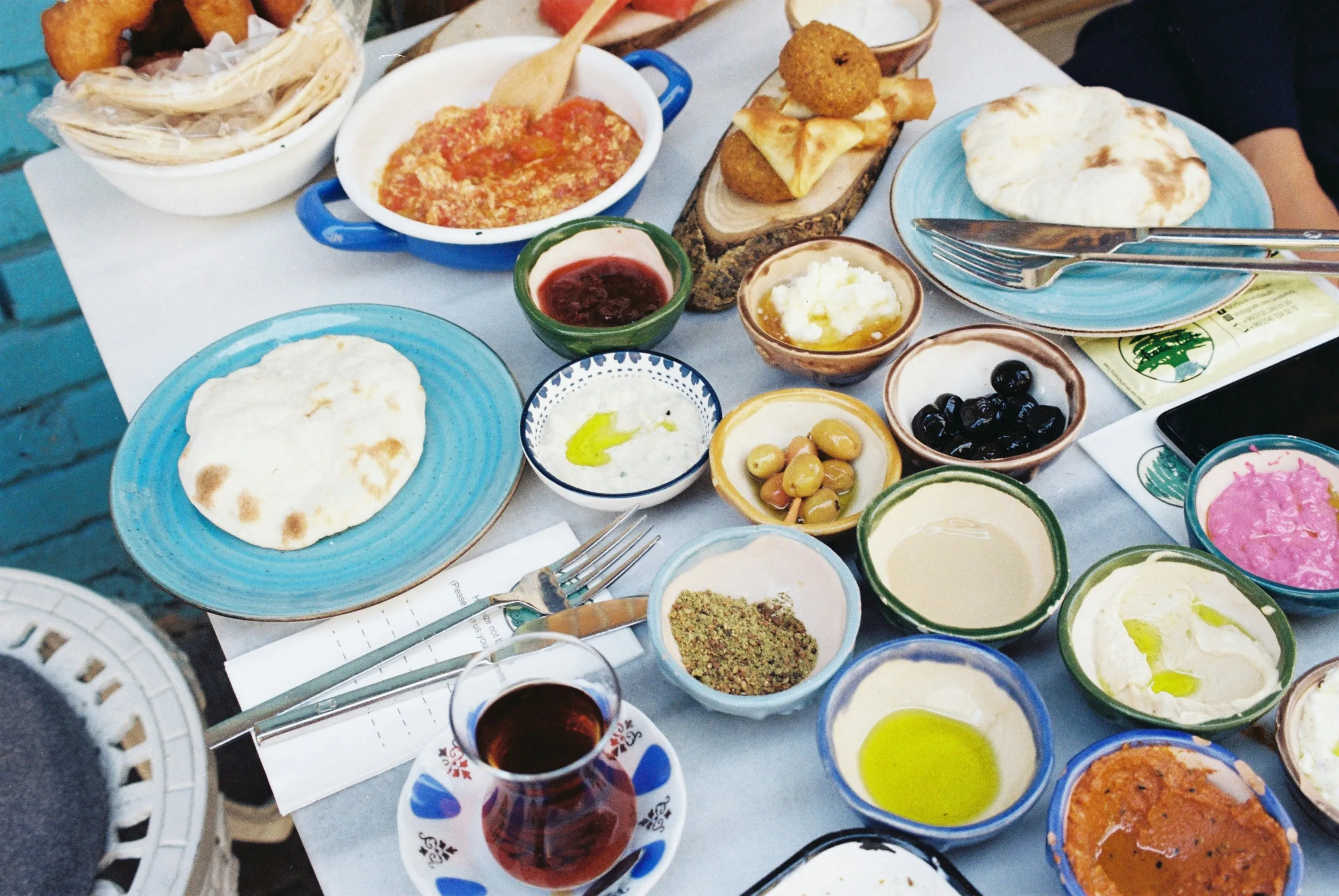
Yet across homes, cafés and family kitchens, something older has been resurfacing. The Arabic breakfast table. Not a single dish but a constellation of small plates, shared in the morning light.
A proper spread begins slowly. Bowls of fūl medames, the long-simmered fava beans dressed with olive oil and lemon. Thick labneh swirled with more olive oil. Warm flatbread pulled apart by hand. Za’atar scattered generously, its thyme and sesame scent cutting through the morning air. Olives, tomatoes, cucumbers, perhaps a soft egg or two, sometimes honey or date syrup for sweetness.
None of it is hurried. That is the point.
Where contemporary breakfast culture often frames food as a kind of performance nutrition, the Arabic table operates differently. It nourishes rather than optimises. The dishes themselves are modest but deeply sustaining: legumes rich in fibre and plant protein, yoghurt strained into labneh for probiotic depth, olive oil delivering slow energy rather than a sugar spike.
It is a style of eating that developed through necessity and climate long before wellness language existed. Beans that hold warmth through the morning. Fermented dairy that keeps well in the heat. Herbs and olive oil that provide flavour without heaviness.
But the deeper value of the breakfast table is not nutritional. It is social.
The Arabic morning meal was never designed to be eaten alone. Plates are placed in the middle. Bread becomes the utensil. People lean across the table to scoop labneh or dip into the beans. Someone pours tea. Someone else cuts tomatoes. Conversations drift in and out as the table refills itself.
Food cooked with care carries that care with it. A bowl of fūl simmered slowly before the household wakes tastes different from something poured out of a packet. Not because of ingredients alone, but because time has been invested in it.
Across cities such as Dubai, Abu Dhabi and Riyadh, younger diners appear to be rediscovering that logic. Cafés increasingly present breakfast not as a single plate but as small, shareable dishes. Home cooks post family recipes online. A generation raised on global brunch culture is beginning to recognise the quiet completeness of what their grandparents already knew.
Perhaps the appeal is simple. In a region that moves at extraordinary speed, the Arabic breakfast table insists on slowness. Bread must be torn. Beans must be spooned. Tea must be poured.
You cannot rush it. Nor, ideally, should you try.