
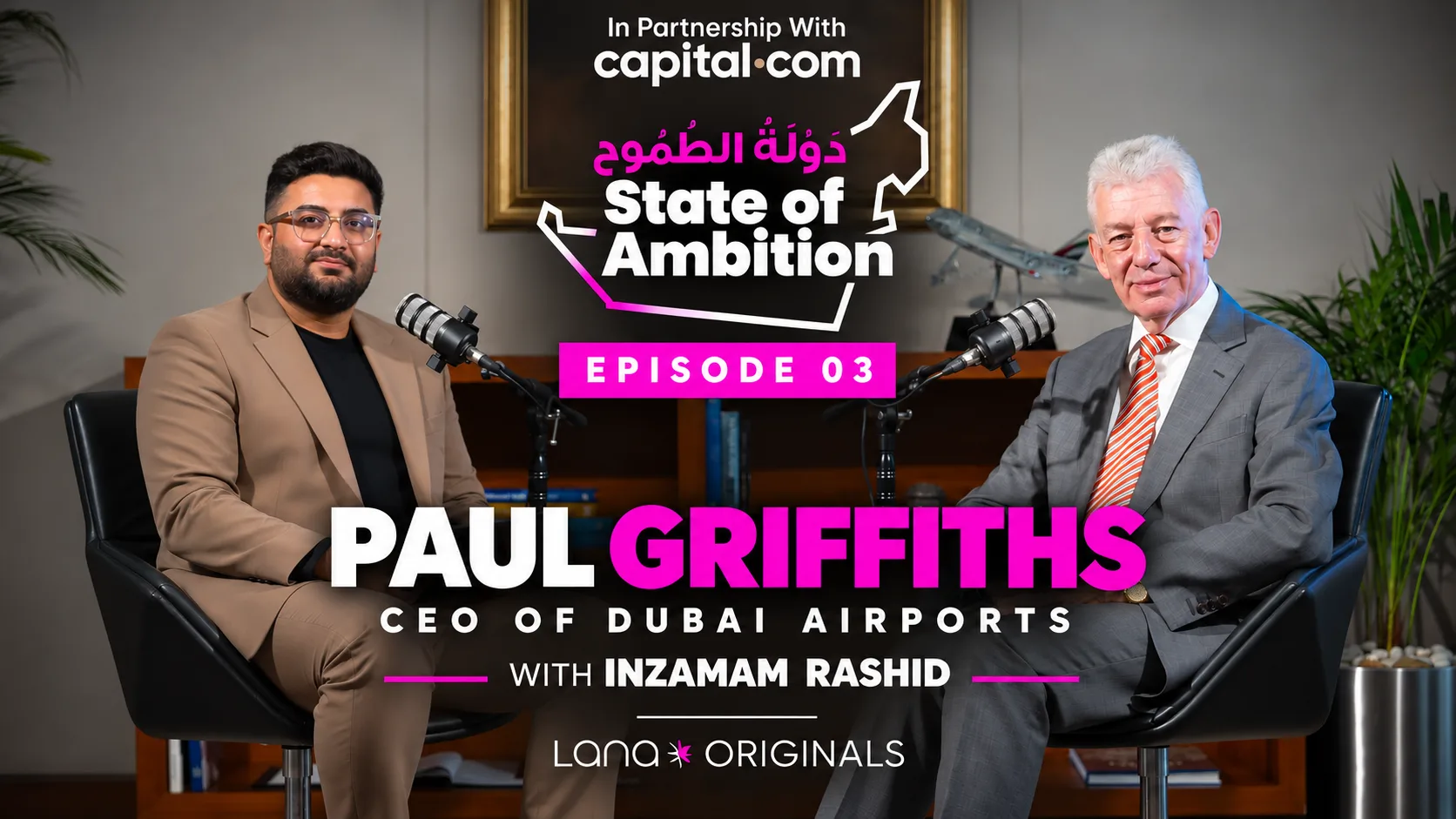
Dubai International Airport is expected to handle 71 million passengers this year as airlines restore flights disrupted by the war in Iran, and in an interview with Lana’s State of Ambition podcast, Dubai Airports chief executive Paul Griffiths described how the airport kept services running through much of the conflict, even after its own facilities came under attack.
Dubai International (DXB) handled 50.4 million passengers in the first nine months of 2026, down 28.1 per cent from a year earlier. Dubai Airports expects more than 70 million passengers for the full year, with Griffiths saying that the figure could reach 71 million, compared with a record 95.2 million in 2025.
Griffiths also told Inzamam Rashid that the priority was getting people out of the airport. After learning that Kuwait’s airport had been struck, he feared DXB could also be targeted. With flights suspended, his team moved about 150,000 people out of the airport and into the city, he said.
‘There was no manual’
Griffiths was sitting in his garden with the British ambassador on the morning of 28 February when both their phones began ringing. He went to the airport’s operations control centre, where news of the strike in Kuwait sharpened his concern that civilian infrastructure could come under attack.
“So what we did is we quickly mobilised and moved probably about 150,000 people out of the airport,” he said.
With flights curtailed in the days that followed, the airport also reduced the amount of fuel it was holding. Griffiths said that decision limited the damage when its fuel storage facility was struck.
He credited both measures with preventing fatalities at DXB and said those who suffered minor injuries had since recovered. “There was no manual on how to deal with incoming ballistic missiles,” he said.
Griffiths credited close coordination with the military, civil defence and government, as well as the airport staff making decisions on the ground. “The best thing that I could have done, and hopefully was what I did, was just to allow them to carry on making the decisions.”
How Dubai kept flights moving
For Griffiths, the war showed what strategic autonomy means for an airport that depends on airspace controlled by other countries. Dubai used alternative routes when its usual flight paths were unavailable and diverted some flights to Al Maktoum International, the emirate’s second airport.
The changes lengthened some journeys but allowed services to continue. “Some corridors were closed, some were open, and we just made the best of what was available,” he said.
“The extended flight times were a very small price to pay to get everyone moving.”DXB handled 18.8 million passengers in the third quarter, down 22.1 per cent year on year. August was the busiest month of the quarter, with 6.6 million passengers, according to Dubai Airports.
The operator expects Dubai’s winter tourism and events season to draw more international visitors as airlines restore services. Griffiths said some European airlines had moved aircraft to southern Europe after suspending flights to Dubai.
Once they had committed those aircraft for the summer season, he said, their schedules helped determine when they could return, adding that British Airways had resumed flights and Air France was among the carriers expected to follow.
Dubai presses ahead with its next airport hub.
Despite this year’s fall in traffic, Griffiths said Dubai Airports plans to raise DXB’s annual capacity to about 115 million passengers. With limited room for new terminals or runways, the operator is investing in technology, including biometrics, to move more people through its existing facilities.
The bigger expansion is at Al Maktoum International. Griffiths said the expanded airport is expected to open in the early 2030s with capacity for 150 million passengers a year, eventually rising to 260 million as more concourses are added.
“We wouldn’t be building it if we were not confident that the demand exists for us to be able to utilise it,” he said.
Watch or listen to the full interview with Paul Griffiths on YouTube, Spotify and Apple Podcasts. State of Ambition is a Lana Original in partnership with Capital.com.