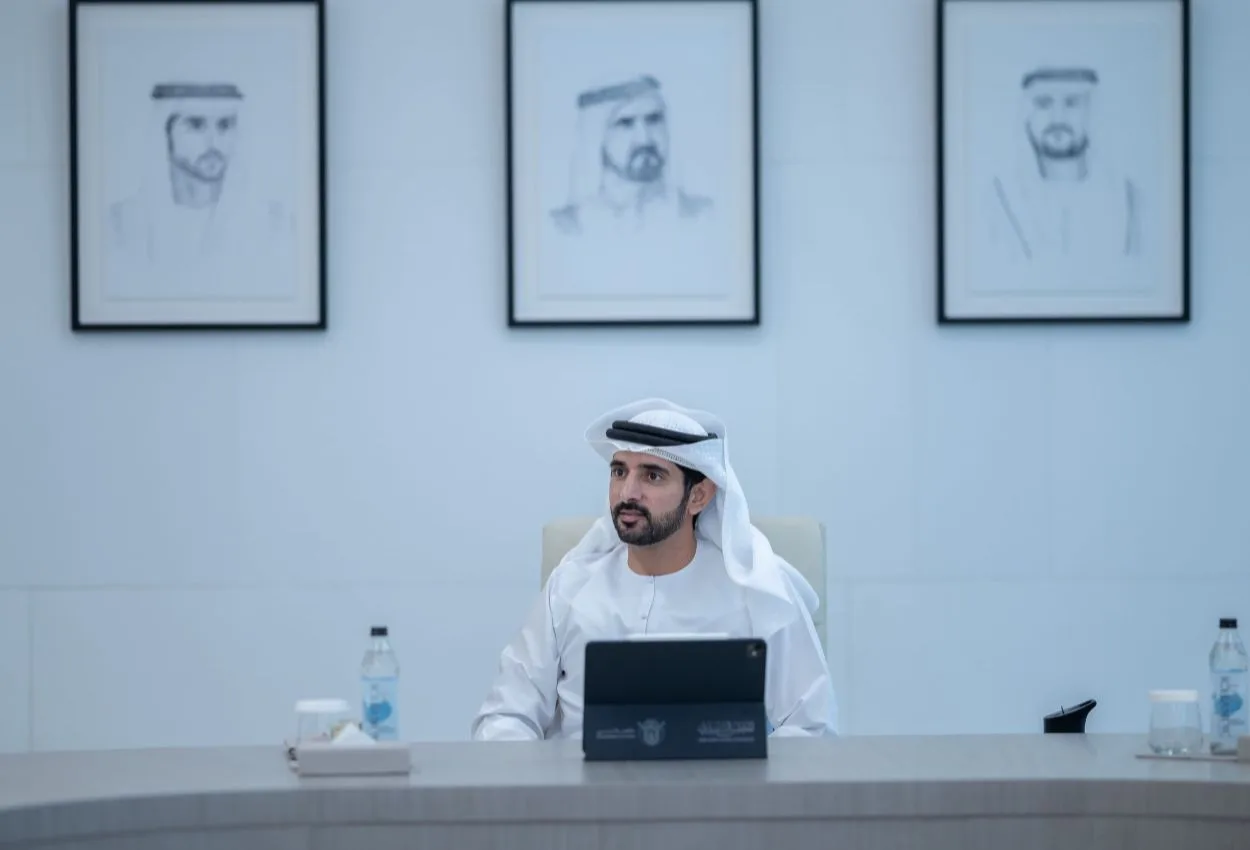
Dubai has recorded two decades of growth in its economy, infrastructure, government services and international rankings since Sheikh Hamdan bin Mohammed bin Rashid Al Maktoum assumed the chairmanship of The Executive Council of Dubai in September 2006.
The period, guided by the vision of Sheikh Mohammed bin Rashid Al Maktoum, Vice President and Prime Minister of the UAE and Ruler of Dubai, has seen policies, programmes, projects and government decisions translated into outcomes measured across services, the economy and global competitiveness indicators.
Sheikh Hamdan, Crown Prince of Dubai, Deputy Prime Minister and Minister of Defence of the UAE, and Chairman of The Executive Council of Dubai, has led a government model aimed at moving planning into delivery, directing resources towards priorities and linking achievement with impact.
A whole-of-government approach has supported decision-making, directed capabilities towards Dubai’s priorities and developed a system designed to anticipate needs and sustain development.
Under Sheikh Hamdan’s leadership, Dubai has expanded its economy, developed infrastructure, improved public services and advanced across international competitiveness rankings.
People have remained at the centre of the model, with economic growth, urban development and international positioning intended to support safety, stability and prosperity.
People remain at the centre of Dubai’s development model
Dubai’s development model places people at its centre, with 99.9 per cent of individuals saying they feel safe in the emirate.
Healthy life expectancy has reached 80.75 years, reflecting an approach that measures development through both lifespan and the years in which people can participate and contribute to society.
Dubai also ranks among the world’s top five in several international education assessments, as the emirate seeks to prepare students for a knowledge-based economy.
Customer happiness across the Government of Dubai has reached 95 per cent, reflecting the performance of public services and their response to customers’ needs, time and expectations.
Employee happiness stands at 89.3 per cent, with the government workforce supporting performance, service improvement and delivery.
Integrated housing solutions for citizens worth AED50 billion have been provided over 20 years, supporting family stability and helping citizens plan for their children’s future.
Dubai also has 27 majlis and community centres supporting community engagement, communication and social cohesion.
Green spaces across the emirate have exceeded 55.7 million square metres, supporting residents, communities and the urban environment.
The figures reflect the impact of government decisions across safety, health, education, services, housing and community life.
Dubai GDP doubles as trade and investment expand
Dubai’s economy has expanded alongside its investment in people.
Over the past two decades, the emirate’s GDP has doubled to AED937 billion, strengthening Dubai’s position as a centre for business, trade and investment.
Non-oil foreign trade has exceeded AED3 trillion, reflecting Dubai’s role in international trade and the use of infrastructure and transport links to expand partnerships and connect supply chains.
The economic performance reflects the environment established under Sheikh Mohammed bin Rashid and advanced by Sheikh Hamdan, alongside Sheikh Maktoum bin Mohammed bin Rashid Al Maktoum, First Deputy Ruler of Dubai, Deputy Prime Minister and Minister of Finance of the UAE.
Economic growth has been supported by coordination across social, urban and commercial policy.
Real estate transactions reached AED917 billion in 2025, reflecting demand, market activity and the sector’s response to economic and population growth.
Government expenditure aggregated over the past 20 years has reached AED1.2 trillion across sectors, supporting services, infrastructure and development priorities.
Roads, tourism and aviation support Dubai’s role as a global hub
Dubai welcomed 20 million visitors, supporting tourism, hospitality, transport and services and reinforcing the emirate’s role as a destination for international travellers.
The emirate’s road network has reached 25,974 lane-kilometres, connecting communities with workplaces and services while supporting trade, supply chains and urban growth.
The combination of economic activity, infrastructure, quality of life and international connectivity has supported Dubai’s position in global markets.
Dubai International is the world’s busiest airport for international passenger traffic, connecting cities, markets and travellers through the emirate.
FDI, finance and technology rankings reflect Dubai’s global position
Dubai ranks first globally for the number of greenfield foreign direct investment projects attracted to the emirate, reflecting investor activity in its business environment.
For the fourth consecutive year, Dubai also ranks first in attracting greenfield FDI projects in the cultural and creative industries.
The results show the range of sectors represented in Dubai’s economy, including projects linked to knowledge, content, culture and innovation.
Dubai ranks first as the world’s cleanest city for the sixth consecutive year according to the Global Power City Index, reflecting the performance of environmental services and conditions experienced by residents and visitors.
The emirate also ranks first in the region and among the world’s top 10 in the Global Financial Centres Index, supporting its role in linking regional markets with international finance.
In the Intelligent City Index, Dubai ranks second globally for the use of technology to improve services and ease of doing business, with digital systems supporting customer experience, efficiency and business operations.
Executive Council links strategy, spending and delivery
The results over the past 20 years span safety, health, education, housing, government services, infrastructure, trade, investment, tourism, finance, technology and the environment.
The Executive Council’s approach has sought to link government planning with implementation and direct public resources towards stated priorities.
Dubai’s next phase is expected to continue the same approach, with people remaining the focus of development, economic growth supporting opportunity and government entities working across sectors.
“Dubai continues its journey by putting people first, using economic growth to expand opportunity and strengthening its global leadership through integrated action,” according to the information provided on the Executive Council’s 20-year record.
Under Sheikh Hamdan’s leadership, The Executive Council will continue to translate strategic priorities into measurable outcomes for Dubai and its people.