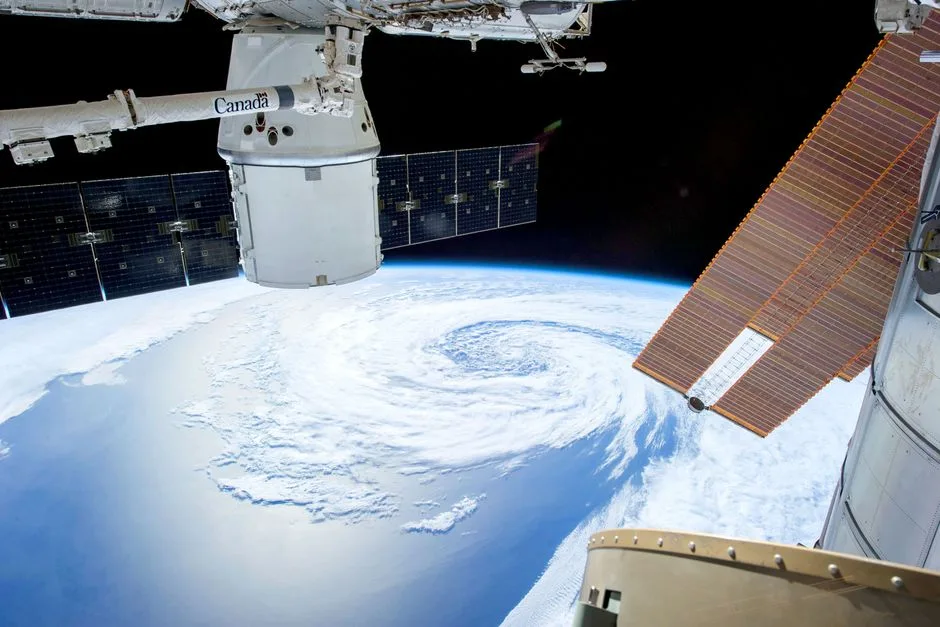
Five crew members aboard the International Space Station (ISS) have been cleared to resume normal duties after spending several hours sheltering inside the docked SpaceX Crew Dragon “Freedom” spacecraft while Russian cosmonauts attempted repairs on a worsening air leak in the station’s Russian segment.
NASA instructed the crew to stand down after Roscosmos paused the repair operation to assess fresh measurements and data. NASA spokeswoman Bethany Stevens said: “Roscosmos has paused Friday’s structural repair efforts inside the Zvezda service module transfer tunnel, known as PrK, as more measurements and data is assessed. Given this development, NASA has instructed the crew members inside the Dragon spacecraft to end the safe haven procedures and return to planned operations aboard the International Space Station.”
According to a report by the BBC, the leak is in the PrK, a small tunnel connecting a docking port to the Zvezda service module. Roscosmos first identified microscopic structural cracks there in September 2019. The problem worsened over time, eventually reaching roughly one kilogram of air lost per day, which led NASA to classify it as the station’s highest-level safety risk.
Earlier this year engineers believed they had made progress. After multiple inspections and sealant applications, NASA reported in January that pressure readings suggested a stable configuration had been reached. Those doubts proved well founded when, on 1 May, sensors detected a fresh pressure drop as Russian cosmonauts unloaded cargo from the Progress 95 supply spacecraft. By this week the loss rate had climbed back to a kilogram of air per day, prompting Roscosmos to attempt a more extensive repair rather than another patchwork fix.
Russia’s Interfax news outlet reported Roscosmos as saying two leaks were identified during the operation and one had already been sealed. Tass reported Roscosmos as confirming the crew and station systems were not in danger.
The five who sheltered in Dragon were NASA’s Crew-12 astronauts Jessica Meir, Jack Hathaway, Sophie Adenot and Andrey Fedyaev, along with NASA astronaut Chris Williams. Station commander Sergey Kud-Sverchkov and flight engineer Sergei Mikaev remained in the Russian segment to carry out the repairs, with the separately docked Soyuz MS-28 as their designated return vehicle.
Had the situation required a full evacuation, crew members would have left on their assigned spacecraft rather than whichever one they were sheltering in. Dragon would have carried the four Crew-12 members to a splashdown off the US coast, while Kud-Sverchkov, Mikaev and Williams, who launched together aboard Soyuz MS-28 last November, would have landed separately on the Kazakh steppe.
NASA said it looks forward to working with Roscosmos on a collaborative approach to address the leaks more permanently.