
As the UAE prepares for the new school year to begin on August 31, families are getting ready for changes in routines, schedules and education.
For some parents, the same period will involve another transition: a child leaving home for university, moving abroad for study or beginning a life with less day-to-day dependence on the family.
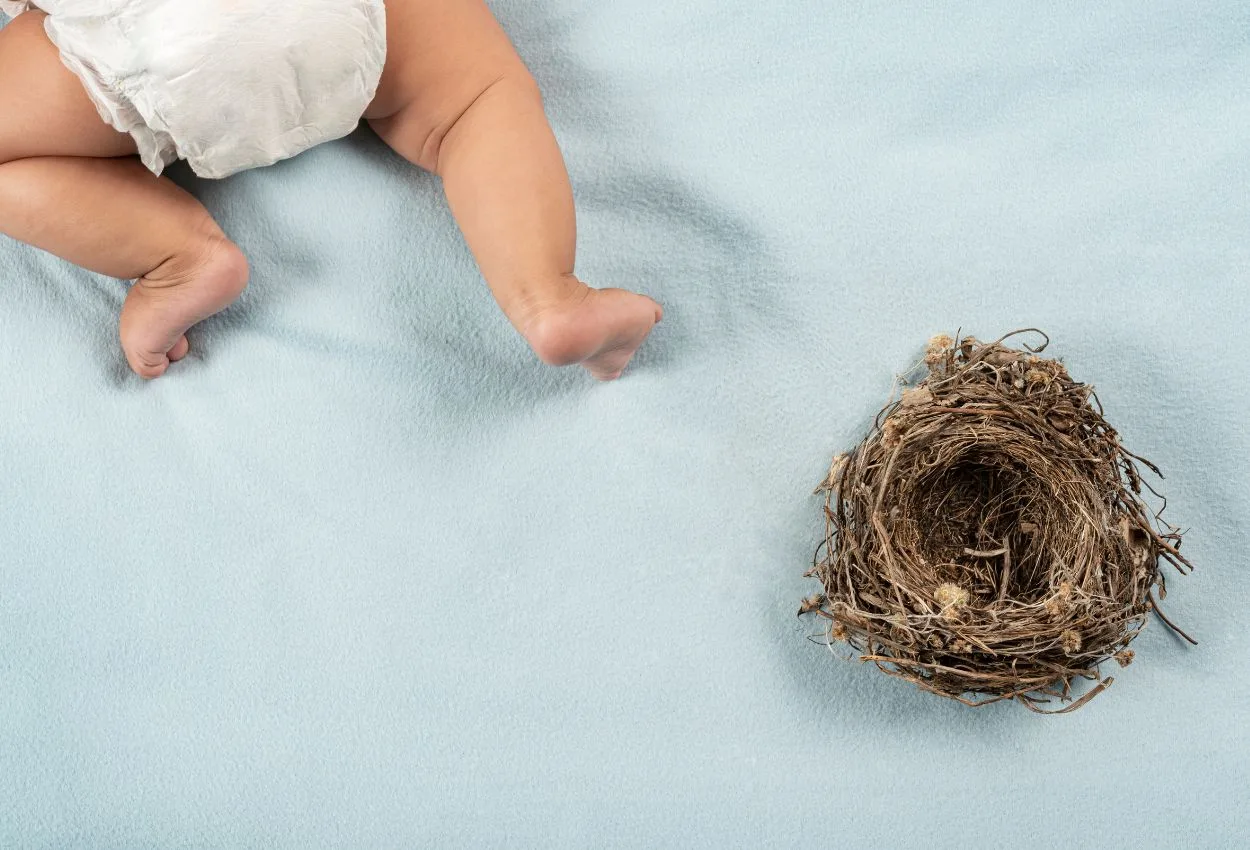
That change can bring sadness, loneliness and uncertainty about a parent’s role, a response often referred to as empty nest syndrome.
In an exclusive interview with Lana, Rita Figueiredo, Clinical Psychologist and Managing Director of Peninsula Psychology, said the term describes the emotions some parents experience when children leave home, but it is not a mental health diagnosis.

“Empty nest syndrome is the name commonly given to the sadness, loneliness or sense of disorientation that some parents experience when their children leave home,” Figueiredo said.
“I think it is helpful to see it as a family transition, because the child’s departure changes daily routines, relationships and the parent’s sense of purpose. The family is learning how to remain connected in a different way.”
Echoing the sentiment, Dr Reem Abu Hweij, Clinical Psychologist at Thrive Wellbeing Centre also describes empty nest syndrome as a transition rather than a psychiatric condition.
She said it can involve sadness, loss, loneliness and role confusion when a child leaves home, particularly when the departure happens alongside retirement, menopause, changes in health or ageing. However, Abu Hweij said the experience should not be treated as something that affects every parent in the same way.

“The concept itself continues to generate considerable debate. While some parents undoubtedly experience genuine and significant emotional distress following their children’s departure, many others report greater life satisfaction, renewed marital closeness, increased personal freedom, and the opportunity to reconnect with interests and aspects of themselves that had gradually taken a back seat during the years of raising children. Rather than representing a universal or inevitable experience, the empty nest appears to reflect the intersection of multiple psychological, relational, and contextual factors, including the parent’s sense of identity beyond the caregiving role, the quality of family relationships, the strength of their social support, and the presence of other concurrent life transitions,” she said.
The start of the academic year places attention on children and the next stage of their education. For parents whose children are leaving the family home, however, August and September can also mark the end of routines that have shaped daily life for years.
Parents may feel sad, lonely or emotional, and the house can feel quiet after a child leaves.
Some may lose motivation or become unsure about what to do with time that was previously organised around parenting. Others may worry about the child, contact them repeatedly or feel hurt when the child is occupied with university, work, friends or other commitments.
Empty nest syndrome or depression?
Both psychologists said empty nest syndrome should be distinguished from depression. Figueiredo said empty-nest sadness is generally linked to the child leaving home and may change as the parent adjusts.
“The sadness associated with an empty nest usually makes sense in relation to the child leaving and may come and go as the parent adjusts. Depression tends to spread across different parts of life. The person may lose interest in most things, feel persistently hopeless or worthless, struggle to concentrate, and experience significant changes in sleep, appetite or energy. Empty-nest distress can develop into depression, so it is important to pay attention to how long the symptoms last and how much they interfere with daily life,” she said.
Figueiredo said the change can be harder for parents whose lives have been organised around raising children, particularly where caregiving has provided identity, meaning or connection.

Single parents, parents with limited social support and those whose child leaves suddenly or following conflict may also face more difficulty. As mentioned earlier, the transition can happen at the same time as menopause, retirement, bereavement, changes in health or caring for ageing parents.
Mothers may be affected in families where women have carried most of the practical and emotional work of parenting. “After spending years being needed by everybody, they can find themselves wondering what belongs to them now,” Figueiredo said.
However, according to Abu Hweij, gender alone does not determine who will struggle.
“Historically, mothers have been thought to be more vulnerable to empty nest syndrome because caregiving has often constituted a larger part of their identity and daily life. However, contemporary research suggests that it is not gender itself that best predicts who struggles with the transition, but rather the extent to which a parent’s sense of identity has become organised around the caregiving role, alongside other factors such as marital satisfaction, social support, employment, and other concurrent life transitions,” she said.
When a parent has to rethink their identity
For years, parents may organise their schedules, decisions and relationships around their children. When a child leaves, the parent may feel that a part of their identity has changed, even while feeling pride about the child becoming independent.
Figueiredo said the transition can lead parents to return to friendships, work, interests, intimacy, creativity or ambitions that received less attention during the years of raising children. They remain parents, she said, but have to learn how to occupy the role in another way.
Abu Hweij described the process as one of “identity restructuring.” The departure of a child does not end parenthood, she said, but changes its nature and can prompt parents to reconsider their sense of purpose outside the caregiving role.
“For some, this transition can feel deeply disorienting, giving rise to questions around simple daily routines, sense of purpose and self worth. In this sense, the empty nest represents not only a change in family structure but also an existential transition, requiring parents to reconstruct their identity around a broader range of relationships, interests, values, and aspirations.
“Although initially experienced as a loss, this period can also become an opportunity for growth. Rather than abandoning the identity of “parent,” many individuals gradually integrate it into a richer and more expansive sense of self, one in which parenting remains an important part of who they are, but no longer the sole foundation upon which their identity rests,” she explained.
What happens to a marriage when children leave?
A child leaving home can also change the relationship between parents. Figueiredo said some couples rediscover companionship, privacy and intimacy when children leave.
Others realise that much of their conversation and shared activity centred on the children, while tensions that were easier to ignore when family life was busy may come to the surface.
“The change also affects siblings and the adult child who has left. One sibling may feel relieved, another may feel abandoned, and the adult child may begin to feel responsible for a parent’s loneliness. It helps when families can speak honestly about missing one another without making anyone responsible for removing another person’s sadness,” she said.
However, the transition can bring existing patterns within a marriage into focus, Abu Hweij said. For some couples, that may mean conflict, loneliness or distance. For others, it can lead to more time together, shared interests and reconnection. “In many ways, the empty nest does not create the strengths or weaknesses within a family system as much as it brings them into sharper focus,” she said.
How parents can stay close without crossing boundaries

For UAE families whose children leave for university in another emirate or another country, questions about calls, visits and contact can arise soon after the move.
Figueiredo said it can help to have a conversation about how often the parent and child would like to speak or meet, while understanding that this may change as the child develops a routine. She said reduced contact does not necessarily mean reduced love.
Parents can remain interested and available while asking before giving advice and respecting privacy. “Healthy closeness allows the adult child to develop a life of their own without having to reassure the parent constantly. Parents can remain interested, available and emotionally present, while asking before giving advice and respecting privacy. The relationship becomes more mutual over time, and that can create a very meaningful new form of closeness,” Figueiredo said.
Abu Hweij said the relationship has to shift from directing and protecting a child towards a relationship between adults. “This stage offers parents the opportunity to cultivate a relationship that is more mutual, companionate, and collaborative. The balance shifts toward respecting the judgment, autonomy, and sovereignty of their adult children while remaining emotionally available, interested, and supportive. Guidance is no longer rooted in authority but in wisdom, experience, and trust, offered freely rather than imposed.
“Paradoxically, many parents find that the more they respect their children’s independence, the closer the relationship becomes. Adult children are often more likely to seek advice, share their lives, and maintain emotional closeness when they feel trusted, rather than managed,” she explained.
When parents should seek professional help
Figueiredo said parents should consider seeking support when distress remains intense or begins to interfere with work, sleep, relationships or self-care.
Help may also be needed if a parent becomes consumed by worry, repeatedly crosses the child’s boundaries or relies on alcohol, medication or other methods of coping that cause harm.
“Persistent hopelessness, loss of pleasure, major changes in sleep or appetite, and thoughts about death require a clinical assessment. A person does not have to wait until things become severe, because therapy can also provide a space to understand the loss and begin building the next stage of life,” Figueiredo said.
Abu Hweij also said support should be considered before a person reaches a point of crisis, giving parents space to examine changes in identity, purpose and relationships.
“It can also provide a valuable space in which to process and thoughtfully engage with this transition before significant symptoms emerge. For many parents, the empty nest represents a profound developmental shift, one that invites reflection on identity, purpose, relationships, and the next stage of life. Working through these questions with a mental health professional can help transform what initially feels like a loss into an opportunity for growth, renewal, and the development of a richer sense of self,” she said.
How parents can cope with an empty nest
Both psychologists said parents should allow themselves to acknowledge the feelings connected with a child leaving home. Figueiredo said a child’s departure is a step towards independence, but it also marks the end of one period of family life.
Parents may miss routines, noise and the physical presence of their child. She said staying connected with friends, speaking with a partner, rebuilding relationships and finding activities that carry meaning can support the adjustment.
“There is no need to fill every empty hour immediately. Adjustment takes time, and part of coping involves discovering what this new space in life might eventually make possible,” Figueiredo said.
Abu Hweij said parents should make space for grief rather than dismissing it. Parents can gradually invest more time in relationships, work, interests and their community without seeking to replace the role their children held in their lives.
“The very fact that a child is ready to leave home is, in many ways, evidence that the task of parenting has succeeded. Honouring that achievement can help shift the experience from one of pure loss to one that also carries pride, gratitude, and meaning,” she explained.
Why empty nest syndrome is often misunderstood

Figueiredo said parents who struggle can face assumptions that they became too dependent on their children or failed to develop a life outside parenting. She said that view can overlook the time, identity and emotional work involved in raising children, as well as expectations around caregiving and gender.
“That judgment ignores how much time, identity and emotional energy parenting can involve, as well as the gendered expectations that still shape caregiving in many families. Research shows that this period is varied. Some parents experience loneliness and loss of purpose, and others feel freer, closer to their partner or more able to pursue their own interests. Plenty experience both. Feeling grief does not mean the parent resents the child’s independence or wants to prevent them from leaving,” Figueiredo said.
Abu Hweij said another misunderstanding is treating empty nest syndrome as either a pathology or something parents should simply move past. She said it is a developmental transition that can reorganise family life, identity and purpose and deserves attention rather than dismissal.
“I often think we underestimate the psychological significance of role transitions. We expect people to prepare for marriage, parenthood, retirement, even bereavement, yet we rarely prepare them for the day their primary role as a full-time caregiver comes to an end. That adjustment deserves the same degree of reflection and care. Ultimately, the empty nest is not simply about children leaving home. It is about parents discovering that while the role of parenting evolves, their own capacity for growth, meaning, and connection continues to evolve alongside it,” she said.
In addition, Figueiredo said leaving home does not carry the same meaning in every family. It can also emerge when a child becomes more independent, moves out for work or marriage, relocates abroad, or when a parent’s day-to-day caregiving role changes.
“In some families, adult children are expected to remain at home until marriage, and several generations living together may be understood as closeness, responsibility and security. In other families, leaving home is seen as an important sign of independence and successful parenting,” she said.
Migration adds another factor. A child may leave the UAE for university or work in another country, making visits less frequent. Financial circumstances can also delay leaving home or result in adult children returning to live with their parents.
“What appears to be the same transition can therefore represent pride, grief, financial insecurity, disruption of family duty or a mixture of all of these,” Figueiredo said.
“What appears to be the same transition can therefore represent pride, grief, financial insecurity, disruption of family duty or a mixture of all of these. Understanding the family’s cultural and economic context tells us far more than the label “empty nest syndrome” alone,” she concluded.