
Last week, American media personality, socialite and businesswoman Kylie Jenner revealed that she had undergone stem cell treatment for a three-year back pain issue.
Jenner’s announcement followed her sister Kim Kardashian’s disclosure that she had received stem cell injections for chronic shoulder and back pain that had affected her ability to study and carry out daily tasks.
Kardashian detailed her experience publicly, stating that the injections helped her return to normal movement.
However, these cases have intensified questions about why celebrities and the global elite are pursuing stem cell therapy and what the scientific basis for the treatment is.
Speaking in an exclusive interview with Lana, Dr. Adeel Khan – who treated both Jenner and Kardashian – explained why celebrities are turning to stem cell therapy, the myths that surround it, the science he trusts, and the range of patients who now approach him at Eterna Health in Dubai.
How stem cell treatments target injury, pain and longevity

“The biggest misconception about stem cells is that they are not safe,” he said. “And that is because a lot of stem cells are not safe, because there are different types of stem cells – which is what people don’t realise,” he said.
“When they think of stem cell, they just think there is one stem cell. There are dozens of different types.”
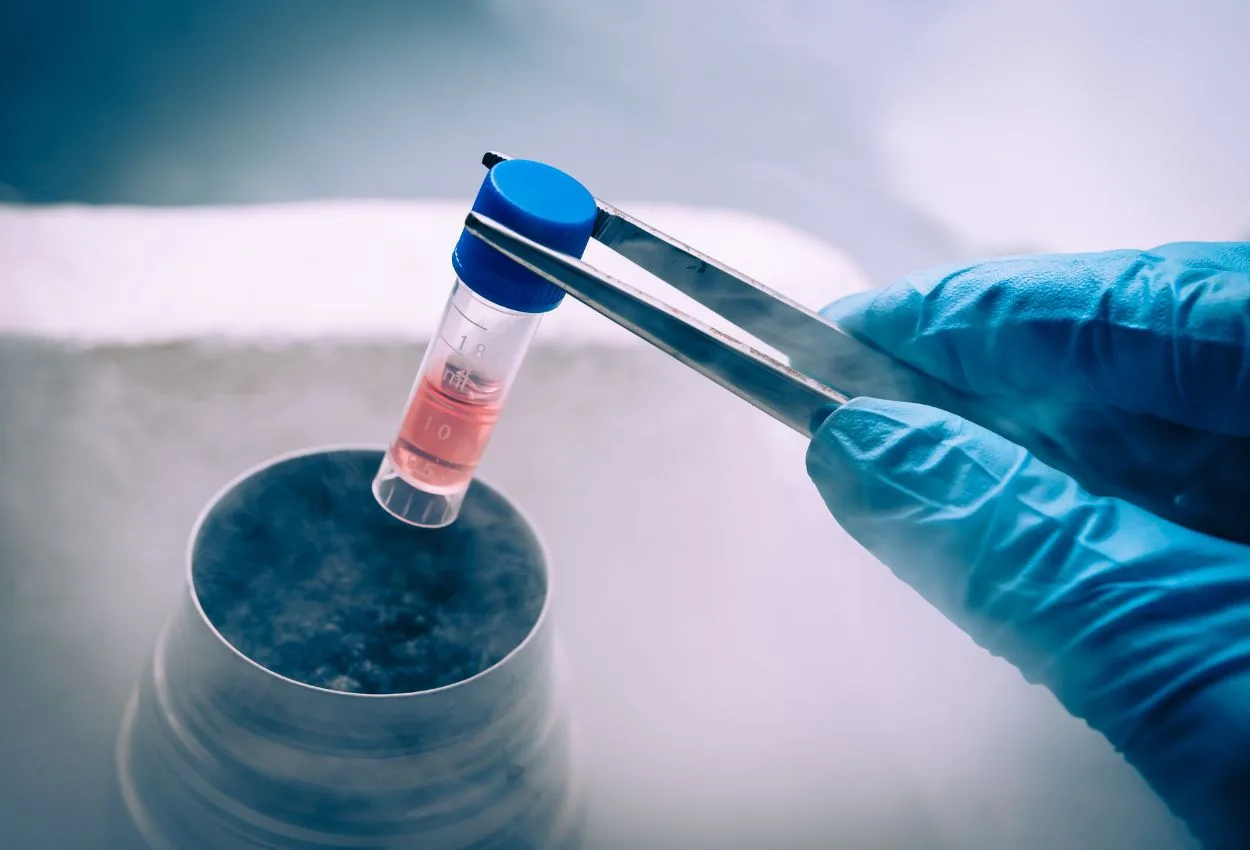
Stem cell therapy, in medical definition, is an approach that uses specialised cells capable of developing into different types of tissue within the body.
These cells can divide, renew themselves and support the repair of damaged structures. The treatment is used in attempts to restore function in areas affected by injury, disease or age-related decline.
Delivery methods vary and can include injections into targeted sites or intravenous infusions, depending on the intended outcome.
While research continues to define its long-term impact, stem cell therapy is part of a wider field known as regenerative medicine, which focuses on supporting or restoring natural biological processes.
“The simplest way to explain is basically it is your body’s ability to heal itself,” Dr. Khan explained.
“Instead of cutting out an organ, maybe we could regenerate the organ. So just tissue healing and getting your body to go back to a previous state, and now we can use certain technology to make your body heal,” he added.
Kim Kardashian seeks MUSE cells therapy for chronic back and shoulder pain relief

Safety, however, remains the central public concern, and Dr. Khan said the criticism is not unfounded.
“Some stem cells can cause cancer, some stem cells can allow them to die in the body and cause more inflammation or more problems,” he said.
However, his approach at Eterna Health is based on a specific stem cell line known as MUSE cells , developed in Japan.
MUSE cells
AI Generated
MUSE cells (Multilineage-differentiating Stress Enduring cells) are a type of pluripotent stem cell found in various adult tissues, capable of differentiating into cells from all three germ layers. Their potential for regenerative medicine is under investigation, with studies exploring their safety and efficacy in treating various conditions, as seen with Kim Kardashian’s use of them for chronic pain.
“We were one of the first clinics to use them. They have clinical trials that showed no adverse effects, hundreds of animal studies, and are basically very safe in the sense that your body will not reject them. They’re anti-cancerous based off some of the data that’s been published.”
This scientific structure is one of the reasons high-profile patients approach him. Kardashian’s case is one example he recounts in detail.
“Kim had a debilitating shoulder pain, and then back pain as well,” he said. “And her back pain was really bad – it was preventing her from studying; she could not sit or stand in one period for a long time.”
According to him, the problem had lasted years. “She had the shoulder [pain] for like two years, the back [pain] for like the last year, it was getting worse.”
The treatment involved direct injections into the affected areas, after which he said Kardashian reported significant improvement. “She felt amazing shortly after the procedure,” he recollected, adding that “her pain pretty much went away in the next few weeks, and she has been good since – functioning and very happy.”
Although Kardashian’s case has attracted attention due to her public platform, Dr. Khan explained similar stories are common across the clinic’s patient base.
Stem cell therapy for ageing – does it really work?

Some pursue treatment after long periods without relief. Others seek to avoid surgery or long-term medication. And an increasing number, he said, enquire about longevity.
At Eterna Health, he sees people in their 50s and 60s who want to support long-term health markers, but he also meets much younger patients.
“We have had people as young as like 19, 20 [years] for longevity, but also for injuries and pain, or chronic conditions where the traditional system does not have solutions, or perhaps they want to avoid surgery or avoid just taking pharmaceuticals.”
Interest in longevity has created demand for intravenous procedures, which he said are straightforward.
“For longevity, for example, it’s just an IV,” he explained. The patient sits for two to three hours while the cells circulate. He describes what happens next as a targeted search for damage.
“They have a homing mechanism so they can go to your brain, your liver, wherever there’s damage – they will go find it and it will help to repair it,” he said. “Which sounds like science fiction, but this has been shown in studies.”
This process is one of the reasons many of his patients, including public figures, choose stem cell therapy over surgical intervention: there is no recovery period. “There is no recovery or downtime afterwards. You can go back to normal activities the next day.”
Moreover, the subject of ageing is where interest is growing fastest. When asked whether the treatment can reverse signs of ageing, Dr. Khan argued that ageing is not fixed.
“Ageing is just a process that is essentially programmable – meaning it is a programme that is running, and that we can modify that programme now, using regenerative medicine especially.”
Stem cell therapy in Dubai can cost up to AED80,000, says Dr. Khan

Yet even as interest grows, access remains limited especially as stem cell therapy is not covered by insurance, which affects how patients budget for it.
“We do get regular people as well, but the price point is high because it is not covered by insurance, because it is still considered experimental,” Dr. Khan said, pointing out the gap between regulatory labels and actual effectiveness. “There are a lot of therapies that are not approved by FDA but are still very effective.”
For now, however, affordability is a barrier. “It is too expensive for the average person,” he acknowledged. But he predicts that costs will fall as the sector develops. “In five to 10 years, probably, the price will go down dramatically.”
Some patients, he said, prioritise the therapy despite the cost. “If you’re going to spend money on vacations or on so many different things, you can also just allocate it towards something for your health – then most people can make it work.”
Prices vary widely depending on the treatment plan. “In Dirhams, it could range anywhere from like AED2,000 to like AED50,000, or AED80,000 even – depending on how much you are doing or how many treatments you need.”
A common question he receives is whether the treatment must be repeated. In cases such as Kardashian’s, he said the goal is long-term correction.
“With Kim, hopefully I’ll never have to treat her shoulder or back again,” he said. “Once its fixed, it is meant to be. This is regenerative. You are repairing the problem.”
Longevity treatments, however, require ongoing sessions. “For cosmetics, like eye facial or IV, then yes, you have to keep doing that every year or twice a year, because ageing is a continuous process,” he said. “So, if you want to fight ageing, you have to do this continuously.”
Eterna Health has recently expanded in Dubai, and Dr. Khan said the clinic is integrating new elements into its practice.
“We are partnering with Dr. Mansour, who is a world expert in genetics. So, we are going to be also looking at genetics and combining that so that we can do personalised plans,” he concluded.