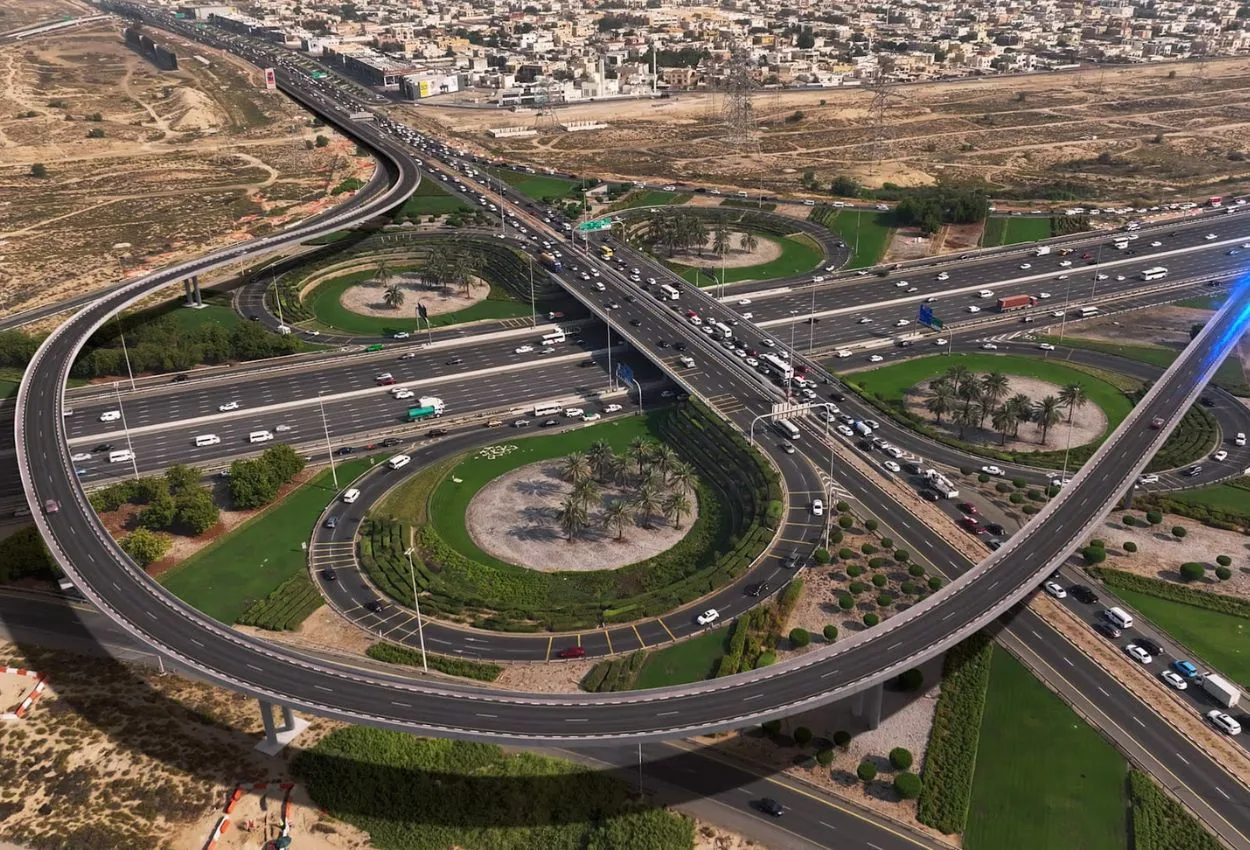
Dubai’s Roads and Transport Authority (RTA) has opened the full scope of works under the Hessa Street Development Project, covering the section from Sheikh Zayed Road to Al Khail Road across a stretch of 4.5 km.
The project involved widening Hessa Street and the bridges at its intersections with Sheikh Zayed Road, Al Asayel Street, First Al Khail Street, and Al Khail Road to four lanes in each direction. The RTA said the completion marks the development of Hessa Street in full, including all intersection bridges.
Travel time between Sheikh Zayed Road and Al Khail Road has been reduced from 15 minutes to four minutes, with capacity on the corridor rising from 8,000 vehicles per hour in both directions to 16,000 vehicles per hour in both directions – an increase of 100 per cent.
Hessa Street Dubai now four lanes each way; Four intersections upgraded
“Hessa Street Development Project extends from its intersection with Sheikh Zayed Road to its intersection with Al Khail Road over a stretch of 4.5 km. The project includes upgrading 4 key intersections along Hessa Street with Sheikh Zayed Road, First Al Khail Street, Al Asayel Street, and Al Khail Road, and expanding Hessa Street from 2 lanes to 4 lanes in each direction. This will increase the street’s capacity by 100%, raising it to 16,000 vehicles per hour in both directions,” Mattar Al Tayer, Director General, Chairman of the Board of Executive Directors of the Roads and Transport Authority (RTA) said in a statement.
The population of the areas served by the project is expected to exceed 640,000 by 2030. The project covered the development of four intersections along the corridor.
At the intersection with Sheikh Zayed Road, a two-lane directional ramp was constructed above Dubai Metro’s Red Line to serve traffic turning right from Sheikh Zayed Road onto eastbound Hessa Street towards Emirates Road.
At the intersection with First Al Khail Street, the existing Hessa Street bridge was widened from three lanes to four lanes in each direction, alongside traffic improvements at the signal-controlled at-grade intersection.
At the intersection with Al Asayel Street, the number of lanes on the existing bridge was increased from two lanes in each direction to four lanes in each direction through the construction of a new bridge parallel to the existing one. Traffic improvements were also carried out at the signal-controlled at-grade intersection.
At the intersection with Al Khail Road, a direct two-lane directional ramp was constructed to serve traffic from Hessa Street onto northbound Al Khail Road towards Sharjah, along with additional bridges at the existing interchange above Al Khail Road to serve traffic moving from Hessa Street towards Deira.
Phase Two underway
The RTA has also begun work on Phase 2 of the Hessa Street Development Project, which extends from its intersection with Al Khail Road to its intersection with Sheikh Mohammed bin Zayed Road over a 3 km stretch.
Phase 2 includes the development of three key intersections through the construction of 8,835 metres of bridges and a 480-metre tunnel, in addition to upgrading entry and exit points on several roads.
Al Tayer said the works will “double capacity from 4,000 vehicles per hour to 8,000 vehicles per hour, reduce travel time from 24 minutes to 5 minutes, and provide direct traffic flow between Al Khail Road and Sheikh Mohammed bin Zayed Road.”
Traffic volumes on the roads covered by Phase 2 are estimated at around half a million trips per day. The development is expected to benefit around 650,000 people across 10 residential and development areas, including Jumeirah Village Circle, Arjan, Dubai Science Park, Al Barsha South, Jumeirah Lakes Towers, Jumeirah Islands, Barsha Heights, The Greens, and Emirates Hills.