
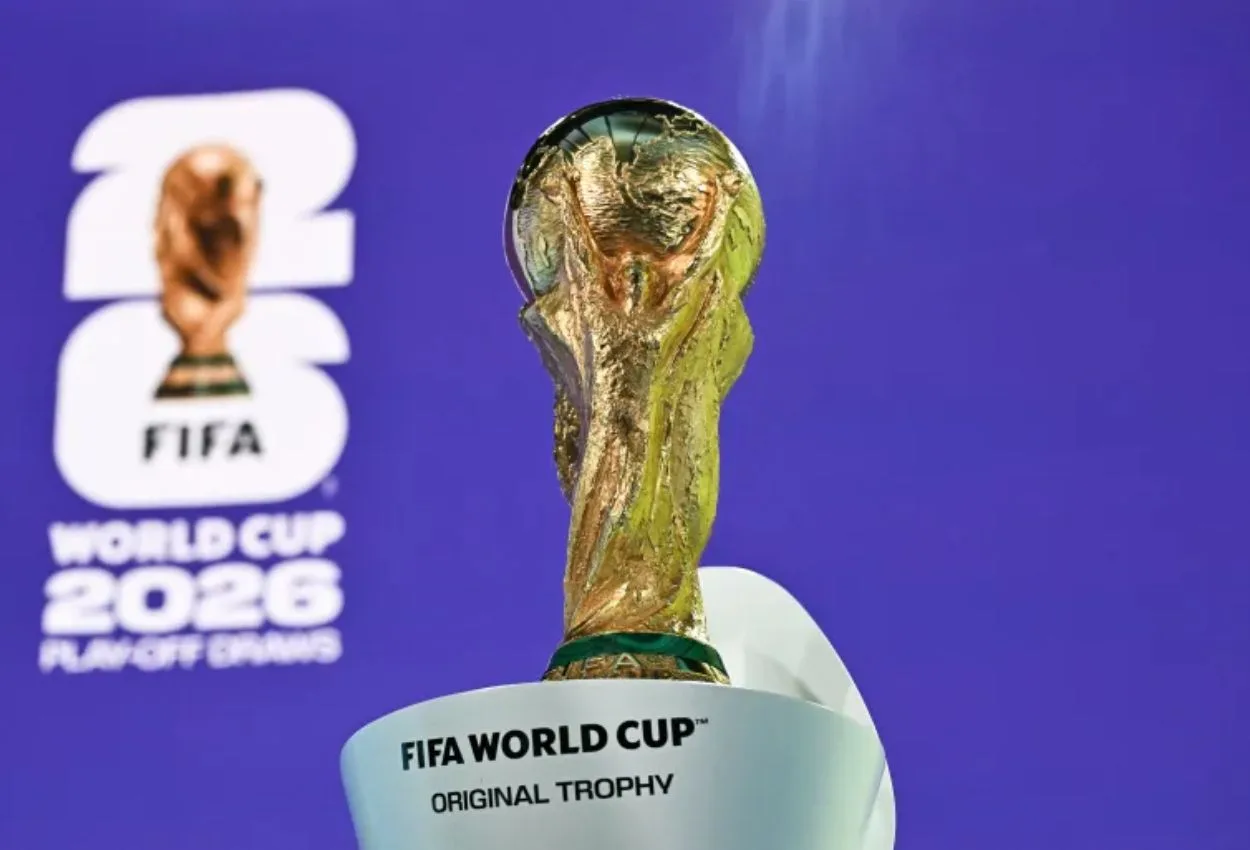
The International Football Association Board has approved a set of significant rule changes that will take effect at FIFA World Cup 2026, with Pierluigi Collina, chairman of the FIFA referees committee, framing the package around a single ambition.
“We are trying to clean the game as much as possible,” he told reporters, according to a report by The Athletic.
The 170 officials assigned to the tournament will attend a final preparatory seminar in Miami before the competition opens on June 11. All 48 national team coaches participated in a workshop on the changes, and every player will receive the same briefing before the opening match.
Red card for covering the mouth
Any player who covers his mouth during a confrontation with another player or official risks a red card. The rule does not apply to casual conversation – players may still speak privately with covered mouths in non-confrontational situations – but the crackdown is designed to remove the cover that obscured comments have provided in discrimination cases.
The rule follows a high-profile incident in February when Benfica midfielder Gianluca Prestianni, whose jersey was pulled up over his mouth during a Champions League match, received a six-game UEFA ban after Real Madrid winger Vinicius Junior alleged he was racially abused.
“Covering the mouth means you are doing something potentially very wrong,” Collina said. “This is something you do on purpose. It is not something that a player can do instinctively.”
Leaving the field in protest
Referees now have the power to show a red card to any player who walks off the pitch in protest at an official’s decision, or to any team official who incites players to do so. Any team that causes a match to be abandoned will, in principle, forfeit the match.
The rule follows the Africa Cup of Nations final in January, when Senegal’s players left the pitch for 16 minutes after Morocco was awarded a stoppage-time penalty. Senegal won on penalties, but the result was later overturned on a 3-0 forfeit ruling by CAF. Senegal are appealing.
VAR expansion
When VAR was introduced at the 2017 Confederations Cup, its scope was limited to goals, penalties, red cards, and mistaken identity on red cards. That remit has now been widened. VAR can intervene in three additional situations: clearly incorrect second yellow cards; mistaken identity on yellow and red cards involving other players on either team; and incorrectly awarded corner kicks, provided a correction can be made before the corner is taken.
According to the report, Collina was direct on the logic. “I don’t think any of you would be happy for a goal coming as a result of a foul being committed and the reason being that VAR cannot intervene because of protocol.”
A related clarification applies specifically to the World Cup: VAR will be able to flag clear offences committed by the attacking team before the ball is in play at a corner or free kick, where those offences have a direct impact on a goal, penalty, or disciplinary sanction. The clarification will be reviewed after the tournament before any broader application is considered.
Time-wasting crackdowns
The eight-second release rule for goalkeepers, introduced at the start of the season, has been extended. Referees will now apply a visual five-second countdown to goal kicks and throw-ins as well. If the ball is not played within that window, the opposition receives a corner or throw-in respectively.
Substituted players will have 10 seconds to leave the pitch. If they fail to comply, the incoming substitute will only be allowed to enter at the first stoppage after a minute of play has elapsed. The rule mirrors one Collina described as effective since its introduction in MLS.
On-field treatment
FIFA World Cup 2026 players who receive treatment from medical staff on the pitch will be required to leave the field for one minute after play restarts, the report said.
Exceptions include goalkeeper injuries, collisions involving a goalkeeper and an outfielder, head injuries or concussion, injuries caused by a yellow- or red-card offence, and cases where the injured player is the designated penalty taker.
The longer-running issue of goalkeepers feigning injury to allow their managers an impromptu team talk remains unresolved. “I’m afraid we didn’t get a solution agreed by everybody,” Collina said, though he indicated referees would be instructed to prevent both teams from retreating to the bench when a goalkeeper is down.