The FIFA World Cup 2026 delivered a record moment for Arab football, and the region’s audiences responded accordingly.
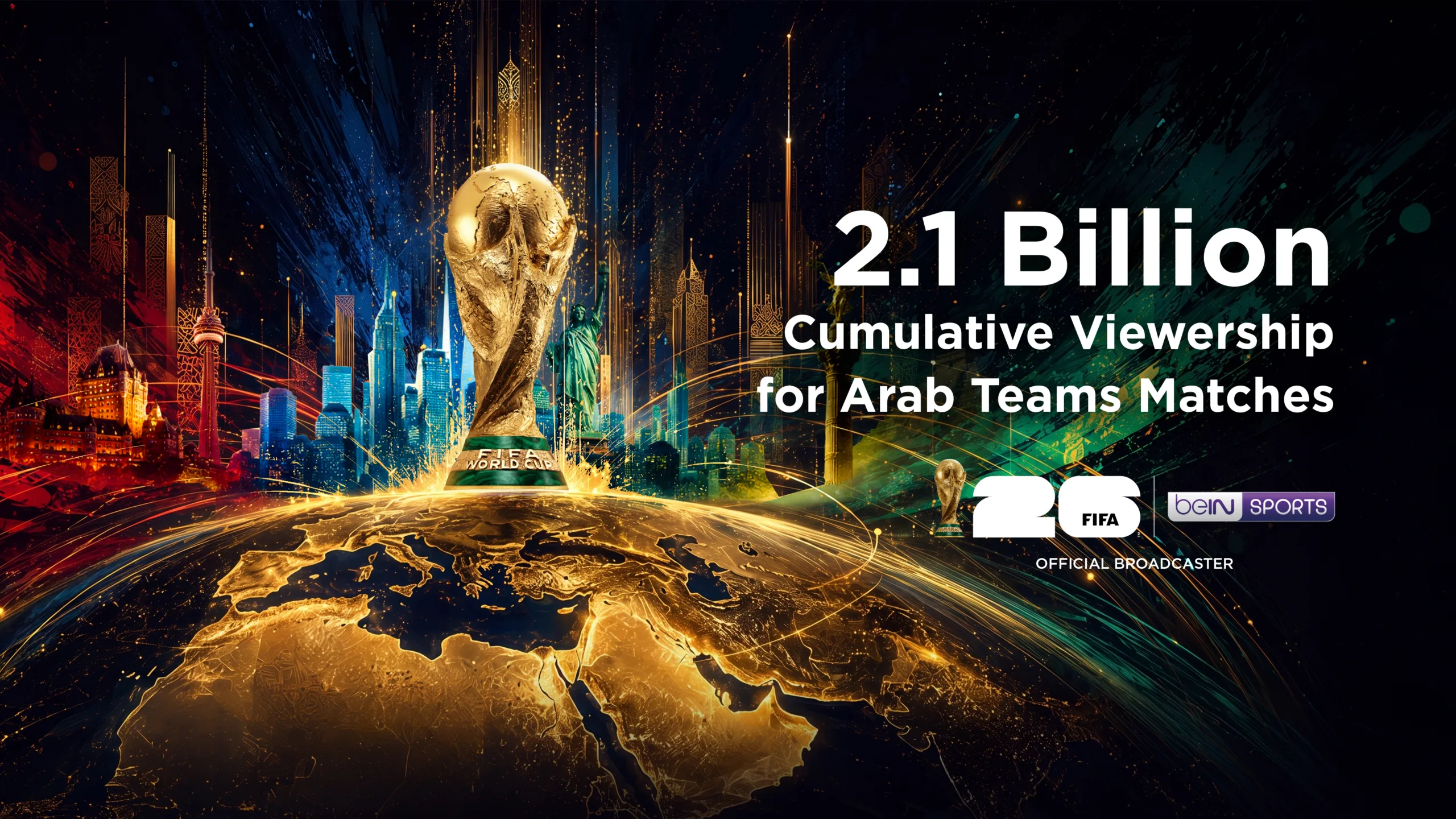
Eight Arab nations competed at the expanded tournament, and across 29 matches involving those teams, cumulative viewership exceeded 2.1 billion, according to independent measurement by Ipsos commissioned by beIN SPORTS, the exclusive rights holder across 24 MENA markets.
Egypt’s Round of 16 tie against Argentina on July 7 was the most-watched match of any Arab team in the tournament’s history. Leading 2-0 with 12 minutes remaining before falling 3-2, the Pharaohs drew 192.6 million viewers at a 19:00 MECCA kick-off.
In Egypt itself, 94 per cent of the adult population watched the match. It was the country’s first-ever appearance in the last 16, reached after a first World Cup victory against New Zealand (3-1) and a knockout win over Australia watched by 157.1 million.
Morocco’s quarter-final against France in Boston, which kicked off at 23:00 MECCA on July 9, attracted 151.6 million viewers, including 97 per cent of Morocco’s adult population.
The Atlas Lions became the first African and Arab team to reach back-to-back World Cup quarter-finals, having been semi-finalists in Qatar in 2022. Their run included a last-32 win over the Netherlands watched by 81.1 million and a quarter-final passage over co-hosts Canada seen by 149 million.
Egypt and Morocco’s simultaneous presence in the Round of 16 was itself a first: no two Arab nations had reached the knockout stage at the same tournament before.
Elsewhere in the group stage, Algeria progressed to the last 32, where 123.1 million viewers rose for a 06:00 MECCA kick-off to watch their tie with Switzerland.
Qatar claimed their first-ever World Cup point by holding Switzerland, who would reach the quarter-finals. Jordan, at their first tournament, scored in all three group matches, including against Argentina, a game watched by 65 million. Even Saudi Arabia’s 03:00 MECCA group fixture drew 44.9 million.
The 23 group-stage matches involving Arab teams drew 1.25 billion viewers combined, an average of more than 54 million per match. The six knockout ties lifted that average considerably, drawing 854 million viewers at an average of more than 142 million per match.
“This has been a historic FIFA World Cup TM for Arab football, and it has been an honour to bring every moment of it live and exclusive to fans across the region. A record eight Arab nations, Egypt’s first Round of 16, and Morocco’s back-to- back quarter-finals are achievements that belong to the entire region – and the record audiences that followed them tell their own story about the passion of our fans and the connection they share with their national teams. These are moments that will inspire a generation across the region, and we are proud that fans experienced every one of them on beIN,” Mohammed Al-Bader, Managing Director of beIN Channels – MENA said in a statement.
With matches kicking off at 01:00, 04:00 and 06:00 MECCA due to the North American host time zones, the sustained pre-dawn audiences above 100 million reflect the scale of regional engagement with Arab teams competing at this level.