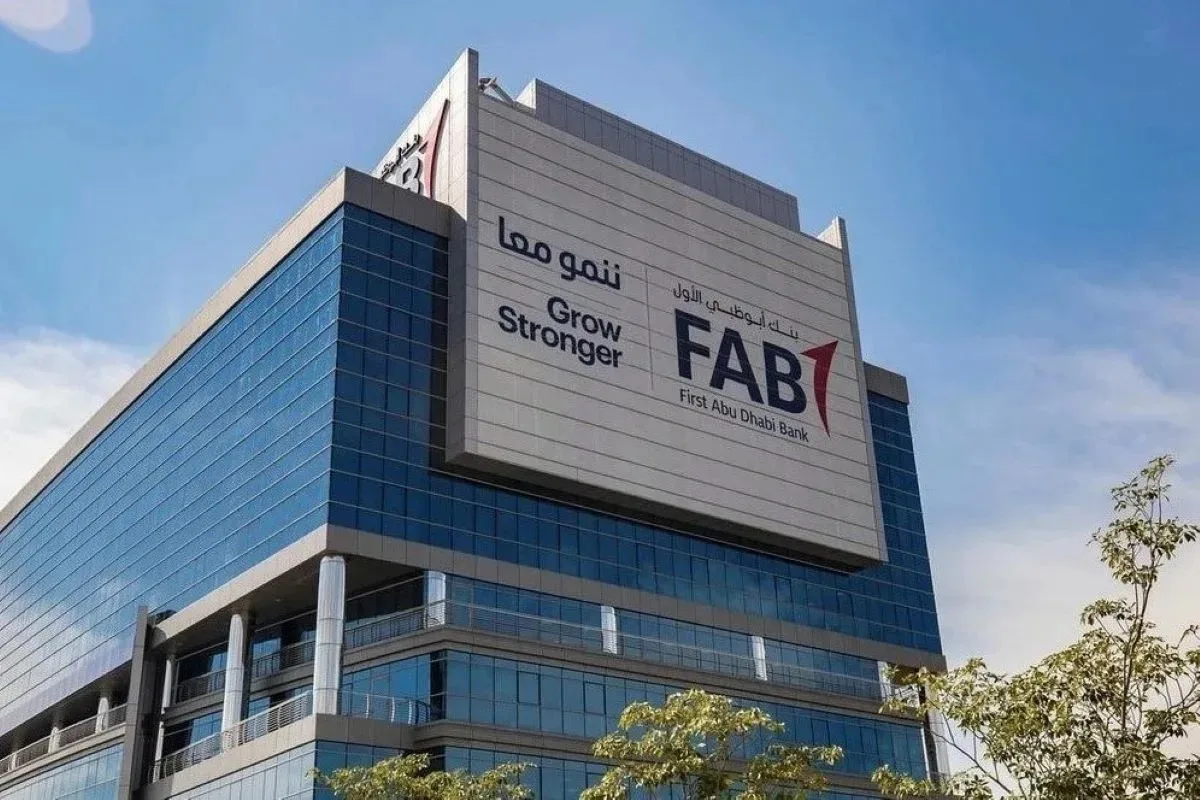
First Abu Dhabi Bank reported a net profit of AED 10.73 billion for the first half of 2026, up 1% from the same period last year, with tangible return on equity holding above the group’s medium-term guidance at 18.5%.
Operating income rose 7% year-on-year to AED 19.50 billion, while pre-tax profit climbed 3% to AED 13.20 billion. Net interest income was the main driver, growing 14% to AED 11.48 billion on the back of higher business volumes and improved margins. Non-interest income held steady at AED 8.02 billion, accounting for 41% of total operating income.
The second quarter was particularly strong. Pre-tax profit reached AED 7.08 billion, up 16% from Q1 and 6% from the same quarter in 2025. Operating profit for Q2 exceeded AED 8 billion, rising 11% from the prior quarter.
The balance sheet expanded steadily. Total assets grew 2% since the start of the year to AED 1.41 trillion at end-June. Loans and advances rose 7% to AED 661 billion, supported by broad-based growth across sectors, while customer deposits edged up 1% to AED 853 billion.
All three major rating agencies, Moody’s, Fitch, and S&P, reaffirmed the group’s credit rating at AA- or equivalent with a stable outlook during the period.
Group CEO Hana Al Rostamani said the results reflected the bank’s scale, diversification, and consistent execution of its strategy. “These results reflect the strength of our customer base and the depth of trust we have built in our home market and across our international network,” she said.
Group CFO Lars Kramer said the second quarter had delivered record results, supported by margin improvements, strong client activity, and solid performance across the investment portfolio. He added that the bank had continued building management overlays, reflecting a prudent approach to risk in a shifting operating environment.
On the sustainability front, FAB said it had facilitated AED 395 billion in sustainable and transition finance to date, reaching 79% of its AED 500 billion target for 2030. The group also said it was scaling AI across its operations, citing productivity gains of more than 20% and a reduction in manual effort of 70%–80% across key business lines.