

Artificial intelligence (AI) is changing the way parents think about their children’s future. From the jobs they might pursue to the skills they will need, families in the UAE are considering how to prepare children for a world that is becoming increasingly challenging to predict.
But technology is only part of the conversation. The cost of raising children, job security, education and access to parenting support are also among concerns weighing on family decisions.
For Ashleigh Lloyd, Co-Founder of Baby & Kids Expo and a mother of two, these are questions she encounters both as a parent and through her work with families.
“Families today are increasingly conscious of the future, particularly when it comes to financial security, job stability and the kind of world their children will grow up in,” Lloyd told Lana in an interview.
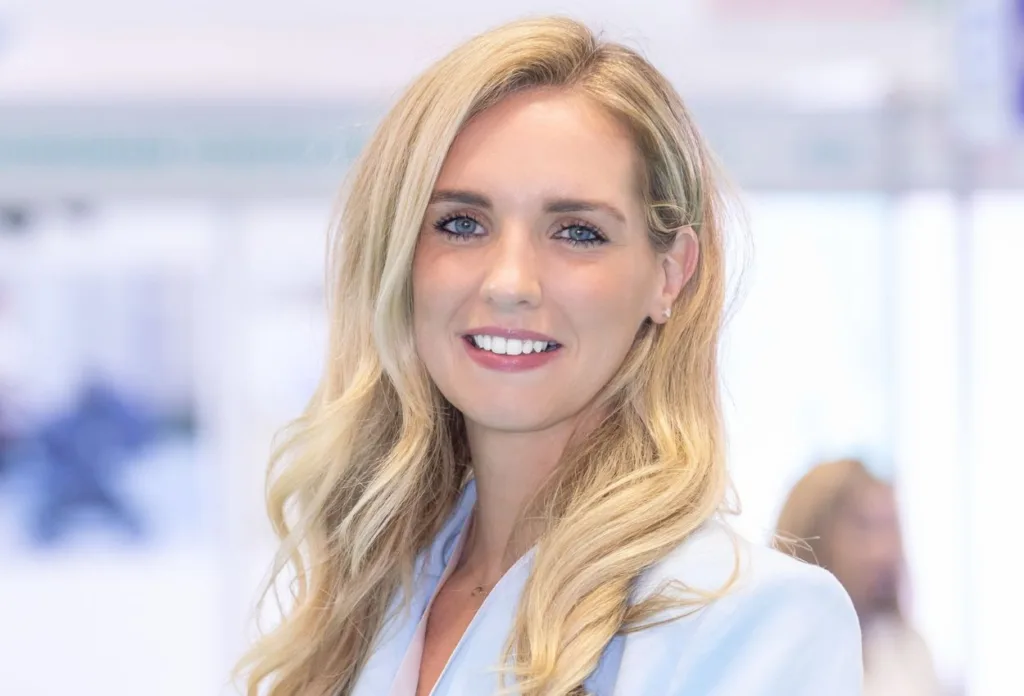
“Concerns around AI, the changing job market and environmental sustainability are all part of that wider conversation, and it’s understandable that these factors may influence how people think about starting or growing a family.”
Those concerns include the prospect of AI replacing certain jobs, as well as questions about the environmental impact of the technology, including the freshwater used by data centres.
Yet Lloyd does not believe parents should feel they need to have every aspect of their children’s future worked out before making decisions about family life.
“Every generation has faced uncertainty, albeit in different forms. What matters is ensuring that families feel informed, supported and confident in navigating the future, rather than feeling that they have to have everything figured out.”
For her, the focus is on ensuring parents have access to information, people they can turn to and services that respond to their needs. “Through platforms like Baby & Kids Expo and our summits, including the Early Learning Summit, our aim is to help families feel better equipped and more confident about the future they’re building for their children,” she added.
What will the job market look like when today’s children grow up?

It is a question that is difficult to answer, particularly when technological change is already affecting how people work and learn. Lloyd said parents were thinking about what AI could mean for their children’s education and employment prospects, but also about its impact on childhood itself.
“As a mum of two myself, one of the biggest questions on my mind is what the world will look like for our children by the time they reach adulthood,” she said. “Technology is evolving so rapidly that it can sometimes feel challenging to keep up, let alone understand how to set the right boundaries for our children.”
Screen time, online safety and the development of social skills are among the subjects she said parents were discussing.
“Many parents share concerns around screen time, online safety and whether their children are developing the social skills, resilience and emotional intelligence they’ll need as they grow,” she said, adding that the changing job market was another consideration.
“There’s also the question of what the future job market will look like and which skills will be essential for success in a world where AI is becoming increasingly integrated into everyday life.”
However, Lloyd is not opposed to children using technology. She believes AI can create opportunities for them to learn, explore interests and develop skills.
“It’s important not to approach technology with fear. It offers incredible opportunities for children to learn, explore and develop new skills, and it will undoubtedly play a significant role in their future.”
What matters, she said, is making sure technology does not replace the experiences and relationships children need as they develop.
“For me, the key is finding the right balance, embracing the benefits of technology while ensuring that human connection, creativity and real-world experiences remain central to their development.”
That balance, becomes more important when parents themselves are learning how to navigate technologies that did not exist when they were children.
“The reality is that none of us have all the answers, and that’s perfectly okay. What parents truly need is access to trusted advice, a supportive community and the confidence to make decisions that feel right for their own families.”
Preparing children for jobs that may not yet exist
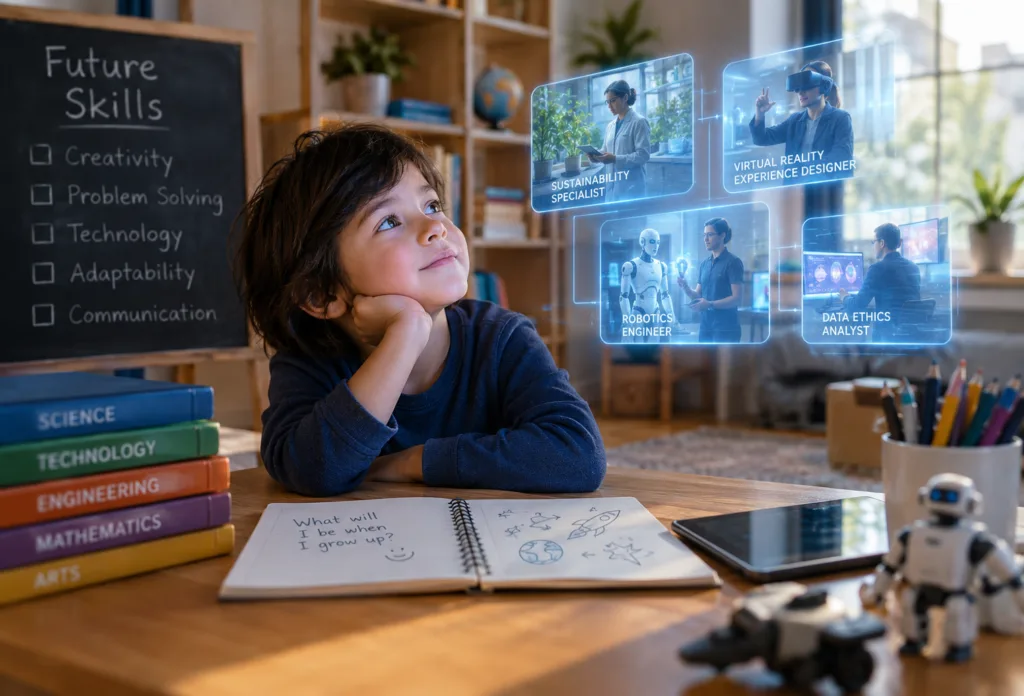
For many parents, thinking about their children’s future means considering schools, qualifications and eventually careers. But Lloyd believes the conversation needs to begin much earlier.
“AI is encouraging us, as parents, to consider a much bigger question: how do we prepare our children for a future we cannot fully predict?”
She said that while academic achievement and career planning mattered, the experiences children had before entering school deserved attention.
“When it comes to our children’s education, it’s natural to focus on schooling, academic achievement and eventually choosing the right career path. However, with the world evolving so rapidly, it’s equally important to consider the foundations we build long before a child even enters a classroom.”
This is one of the reasons the Early Learning Summit was introduced as part of Baby & Kids Expo Dubai’s 2026 programme. Lloyd said early learning was sometimes understood simply as preparation for school, when it was also about how children develop, learn and respond to the world around them.
“It’s about understanding how children develop, how they learn best and how the experiences and opportunities we provide during their early years can shape the individuals they become.”
The summit focuses on childhood education and development, bringing educators, parents and other industry participants into the same discussion. For Lloyd, the rise of AI is also an opportunity to reconsider what children should gain from education.
“While AI may transform the world our children grow up in, it also presents an opportunity to rethink what we want education to achieve,” she said, adding that her view is that education should do more than help children respond to changes in technology.
“For me, the goal isn’t simply to prepare children to adapt to the future, but to nurture confident, capable and compassionate individuals who have the skills and mindset to help shape it.”
Parents are turning to AI for answers. But how far should they trust it?

AI is not just something parents are thinking about for their children’s future. It is increasingly becoming a tool they use themselves. Questions about child development, family routines and unfamiliar parenting situations can now be put to AI systems that provide answers within seconds. Lloyd understands the appeal.
“Parents are naturally turning to the tools available to make everyday life a little easier, and AI is increasingly becoming part of that,” she said.
“Parenting can feel overwhelming, particularly when navigating something for the first time, so having a tool that provides immediate answers or helps explain unfamiliar topics can be incredibly reassuring.”
But a quick answer is not necessarily the right answer for a particular child.
“However, it’s important to recognise the difference between having access to information and understanding whether that information is right for your child or family,” she said, adding parents should be especially careful when seeking advice about health, development and decisions affecting their children.
“Every child is different, and parenting rarely comes with a one-size-fits-all approach. When it comes to health, development or important family decisions, as a mum, I would always turn to qualified professionals for guidance rather than relying solely on AI.”
That does not mean parents should avoid AI altogether.
“For me, AI can be a valuable starting point, but it should never replace our instincts as parents, the expertise of professionals or the reassurance that comes from connecting with other parents who understand what we’re going through.”
Lloyd said parents already faced an enormous volume of information, much of it coming from social media, where advice could be contradictory. “You can find hundreds of opinions online, particularly on social media, and sometimes the advice can be conflicting or overwhelming.”
“As a mum, I understand how valuable it is to be able to speak directly to someone you trust, ask questions and get advice that’s relevant to your own child. That’s one of the reasons behind Baby & Kids Expo. We bring together healthcare professionals, educators, parenting experts and brands, alongside expert-led talks and practical workshops, so parents can access trusted guidance in one place and leave feeling more informed, reassured and confident in the decisions they make for their families,” she added.
AI could help parents organise information and manage tasks, but it could also become another source of pressure if families felt they had to follow every recommendation.
“We already live in a world filled with information, opinions and expectations about what it means to be a good parent. If AI becomes another source of advice telling parents what they should be doing, it could leave some feeling even less confident in their own decisions.”
She sees a role for the technology in helping parents with planning and household responsibilities.
“Family life involves an enormous amount of planning, decision-making and balancing responsibilities, so if AI can simplify everyday tasks or make information more accessible, that can be a real positive.”
But she draws a distinction between making family life easier and treating parenting as something that can be managed entirely through technology.
“For me, what’s important is remembering that parenting isn’t something we can optimise or get perfectly right. Children need love, connection, boundaries and the freedom to learn through experience. Those are things that technology simply cannot replace.”
The financial decisions behind starting a family

While AI raises questions about the future, the costs associated with raising children are a more immediate consideration for many households. Childcare, healthcare, education and everyday expenses are among the commitments couples weigh when deciding whether to start or expand a family.
“Financial security naturally plays an important role in decisions about starting or expanding a family,” Lloyd said. “Raising children comes with significant costs, from childcare and healthcare to education and everyday living expenses, so it’s understandable that parents are thinking carefully about their future and the choices available to them.”
Job uncertainty adds another consideration, although Lloyd said its impact depends on each family’s circumstances.
“While the impact of rising living costs and job uncertainty will vary depending on each family’s circumstances, I believe the focus should be on helping parents feel informed and confident in the decisions they make.”
She said parents needed opportunities to explore the products and services available to them, particularly when making decisions that affected household budgets.
“That’s one of the things we aim to achieve through Baby & Kids Expo Dubai, bringing together a range of brands, services and experts to help parents explore options that suit their family’s needs and budget. Ultimately, it’s about ensuring families feel supported and empowered to make the choices that are right for them.”
Raising children takes more than childcare and education

Beyond education and healthcare, children need opportunities to play, socialise and grow, supported by trusted guidance and strong communities. Image: Canva
For Lloyd, the needs of families extend well beyond finding a school or arranging childcare. Parents also want children to have opportunities to play, form friendships, develop confidence and explore their interests.
“As a mum, I think we quickly realise that raising a child goes far beyond meeting their basic needs,” she said. “Of course, health and education are important, but parents are also thinking about how their children play, socialise, build confidence, develop creativity and grow as individuals.”
Those needs change as children grow, and so does the advice parents seek. “It’s about giving them the best possible start in life, and as children grow, their needs and priorities naturally evolve.”
She said access to other parents and professionals could make a difference, particularly when families encountered situations they had not experienced before. “I also believe families are increasingly looking for opportunities to connect with other parents and access guidance from experts who understand the different stages of parenthood.”
“Parenting can sometimes feel isolating, especially when navigating new experiences or making important decisions, so having a supportive community and access to trusted advice can make a real difference.”
Lloyd said the challenge was not necessarily that services were unavailable in the UAE. “It’s knowing where to find the right support that’s most relevant to your family at each stage of your journey.”
A family preparing for the birth of a child may have questions about healthcare and infant care. By the time the child enters school, those questions may concern learning, friendships and development.
“The questions a parent has during pregnancy are very different from those they face when their child starts school or approaches the pre-teen years.”
She said bringing service providers and parents together could make it easier to find information suited to each stage.
“This was one of the reasons that inspired us to create the Baby & Kids Expo. We wanted to bring everything together in one place, so families could connect directly with trusted healthcare providers, educators, parenting experts, brands and family-focused services, rather than having to search for everything individually,” Llyod said.
“At the Expo, parents can speak directly to experts, attend informative talks and practical workshops, discover products and services, and ask the questions that matter to them. It’s about creating an environment where families can access reliable information, explore their options and feel more confident in the decisions they make for their children,” she added.
Finding a support network when family lives abroad

For expatriate parents, raising children can also mean doing so without grandparents, siblings or other relatives nearby. Lloyd, who lives in Dubai, said she understood how much families could miss that support.
“The community becomes particularly important when you’re raising a family away from your wider support network,” she said. “As a mum in Dubai, I understand how much you can miss having grandparents or family nearby to share the experience with, or simply to turn to when you need a little help.”
Schools, friendships and activities involving children can become places where parents form relationships and exchange advice.
“I think families increasingly build those connections through schools, friendships and shared experiences.”
Lloyd said this was another reason the expo aimed to connect families with one another, rather than focusing solely on products or services.
“That’s also something we want to encourage through Baby & Kids Expo, creating a space where parents can connect, learn from one another and feel part of a wider community, because no family should feel they have to navigate parenthood alone.”
She said being able to speak directly to professionals and other parents was particularly valuable in an environment where online advice could be difficult to assess. “I understand how valuable it is to be able to speak directly to someone you trust, ask questions and get advice that’s relevant to your own child.”
From babies to pre-teens: Why the expo has changed
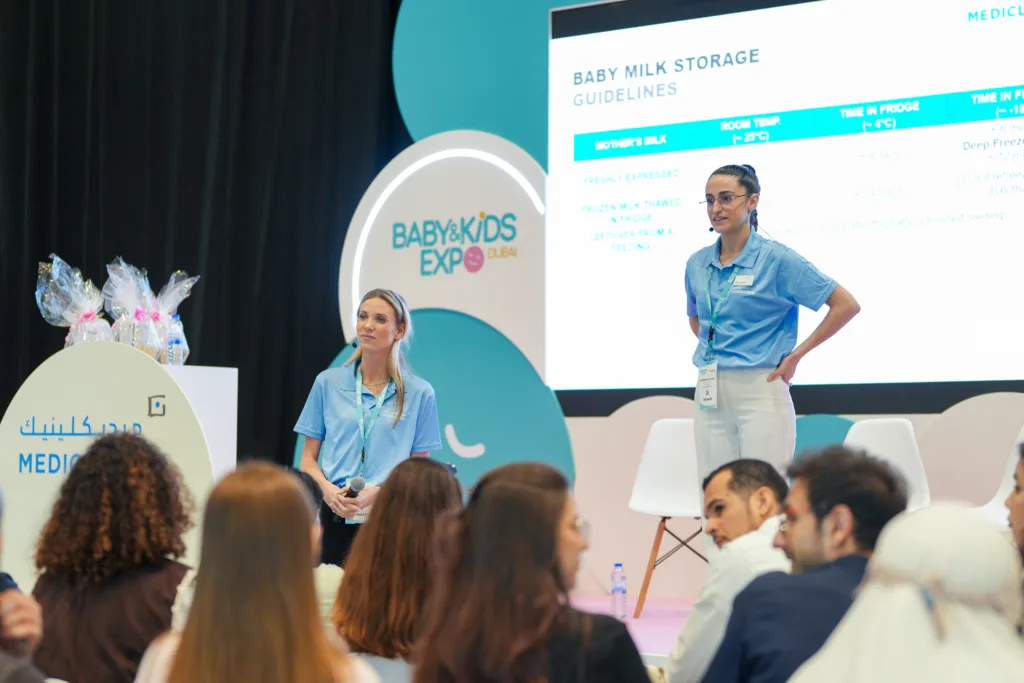
The changing needs of parents have also influenced Baby & Kids Expo Dubai itself. The event, previously known as The Baby Expo, has expanded beyond pregnancy, babies and toddlers to cover children through to the pre-teen years. The decision followed feedback from visitors and exhibitors, as well as post-show surveys, according to Lloyd.
“The growth of the Expo reflects something I’ve experienced myself as a mum: just when you feel you’ve figured out one stage of parenting, your child moves into the next, and suddenly you’re navigating a whole new set of questions,” she said.
“The products you need change, the advice you’re looking for changes, and the challenges you face as a parent evolve too.”
She said the feedback showed that visitors were looking for information on education, health and development, not only products for babies.
“Through feedback from our visitors, exhibitors and post-show surveys, it became clear that parents wanted more than products for babies. They wanted support with early learning, education, health, development and the challenges that come with every new stage of childhood.”
The event’s scope now covers pregnancy, early learning, healthcare, education, play and the pre-teen years.
“That’s why we evolved from The Baby Expo to The Baby & Kids Expo – covering everything from pregnancy and early learning to health, education, play and the pre-teen years.”
For its 2026 edition, organisers projected more than 17,000 visitors, over 450 brands and 150 speakers. The programme also expanded to include the Early Learning Summit and the She Leads Summit, alongside the returning NextGen: Industry Leaders Summit.
The She Leads Summit focuses on women’s leadership, career growth, wellbeing and navigating motherhood, while the Early Learning Summit examines childhood education and development.
Lloyd said the additions were intended to bring discussions about family life into the event alongside its products and services.
“Together with the returning NextGen: Industry Leaders Summit, these platforms allow us to address wider conversations that matter to families, while bringing together experts and industry leaders to explore how we can better support them.”
She believes there is value in bringing together the people raising children, those providing services and professionals working in education.
“Families are the people experiencing the needs and challenges first-hand. Businesses are developing the products, services and solutions that can help. And education professionals bring such important knowledge about children’s development, learning and future opportunities.”
The aim, she said, was to create opportunities for discussions, partnerships and cooperation between those groups.
“We want the Expo to be a place where connections lead to something meaningful, whether that’s a new partnership, a new idea or a better outcome for a child.”
What does the UAE’s Year of the Family mean for parents?
The discussion about how families can be supported comes during the UAE’s Year of the Family 2026. For Lloyd, the initiative provides an opportunity to look at how parents access healthcare, education, wellbeing resources and community networks.
“The UAE’s Year of the Family is an important opportunity to bring greater attention to the needs and wellbeing of families,” she said. “From my perspective, supporting families means looking at the bigger picture, including access to trusted healthcare, education, wellbeing resources and community networks.”
She said families did not all require the same kind of support, and their needs changed as children moved through different stages of development. “It’s also important to recognise that every family’s journey is different, and their needs evolve as their children grow.”
Lloyd believes businesses, educators, healthcare providers and community organisations all have a part to play.
“Businesses, educators, healthcare providers and community organisations all have a role to play in making information and support more accessible. Through Baby & Kids Expo, we hope to contribute to this conversation by bringing families and the wider industry together to share knowledge, build connections and explore how we can better support the next generation.”
For parents, the future will continue to bring questions about technology, education, employment and the costs of family life. Lloyd’s view is that access to information, professional advice and support networks can help families make decisions while technology continues to change.
And while AI may increasingly become part of household routines, she believes its role should be to support parents, not replace the relationships at the centre of family life. “Ultimately, the hope is that AI becomes a tool that gives parents more time and headspace to enjoy being with their children, rather than another thing they feel they need to keep up with,” she concluded.