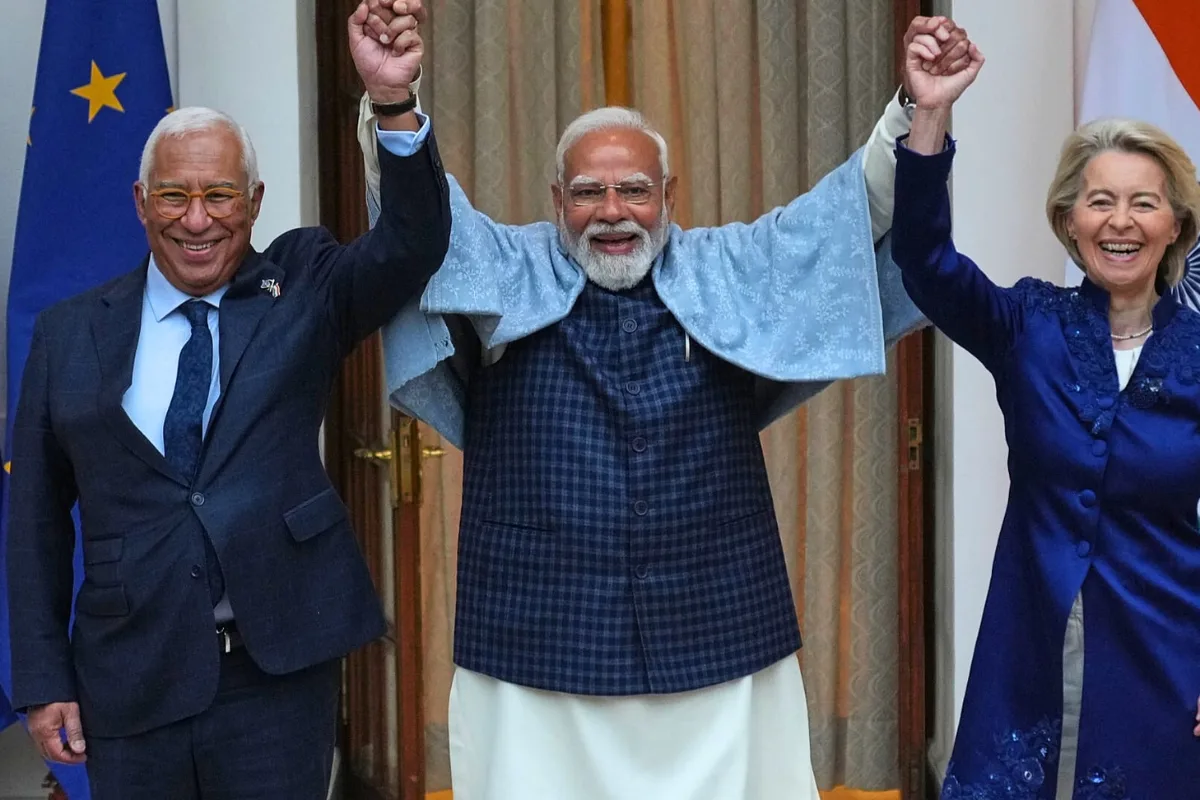
India has officially announced that it has reached a comprehensive free trade agreement with the European Union, sealing what leaders on both sides describe as a “historic” deal that crowns nearly two decades of negotiations and creates a free‑trade zone of around two billion people.
Indian Prime Minister Narendra Modi and European Commission President Ursula von der Leyen celebrated the pact as the “mother of all deals,” noting that together, India and the EU account for approximately 25% of global GDP and roughly one-third of world trade.
Under the agreement, India will significantly reduce tariffs on European cars, machinery, and a range of agricultural and alcoholic products, while gaining broader access to the EU market for Indian exports, including textiles, gems and jewellery, leather goods, and services.
The two sides have concluded the political negotiations, and the text now goes to legal “scrubbing,” expected to take around five to six months, after which the deal will be formally signed and then enter into force, likely within about a year.
The agreement follows a series of recent trade pacts by both parties, and is seen as part of a broader strategy by India and the EU to diversify trade partnerships amid global tariff tensions and shifting relations with Washington and Beijing