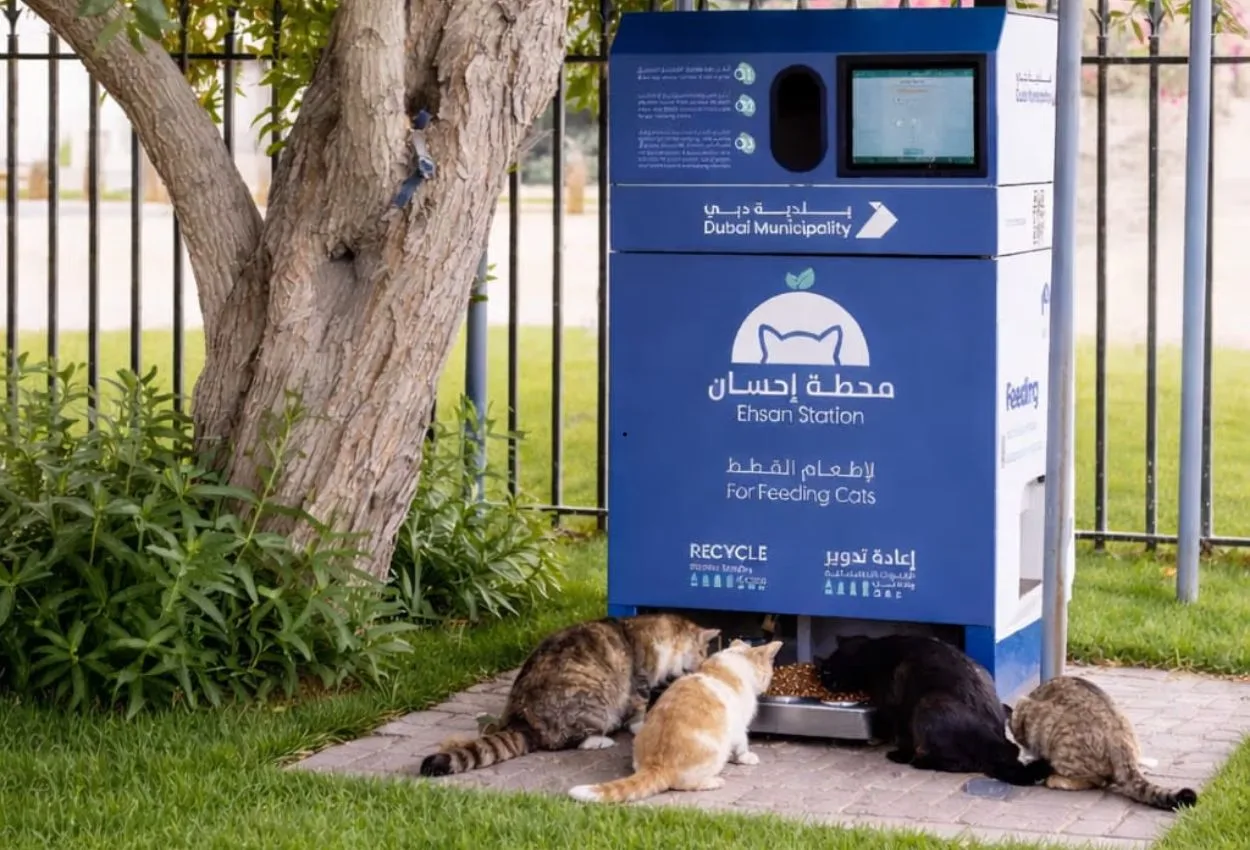
Dubai Municipality has launched the ‘Ehsan Stations’ initiative, deploying 12 AI-powered devices across the emirate to feed stray animals in a move described as the first of its kind in the region.
The stations, which have been designed and manufactured in the UAE, are intended to manage stray animal populations through technology while reducing the practice of random feeding in public spaces. Ten units will be installed in public parks, with two located within facilities operated by Dubai Holding.
“The launch of ‘Ehsan Stations’ for feeding stray animals, including cats and others, reflects Dubai Municipality’s commitment to promoting humane and civilised values across the emirate, foremost among them compassion and animal welfare. The initiative also supports efforts to preserve ecological balance and advance sustainable practices that reinforce Dubai’s position as one of the world’s most attractive, progressive, and liveable cities. Through these stations, Dubai Municipality is introducing an innovative approach that combines provision of food with more effective management of stray animal populations, while also addressing random feeding practices that can lead to environmental, health, and community-related challenges,” Dr. Naseem Mohammed Rafee, Acting CEO of the Environment, Health and Safety Agency at Dubai Municipality said in a statement.
Dubai’s Ehsan Stations: How the technology works
She added that the initiative “supports efforts to preserve ecological balance and advance sustainable practices that reinforce Dubai’s position as one of the world’s most attractive, progressive, and liveable cities.”
Each station relies on an AI-based system that identifies stray animals, collects data on them, and dispenses food accordingly. The initiative also promotes recycling and is intended to bring greater order to how stray animals are fed across the city.
Random feeding practices have been identified by the municipality as a source of environmental, public health, and community concerns. By channelling feeding through the stations, officials say the initiative will contribute to public health protection, animal welfare, and biodiversity balance.
Dr. Naseem described the current rollout as a pilot stage, saying the stations would be “tested and evaluated, enabling Dubai Municipality to draw insights that will support further enhancement and development of the initiative.”
Dubai rolls out smart animal feeding devices in parks as part of animal welfare drive
The Ehsan Stations initiative sits within a wider set of programmes run by Dubai Municipality for the management of stray and free-roaming animals.
The municipality operates a temporary shelter that receives stray animals and provides them with care following collection. It also runs Trap–Neuter–Return (TNR) and Trap–Neuter–Vaccinate–Return (TNVR) programmes, under which cats and other stray animals are trapped, neutered, vaccinated where applicable, and returned to their original locations, provided they do not pose a risk to themselves or to members of the public. Some animals are made available for adoption through the Dubai Municipality website.
Alongside the management of stray animals, Dubai Municipality has called on residents who own pets to follow health best practices in caring for them, in particular when leaving home or travelling. The municipality has urged that animals be treated with care to ensure their safety and wellbeing.
Residents and members of the public are also encouraged to report concerns related to stray animals or negative practices by contacting 800900.
The Ehsan Stations initiative follows a separate announcement by Dubai Municipality of the ‘Fountains of Mercy’ project, which envisages 50 water fountains dedicated to birds and wildlife. Of those, 25 will be installed in urban areas and 25 in desert environments for the benefit of wild animals. The project is to be implemented using materials selected for durability and ease of maintenance, in line with environmental best practice.
Together, the two projects reflect the municipality’s stated aim of building a culture of compassion towards animals whilst maintaining Dubai’s standards as a city.