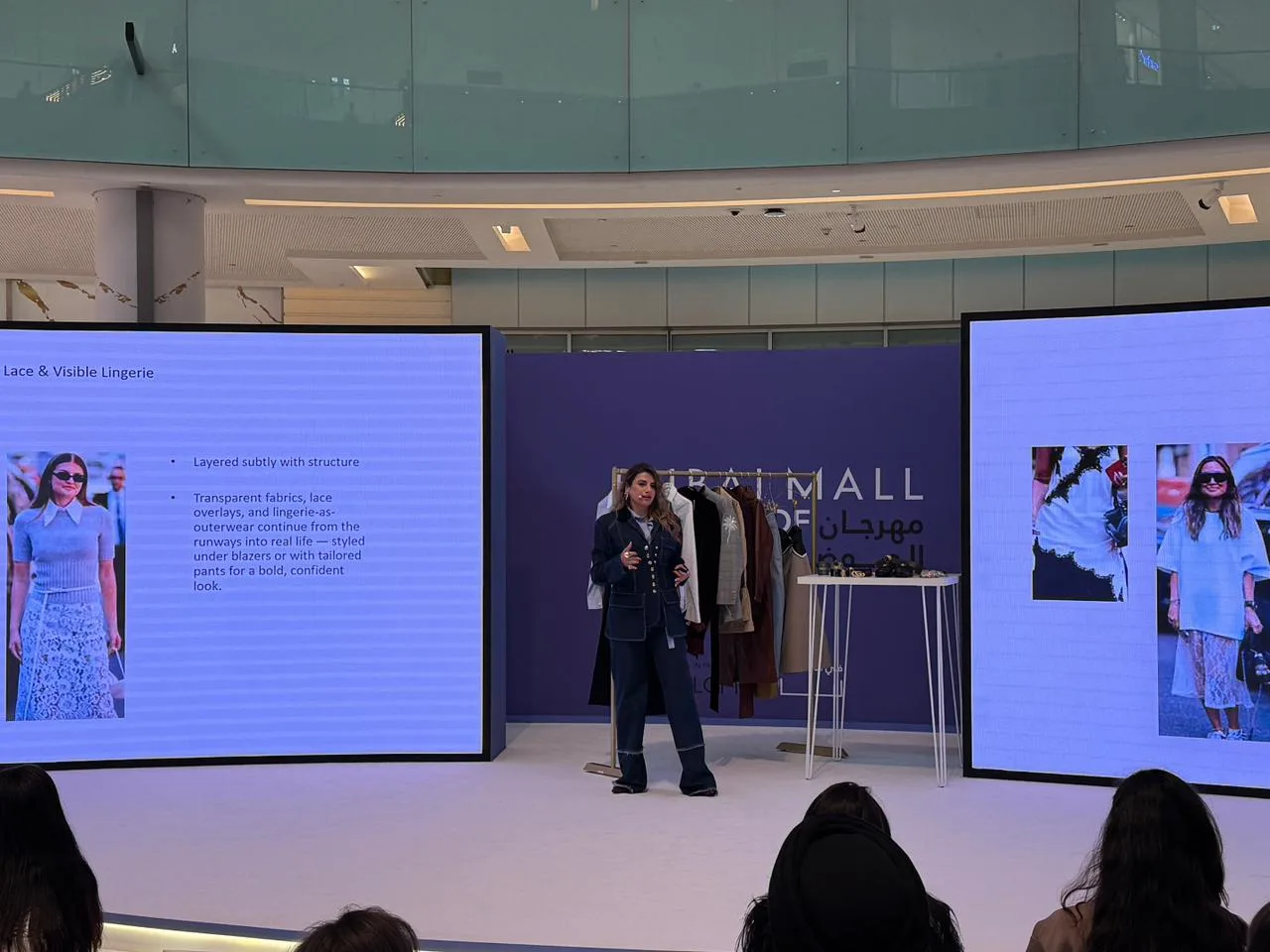
Amidst the high-voltage glamour of the inaugural Dubai Mall Festival of Fashion, where the conversation often revolves around haute couture and red-carpet fantasy, one session on Thursday afternoon struck a refreshingly practical chord. Titled “Runway to Real Life,” the masterclass led by digital creator and fashion influencer Dalia Al Ali offered a much-needed reality check, drawing a crowded audience eager to solve the industry’s oldest puzzle: how to wear the unwearable.
Taking the stage at the Grand Atrium, Al Ali bypassed the usual abstract talk of “inspiration” to tackle the mechanics of styling. Her session was built around the concept of translation—specifically, how to decipher the theatrical language of international runways and rewrite it for the streets of Dubai. For many in the audience, the disconnect between what is seen in Paris or Milan and what is wearable in the Middle East is vast, not just due to climate, but due to cultural nuance.
Al Ali’s approach was analytical yet accessible. She argued that street style is not about copying a runway look piece-for-piece—which often results in a “costume” effect—but about extracting the essence of a trend. Whether it is a silhouette, a color palette, or a texture clash, she demonstrated how these elements can be softened and integrated into a wardrobe that respects regional relevance.
A significant portion of the talk focused on the “Arabizing” of global trends. Al Ali highlighted the unique position of the regional fashionista who often navigates the fine line between modesty and modernity. She offered tangible examples of how sheer fabrics, cropped cuts, or avant-garde layering seen on European models can be adapted using local styling codes without losing their fashionable edge.
For the attendees, many of whom are aspiring stylists or content creators themselves, the session was a masterclass in pragmatism. By moving the conversation away from buying expensive items and towards styling them intelligently, Al Ali reinforced one of the festival’s emerging themes: that true style isn’t about exclusive access, but about personal interpretation.