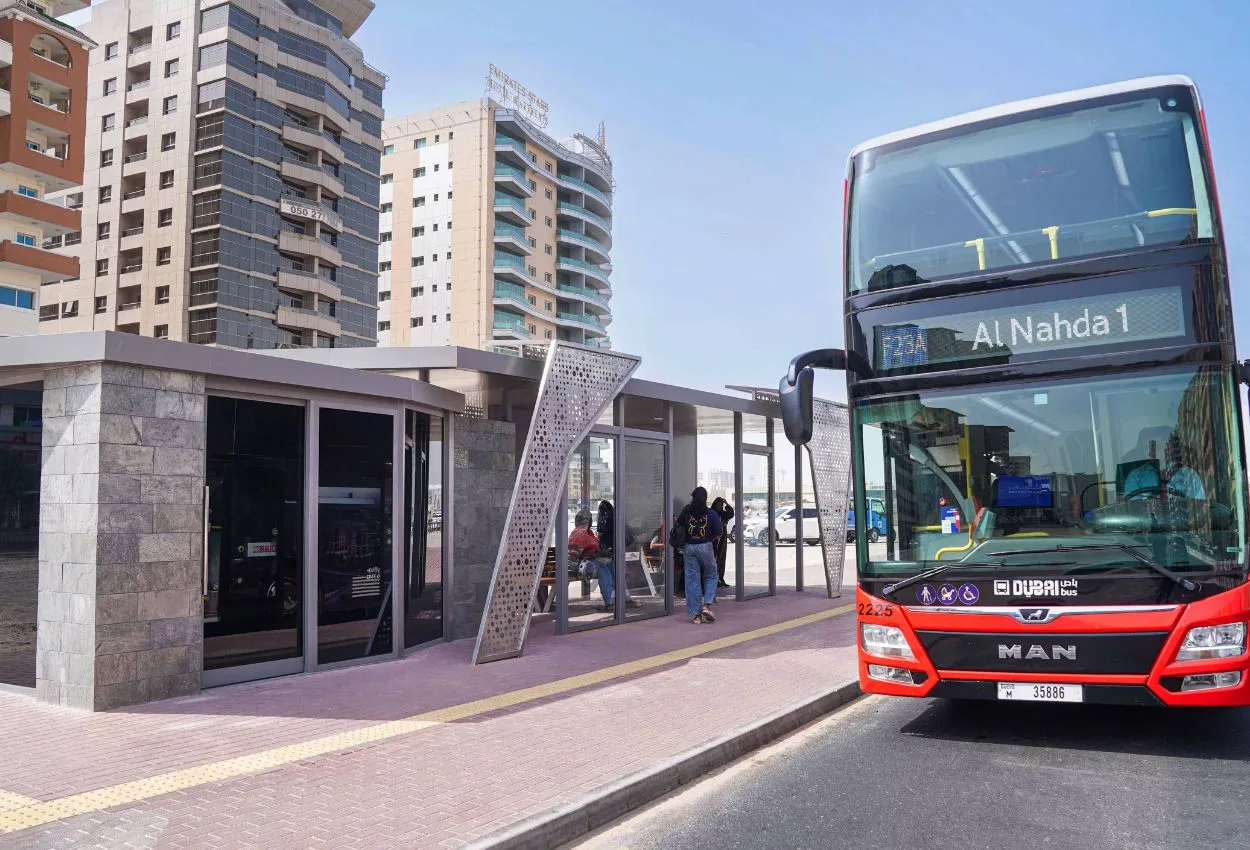
Dubai’s Roads and Transport Authority (RTA) has completed 595 public bus passenger shelters as part of a project to deliver 762 shelters across the emirate. The project has reached 89 per cent completion across all phases.
The shelters serve bus routes with some locations accommodating more than ten routes per shelter. The facilities are used by more than 192 million passengers each year.
“The new shelters represent a pivotal step in RTA’s efforts to develop an integrated urban environment that encourages residents and visitors to use public transport, improves quality of life, and promotes comfort and well-being. RTA is committed to providing modern, comfortable, and safe facilities that enhance the appeal of the bus network and meet the needs of Dubai’s growing population and urban expansion,” Mattar Al Tayer, Director General, Chairman of the Board of Executive Directors of the Roads and Transport Authority said in a statement.
RTA builds 595 bus shelters serving 192 million passengers annually in Dubai
“We were keen to ensure that the new shelters combine modern and aesthetic design with services that guarantee a better mobility experience, thereby reinforcing public confidence in the public transport network and supporting sustainability objectives, including emissions reduction. The shelters serve many bus routes, with some accommodating more than ten routes per shelter, which enhances network efficiency, reduces travel times, and increases reliance on public transport,” he added.
The authority identified shelter locations to meet the needs of areas with concentrations of residents, to address the operational requirements of public bus services, and to ensure integration with mobility options.
The authority classified the shelters into four categories based on passenger usage per day.
A stop is designated as primary when it serves more than 750 passengers per day, secondary when usage is between 250 and 750 passengers per day, basic when usage is between 100 and 250 passengers per day, and a boarding and alighting stop when it serves fewer than 100 passengers per day.
Primary shelters include an area with air-conditioning, alongside seating with shade and spaces for advertising. The shelters feature an information display screen showing the bus network map, schedules, headways, and information for passengers.
The design of the shelters complies with the Dubai Universal Design Code. The shelters provide spaces for wheelchair users in support of the My Community… A City for Everyone initiative, which aims to transform Dubai into a city that is accessible for People of Determination.
Al Tayer noted that the locations selected for the shelters were identified to meet the needs of areas with concentrations of residents and to address the operational requirements of public bus services.