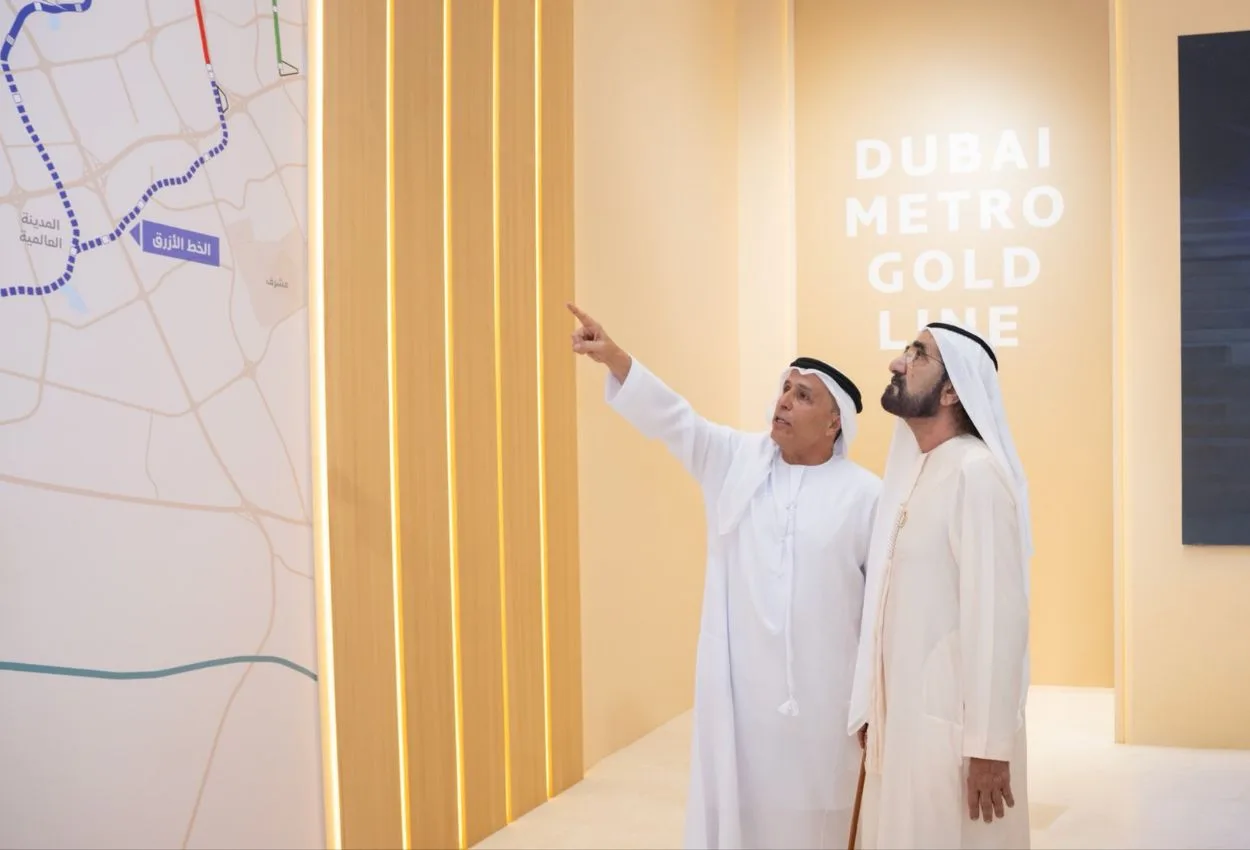
Dubai has unveiled what it describes as the city’s most extensive transportation project to date. The Dubai Metro Gold Line, will run across 15 areas of the city and is set for completion on September 9, 2032, at a cost of AED 34 billion ($9.25 billion approximately).
The announcement was made by Sheikh Mohammed bin Rashid Al Maktoum, Vice President and Prime Minister of the UAE and Ruler of Dubai via X.
“We are pleased to announce the largest transportation project in Dubai: a new 42-kilometre metro line. It will pass through 15 key strategic areas across the city, serve approximately 1.5 million residents, and strengthen connectivity to 55 major real estate developments currently under construction. The Gold Line project will cost AED 34 billion. It will increase the length of the Dubai Metro network by 35%, and is scheduled for completion on 9/9/2032. Our landmark projects to position Dubai as the world’s best city to live in are on track. Our future endeavours will not stop; rather, they will accelerate. Our plan is to build a better future for millions of people. We stand by our words and deliver on them.,” he said.
What is the Dubai Metro Gold Line?
The Gold Line is a 42-kilometre metro line with 18 stations. It runs from Al Ghubaiba in Dubai’s historic northern centre to Jumeirah Golf Estates in the south. It is the first metro line in Dubai to run fully underground.
The line will intersect with the existing Red and Green Lines and will enhance integration with Etihad Rail passenger stations in Meydan and Jumeirah Golf Estates.
The line covers 15 areas across the city and serves more than 55 development projects. It is projected to carry 465,000 passengers per day beyond 2040 and will benefit more than 1.5 million residents by that same year.
The Gold Line will also introduce a new mobility experience in Dubai through LOOPS, though further details on this element of the project were not disclosed at the time of the announcement.
The project carries an investment of AED 34 billion and is projected to deliver a cumulative return of 430 per cent after 20 years of operation, underlining the long-term economic case for the infrastructure.
Dubai Metro Gold Line route explained in Dubai Rail Network Plan 2032
The Dubai Metro Gold Line will run across southern and central Dubai in a wide loop, linking established urban centres with newer residential and leisure districts.
The line begins at Al Ghubaiba, where it intersects with the existing Green Line, before heading through Bur Dubai and Al Satwa toward Business Bay, where commuters can interchange directly with the Red Line – Dubai’s busiest metro corridor.
From there, the Gold Line passes through Al Merkadh and Dubai Hills before reaching Hadaeq Mohammed Bin Rashid.
One of the most significant stops along the route is Meydan, where the Gold Line will connect with the Etihad Rail passenger station, creating a link between Dubai’s urban metro network and the UAE’s national rail system.
Continuing along the route, the line passes through a string of newer master-planned communities. Stations serving Al Barsha South and Jumeirah Village Triangle will bring metro access to tens of thousands of residents in the areas.
The terminus at Jumeirah Golf Estates and Dubai Production City represents perhaps the most transformative element of the entire project.
Here, a major interchange hub will allow passengers to switch between the Gold Line, the Red Line, and Etihad Rail’s passenger services – effectively making this corner of Dubai a significant multi-modal transport junction.