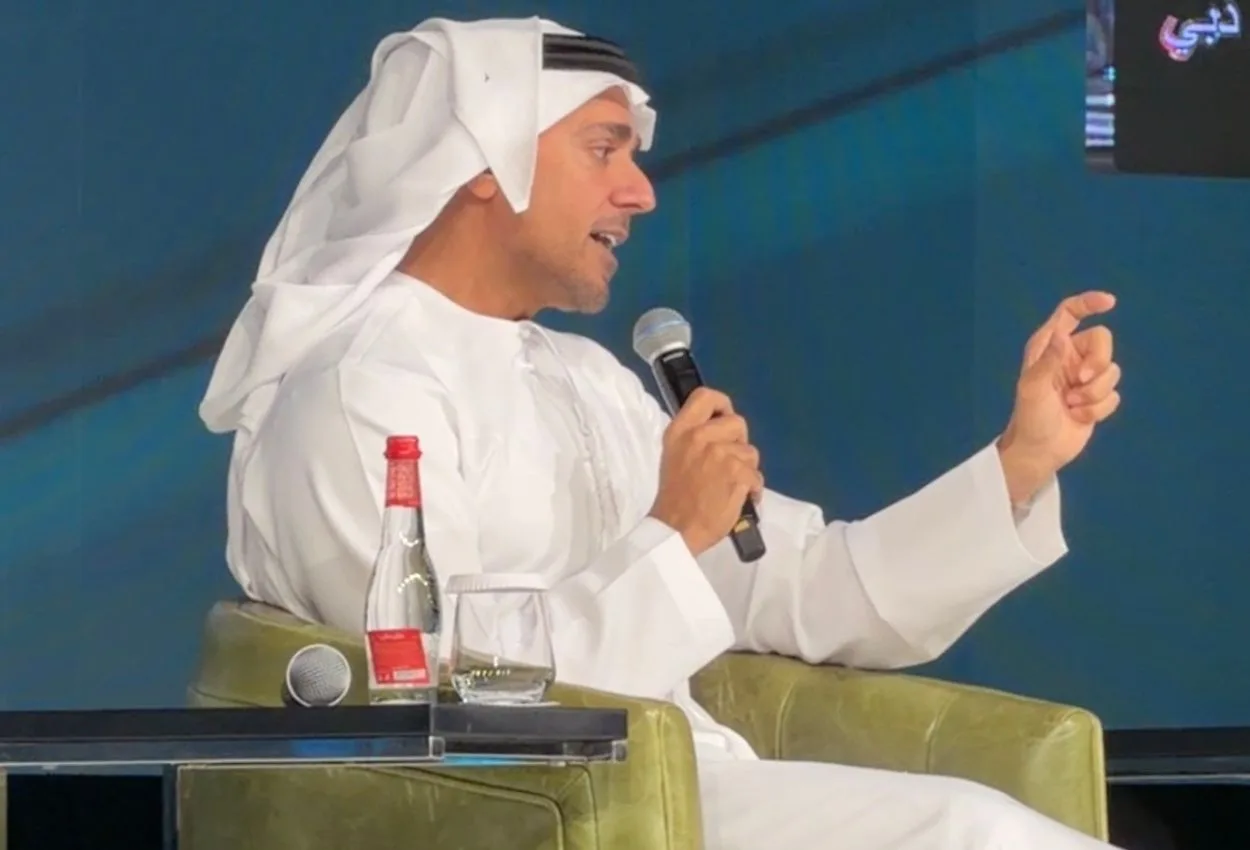
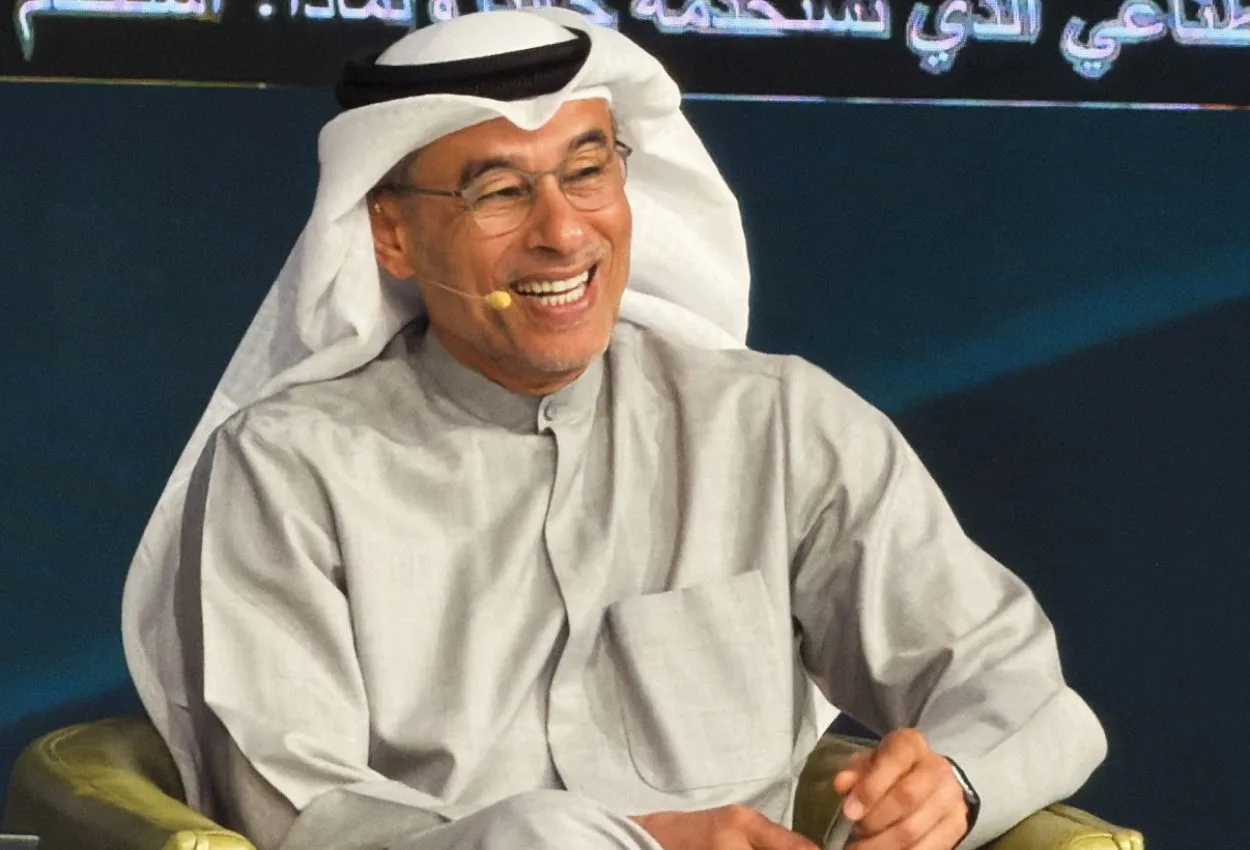
The UAE’s ability to navigate regional tensions and maintain business activity reflects the country’s record of responding to economic and geopolitical crises, according to Mohamed Alabbar, Founder and Managing Director of Emaar Properties.
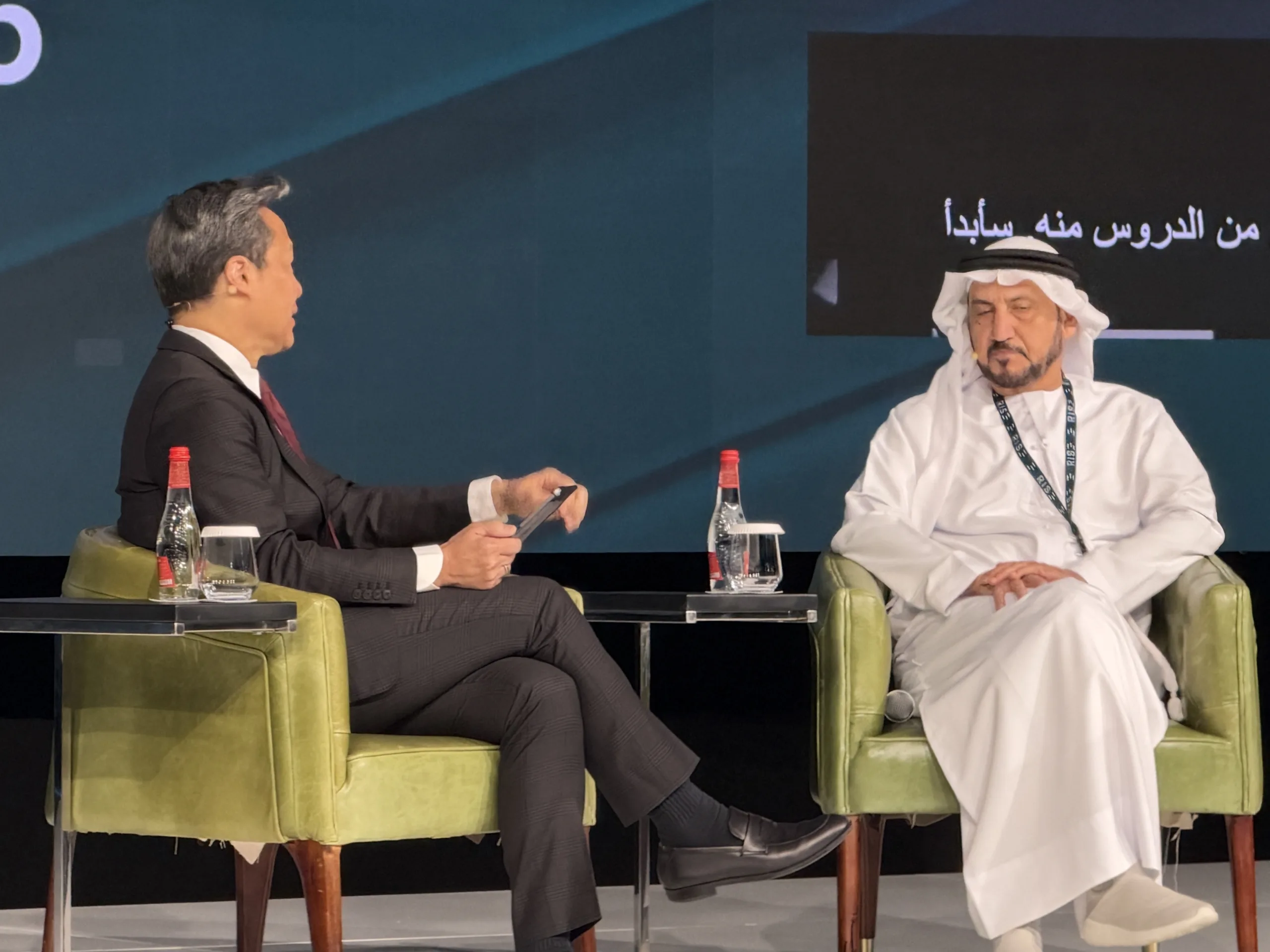
Speaking at RISE Summit 2026, Alabbar pointed to the country’s response to previous disruptions, including the 2008 financial crisis and COVID-19 pandemic, while highlighting the continued operation of businesses, schools and logistics networks amid the conflict.
“I think if I were to focus on my country, the UAE, I think the track record is very clear,” he said, referring to the 2008 financial crisis, September 11 and the COVID-19 pandemic as periods during which the country’s government, banking system and institutions had been tested.
“For me, that was unbelievable performance, and that’s a test of the system: how resilient it is, how it was built, how does it react?” he said, referring to the response during the pandemic.
Alabbar said businesses, restaurants, logistics networks and schools had continued operating during the conflict. “Business is rolling, growth is not too bad while we go through this situation,” he said.
Pointing to confidence among residents, he added: “Everyone I speak to, they are confident, they feel safe, their kids go to school, they feel that tomorrow will be good.”
Reflecting on crises throughout history, Alabbar recalled a conversation with a Jordanian politician about the Middle East’s religious history and said instability had affected countries worldwide. He referred to wars, hunger, political instability and natural disasters since the First World War, arguing that governments and businesses needed to prepare for disruptions.
“The truth, it’s never stable,” he said.
He suggested that crises lasting six months, nine months or a year could provide opportunities for organisations and governments to learn, collaborate and improve their systems.
Emaar’s AED170 billion backlog supports financial position
Turning to Emaar’s performance, Alabbar said the developer continued to benefit from its property backlog, customer payment collections and financial reserves amid changes in market conditions.
“Our backlog is about AED170 billion now, and so we’re pretty safe,” Alabbar said, adding customers continued to meet their payment commitments at levels comparable to 2025, with collections performing better on some days.
“Are people making their payment on time similar to 2025? And the answer, absolutely, is as good and some days better,” he said.
“I’m a public company, and I cannot lie about these numbers.”
Alabbar also revealed that property cancellations, which had doubled during the conflict, had since fallen below their 2025 levels, while Emaar continued to sell properties without offering discounts or changing payment terms. He said the company’s reserves, accumulated following four years of growth, provided capacity to navigate changes in property demand.
“We’ve got good reserves, and in our companies, we can wait,” he said.
Emaar cancellations fall below 2025 levels
Alabbar said Emaar typically sold around 4,000 residential units per month in 2025, with cancellations averaging approximately 600 units. During the conflict, cancellations increased to 1,200 units before declining to below 600.
“That number moved up cancellation to 1,200 units. Right now, it’s below 600 units,” he said, adding that the decline comes as buyers continue to make payments towards properties purchased for residential use or investment.
“I think customers are buying the most expensive product in their lifetime. You know, apartment or a house for you to stay in or for investment. It’s the most important decision,” he said.
He said the continuation of payments offered insight into customers’ commitment to their purchases. “When you look at that behaviour, I would say that the direction is good,” Alabbar added.
Although he acknowledged that sales volumes were below previous levels, he said Emaar’s financial position allowed it to manage a period of slower activity.
“Volume of sales are not as good as before,” he said. “We’ve got good reserves, and in our companies, we can wait.”
Emaar maintains property prices and payment terms
Alabbar said Emaar would continue its approach to property pricing despite reports of discounts being offered by some developers in Dubai. “At our level, we don’t give discount. We don’t change payment terms,” he said.
He explained that Emaar’s policy reflected its commitment to customers who had already purchased homes at agreed prices.
“Even if the sales is slower, to basically be fair to my customer who bought these apartments in this building, I cannot go and give 30% discount to the newcomer,” he said. “So we’re staying with it. We are still selling. We do okay.”
Alabbar said pricing strategies differed across the property market depending on developers’ debt levels, project locations and financial commitments. “I hear that some developers are giving good big discount, which is fine. They want to manage their cash flow. They have maybe higher debt,” he said.
However, Emaar’s reserves and payment collections allowed the company to maintain its existing terms, according to Alabbar. He also noted that the business had benefited from four years of growth, with annual growth rates of 20 to 30 per cent during that period.
Alabbar says Dubai property prices offer value against global cities
Discussing forecasts of a potential 5 to 15 per cent decline in Dubai property prices through 2027, Alabbar said the UAE’s property market should be viewed in the context of international real estate prices.
“When you look at the prices, I think we have to be fair that we look at the prices per square metre, per square feet in Dubai and in the UAE and compare it globally,” he said, citing Chicago, Singapore, London and Mumbai as markets against which Dubai property prices could be assessed.
“Our prices in the UAE are such a good deal, really such a good deal,” he said.
Alabbar also compared property development margins in Dubai with those achieved in Belgrade. “We build in Dubai, say if you build 1,000, we sell for 2,000. In Belgrade, we build for 1,000, and we sell for 4,000,” he said.
He noted that transaction volumes varied between markets and that future price movements would depend on conditions, individual developers and project locations.
Emaar Hospitality occupancy climbs to 60–65%
Alabbar also pointed to an improvement in Emaar’s hospitality operations, saying occupancy rates had been increasing. “Hospitality is moving upward, so our occupancy is moving upward in the right direction. So you’re close to 60-65%,” he said, describing the occupancy trend as a positive indicator for the business.
Alabbar said Emaar had spent the preceding four years recording growth and accumulating reserves, allowing the company to respond to fluctuations in market activity.
He recalled advice from Sheikh Mohammed about the importance of preparing for periods of slower business activity.
“There is winter and there is summer, there is day and there is night. So during the day, are you ready for the night? We should be ready for the night,” he said.
Noon records more than 200,000 daily deliveries
Beyond real estate, Alabbar pointed to the performance of e-commerce platform noon as another indicator of activity in the UAE economy. He said several million users visited noon’s application every day, enabling the company to assess consumption trends and purchasing behaviour.
“We’ve got a few million people that come to our app every day. We can really measure consumption: how long they stay on the app, what do they buy, how is it compared to last night, compared to last week,” he said, adding that noon’s logistics operations continued to process more than 200,000 deliveries daily.
“When we do over 200,000 deliveries a day, you need to understand that there is a lot of logistics behind everything, and the logistics look good,” he said.
Alabbar said the performance of noon’s logistics network, alongside Emaar’s customer payments and property backlog, provided indicators of continued business activity.
Alabbar sees investment potential in Syria
Alabbar also discussed his investment interest in Syria, pointing to its resources, population and potential for economic development. He revealed that he had visited Deir ez-Zor the previous week. “You see their rivers, see their soil, you see their oil and gas, you see their capabilities,” he said.
Alabbar said Syria had experienced six decades without realising what he saw as its economic potential. He also praised the engagement of Syrian government ministers with investors.
“Their ministers, they’re the most efficient people I met in my life. Seriously, these guys are like machines,” he said.
While acknowledging his interest in supporting the country, Alabbar stressed that investment decisions had to be commercially viable. “My business is to mix my emotions with my realistic analysis to make sure that the dollar arrives,” he said.
“So honestly, it’s purely, purely commercial. I’m an emotional man. I like to go and support if I can, but it has to make business.”
Alabbar sees AI transforming business operations
Artificial intelligence was another focus of Alabbar’s remarks, with the developer describing the technology’s impact on business operations and organisational performance. He said working with employees at noon had provided insight into how AI was changing business processes.
“I’m involved with my boys and girls at noon, and the change that we see that’s happening to our operation is beyond your imagination, beyond what you think, and I see it every single day,” he said.
Alabbar said businesses across retail, manufacturing and real estate would need to integrate AI into their operations to remain competitive. “If you don’t go that route, you will be passed so fast,” he said, arguing that AI could change how businesses process information, make predictions and deliver services within the coming months.
He also acknowledged that people would remain part of business operations, while AI provided tools to improve their capabilities. Alabbar said he was continuing to learn about the technology through noon’s employees.
“They helped me understand technology, AI. I still don’t understand it, but I’m getting there step by step,” he said.
He added that he was primarily focused on the potential for AI to improve efficiency and customer service, while broader questions about safeguards should be addressed through government regulation.
AI Engineers among first recruits for Syria development business
Alabbar said AI would play a role in the establishment of his development business in Syria. He revealed that the first two employees hired for the operation were AI engineers, with the appointments taking place two days before RISE Summit 2026.
“I just hired two days ago my development business, right? I hired two guys. I think one girl, one guy, one girl, 20 years old, AI engineers. They are my first two staff,” he said, adding that integrating AI from the beginning would influence how the business was structured and operated.
“If the company is not built by two AI engineers, then it will be old-fashioned,” he said. He also referred to using an AI tool, transcribed as “docs”, and said he had been impressed by its capabilities.
“That’s just driving me crazy because it is so smart,” he said, further explaining that AI would increasingly influence how companies managed teams, processed information and served customers.
Alabbar says investment must support jobs and communities
Alabbar said development companies entering markets such as Syria should consider the economic and social impact of their projects. “You are going into economic development. You are going into creating jobs, new businesses, paying taxes to the government,” he said.
He added that businesses representing the UAE overseas had responsibilities towards the communities in which they invested.
“Am I being a good citizen? Am I carrying the flag of my country as a company of the United Arab Emirates? We are socially responsible. We are listening to the community. We are being honest,” he said, emphasizing on the importance of maintaining commitments throughout the duration of development projects.
“Governments come. Governments go. Your project is 40 years,” he said.
Alabbar said developers needed to account for changes in government while continuing to support economic development and the people affected by their projects.
Customer commitments remain a priority
Beyond financial performance, Alabbar said the wellbeing of residents and employees remained among his priorities.
“With all the communities that we build, are we taking care of our customer? Imagine, they paid us four years in advance for the house. Are we taking good care of them? Are the kids safe? Do they need everything? Do they have everything that they need?” he said.
He also raised questions about the development and wellbeing of employees working under pressure. “At the same time, I worry about my senior people. Are they growing with me? Are they happy with the pressure that we apply to them?” he said.
Alabbar said geopolitical uncertainty, including developments in Europe, the United States and the Middle East, remained a concern.
“For how long this thing is going to last?” he asked.
He also referred to his family, saying his children and 14 grandchildren were living in the UAE and looking towards the future with confidence. “My children are safe. My 14 grandchildren are safe. They live and look into the future positively,” he concluded.