ANAX Developments recorded more sales over the past two months than it did before, as the company saw a shift in the nationalities buying its properties, chief executive Raja Alameddine said in a podcast with Lana.
Alameddine said confidence among investors remained in place because property purchases are generally made with a holding period of several years rather than a period of months.
“The short answer is yes. Confidence is definitely there,” he said.
He said ANAX had also changed its product, marketing and approach to customer requirements, arguing that the increase in sales was not solely a result of conditions in the market.
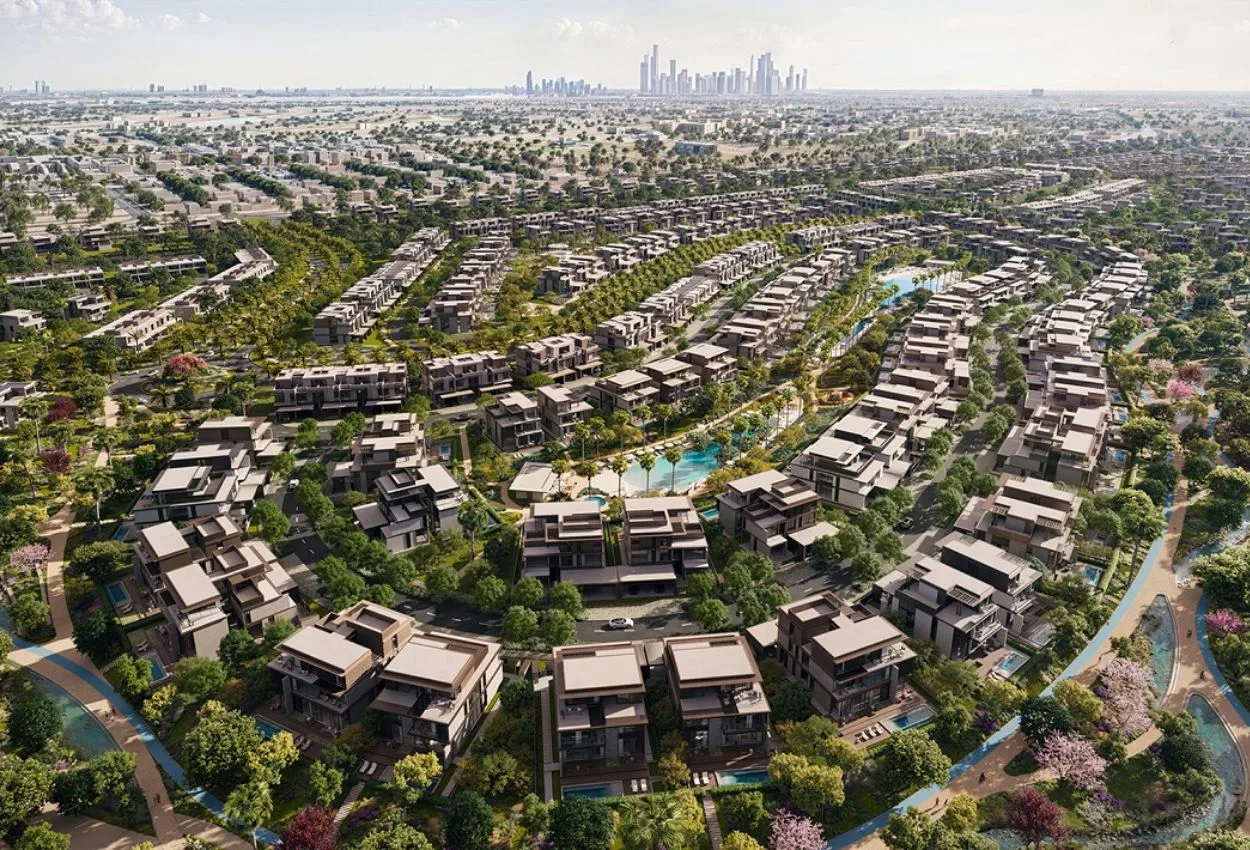
The comments come as the developer moves ahead with four projects comprising more than 1,000 units and prepares two more launches. Two of its four projects have sold out, while sales at the other two had passed 50 per cent earlier this year, Alameddine said.
The four projects are under construction, with completion expected between the end of 2026 and the end of 2027.
ANAX also plans another project for launch by the end of 2026, which Alameddine said would introduce the technology and customer systems being developed by the company. A second project is planned for Jumeirah Golf Estates.
The company could undertake another six or seven projects in 2027, he said. “There is demand,” Alameddine said. “We don’t want to just be another developer.”
Dubai buyer mix moves across more nationalities
Alameddine said one of the changes ANAX had seen was in the nationalities buying its properties. Some projects and locations had previously attracted buyers from a smaller group of nationalities, but the company was now seeing purchases spread across more markets, he said.
He cited Kyomi Residences in Warsan, where about 25 per cent of buyers came from Asia, while the remainder included buyers from Russia, the US, the UK, Australia and Arab countries.
Alameddine said launches in the area had previously recorded between 60 and 70 per cent of buyers from Indian, Pakistani and Chinese groups. He attributed the change both to conditions in the market and to ANAX’s marketing strategy.
The company had made a decision to target buyers across nationalities rather than focus campaigns on one group, he said. Alameddine also argued that the Dubai property market was moving away from purchases based on speculation and towards purchases by people intending to use the property.
He said buyers were also paying more attention to the developer behind a project rather than choosing solely on the basis of location. That shift, he said, had implications for how projects were designed and marketed.
ANAX designs units for investors and residents
ANAX is seeking to build apartments that can work both for investors seeking rental income and buyers planning to live in the property, Alameddine said.
He pointed to the size of one-bedroom apartments as an example. A unit designed mainly for investment might measure about 450 or 500 square feet, he said, while ANAX looks at one-bedroom units of about 700 to 750 square feet.
When reviewing a design, Alameddine said he asks whether he could live in the apartment himself. “If the answer is yes, then we launch it,” he said.
If the unit works only as a property to buy and rent to another person, the company would reconsider the design, he said. Alameddine said the approach requires the developer to balance rental returns with the requirements of people occupying the property.
The same process applies to two-bedroom units, with ANAX considering size, amenities and the experience of residents alongside the potential for owners to lease the property.
Population and government policy remain part of investment case
Alameddine said government policy, infrastructure, security and incentives had contributed to the property market’s ability to recover from periods of disruption.
He also cited population growth as part of the case for property demand. Alameddine put UAE population growth at about 3 per cent a year and about 15 per cent over five years.
The figures were provided by Alameddine, who said said population growth, together with government policy, supported demand for property.
To explain his view of market resilience, Alameddine said ANAX’s sales performance after the events was one indication of the market’s ability to recover.
Technology forms part of ANAX property strategy
ANAX is also developing systems intended to connect functions in homes, buildings and parking through one customer journey.
Alameddine described a system under which a resident could activate functions through a mobile phone around half an hour before arriving home. The system could switch on air conditioning, play music, activate hot water, fill a bath and set lighting before the resident enters the apartment.
At the building entrance, number-plate recognition could allow a vehicle to pass through a barrier without the resident using a card. Facial recognition could provide entry through the lobby, while the lift could recognise the resident and take them to the required floor without the use of a button.
Visitors could also be registered through an application by entering a number plate and an expected arrival time.
Alameddine said the system could direct a visitor to a parking space and allow three hours without charge, with a payment applied after that period through Salik or another system. He said ANAX had other functions under development but did not disclose them.
The systems are being designed within the company rather than through a partnership, according to Alameddine. “The technology is there,” he said, adding that the focus was on designing how the different elements connect during a resident’s journey.
ANAX changes brand and design process
The technology programme forms part of what ANAX calls a brand refresh. Alameddine said the company had changed its website, marketing and instructions given to architects as it moved towards its “build different” positioning.
ANAX now provides architects with a design brief of between 17 and 20 pages setting out what the company wants a project to include, he said.
The technology requires more spending, but ANAX does not plan to price projects above the market solely because of those systems, according to Alameddine.
He suggested that a branded project could carry a premium of about 10 to 15 per cent, while ANAX would seek to compete through the product and customer journey instead, adding that his focus was less on attaching brands to developments and more on what residents encounter when using the property.
Data and experience guide product decisions
Alameddine said ANAX uses data when making decisions but does not always have survey results that provide a clear answer on what buyers will want.
He divided data into three cases: information that supports an idea, information that argues against it, and information that does not point in either direction.
ANAX did not have survey data showing that customers had requested every part of the technology system it plans to introduce, he said. In those cases, Alameddine said he also drew on 30 years of experience and considered what functions he would want in his own home.
He said other developers had introduced parts of the systems, but ANAX was seeking to connect them across the experience of using a property.
Alameddine urges buyers to check developers before purchasing
When asked what he would tell his three children if they were considering buying a home in Dubai, Alameddine said he would advise them to consider purchasing but to carry out checks first. “I would tell them, do your due diligence,” he said.
Buyers should examine a developer’s reputation, payment plans and record of delivering projects, he said.
Alameddine said people could regret failing to take an opportunity more than making a purchase that later proved not to be the optimum decision. His advice, he said, was to look at the developer and the terms being offered before making the purchase.