
Centara Hotels & Resorts plans to double the size of its business by 2030, with growth across the Middle East, Japan, Southeast Asia, the Far East and, later, Europe, as the hotel group responds to a shift in how travellers spend on luxury trips.
In an exclusive interview with Lana, Michael Henssler, Chief Operating Officer of Centara Hotels & Resorts, said the company sees the Middle East as part of its expansion plans, alongside the development of the Centara Reserve brand and investment through partnerships.
“We are going to, until 2030, double the size of the company,” Henssler said, adding that the Middle East would be part of the plan, especially since markets in the region had built “resilience and diversification,” fuelling Centara’s expansion plans. “We want to be here,” he said.
Henssler’s comments came on the sidelines of the Arabian Travel Market (ATM), taking place from September 14-17 at the Dubai World Trade Centre.
Travellers move towards experiences, says Centara boss
The expansion comes as Centara sees travellers moving away from a model centred on accommodation and towards trips built around experiences. “The trend seems to be more experience-based, in my opinion, and it has started before – it is just continuing to develop further,” Henssler said.
He said guests were seeking experiences they could share, including what he called “Instagrammable moments”, while expecting more choice during a trip.
Henssler compared the change with the “online to offline” model used in retail. Technology, he said, has given consumers access to more choices, information and ways to make decisions. The task for hotel operators is to increase the choices available once guests arrive at a destination.
“At the end, it all ends with an offline experience,” he said, referring to eating, spending time at a destination and exploring an island. However, he said operators would need to respond with more flexibility, speed and contact with customers.
Centara operates hotels in Doha and Oman and has properties in Dubai. The company also receives business from travellers from the Middle East at its properties in the Maldives.
Henssler said traffic from the UAE was also feeding demand in Bangkok. At some periods, he said, travellers from Middle East markets could account for between 40 and 45 per cent of inbound business there.
Centara Reserve Krabi to build on Samui success
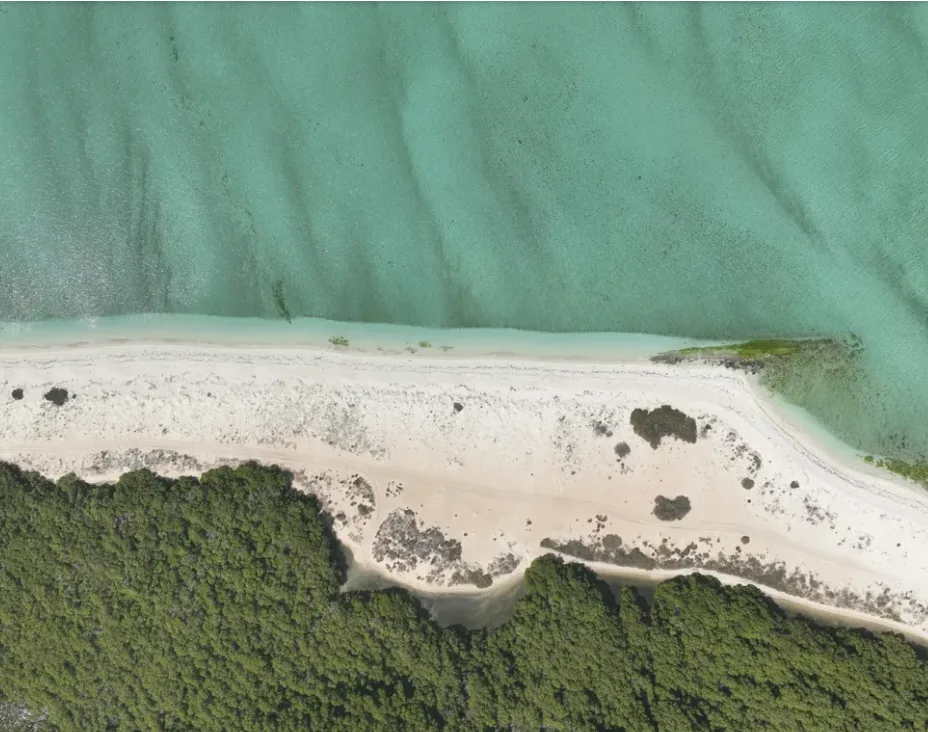
Centara is also preparing Centara Reserve Krabi as a showcase for the Reserve brand. The resort sits in a bay reached mainly by boat. Henssler said guests could also reach the area from near Railay Beach by walking over the Monkey Trail, a path where monkeys are present.
Entry-level rooms at the “hidden gem” will start at 75 square metres, offering “Thailand at its best.”
When asked about price, Henssler said Reserve was not positioned as a low-cost product. “It is certainly not cheap,” he said, while arguing that room size, choice and the product offered value for the price.
For Centara, Krabi was chose in part because it owns the bay and the hotel that occupied the location before the Reserve project. The property previously operated as the Grand Centara Resort in Krabi.
The company also took confidence from Centara Reserve Samui, which Henssler said had outperformed its market. He said demand showed there was a market for a version of luxury rooted in Thailand and Asia, including culture and place.
Centara initially wants to own its Reserve properties, he said, so it can establish the product before expanding through management agreements. Krabi also differs from destinations with more hotel supply at the top end of the market, he said, while giving guests access to nature and the surrounding area.
Reserve strategy focuses on differentiation
The company has also drawn lessons from the performance of Reserve Samui. Henssler said “Thai-ness” had resonated with guests and that being different from other hotel groups had helped the brand. He compared Centara’s approach with other luxury operators, saying both groups deliver their standards but that consistency can also make an experience more predictable.
Luxury today, he said, increasingly involves moments that guests did not expect and stories they can take home. “Local culture is extremely strong, especially since Thailand is known for its food, its temples, and its fantastic nature,” he said. “And these local experiences are most important. That is absolutely clear.”
Well-being is also becoming part of travel demand, according to Henssler. “Wellness is anyhow – wellbeing – very important,” he said, referring to both invasive and non-invasive approaches to wellness.
Centara, however, does not plan to turn its Reserve resorts into dedicated detox or wellness retreats. “We did not go that far yet. For us, we still want to have people have a good time. You can’t really mix a detox or relaxing art with a normal resort,” he added.
Instead, Centara plans to take elements of wellness and incorporate them into its resort product. “We go to the maximum at the Reserve with what you see as a traditional Thai spa, as a traditional Thai offering,” Henssler said.
However, Henssler said travellers were asking for more authenticity and contact with the places they visit. He said that demand is different today especially since luxury was once represented by champagne, suites or boat transfers.
Today, he said, a trip could instead include time with a fisherman, a transfer by electric boat, work linked to sustainability, contact with communities or discovering something that “money can’t buy.”
Centara sets measures for market performance
For Centara Reserve Krabi, success will be measured through revenue, guest feedback and operating profit, as well as the property’s position against competitors. “We need to be market leader,” Henssler said.
He said the company would look at RGI , CQI and HotStats measures to judge performance.
RGI
AI Generated
RGI, or Revenue Generating Index, is a key performance indicator used in the hospitality industry to measure a hotel’s revenue generation against its competitors. It compares a hotel’s revenue per available room (RevPAR) to the average RevPAR of a set of competing hotels, with an index of 100 representing the market average. An RGI above 100 indicates that a hotel is outperforming its competitors in terms of revenue generation, while a score below 100 suggests it is lagging behind.
CQI
AI Generated
The Competitive Quality Index (CQI) is a metric used in the hospitality industry to assess how well a hotel’s operations align with the promises made through its marketing efforts. It measures the guest experience against competitor offerings, often drawing on feedback from various booking and review platforms to provide a comparative analysis of service delivery and overall quality. This index is crucial for understanding customer satisfaction and identifying areas for operational improvement to ensure a hotel meets or exceeds guest expectations.
HotStats
AI Generated
HotStats is a benchmarking service that provides hotel operators with data on costs and profits, allowing them to compare their performance against other businesses within their market. This allows for a comprehensive understanding of financial standing and operational efficiency relative to competitors. The service is used to ensure a balance between providing value to guests, achieving profitability, and meeting customer expectations while aiming to outperform the market.
The goal, he said, is to provide value, make a profit and deliver the promise made to customers while outperforming the market. The performance of Reserve Samui has set the benchmark for the Krabi opening, he added.
Henssler stresses relationships and support for Middle East partners
Henssler said maintaining a presence in the Middle East during periods of disruption was also a major part of Centara’s approach to its partners and employees.
“How can you not show up? How can you not have a town hall meeting with your people? How can you not show up for your travel partners, who all have their own problems?” he said, calling on hotel groups to be more willing to meet their partners and employees during difficult periods and tell them: “Listen, I believe in you. Thank you for what you’re doing. We will have good times again.”
For Henssler, that presence matters because business relationships in the Middle East and Asia operate differently from those in parts of Europe.
“Where I come from in Europe, in Germany, we may never have met and we can still do business,” he said. “But here, and across Asia and China, you know someone first. You start building a relationship. I think that is so important.”
“For me, ATM is one of the top events that we do, definitely. You can’t just show up for the good times, you have to show up all the time,” he concluded.