
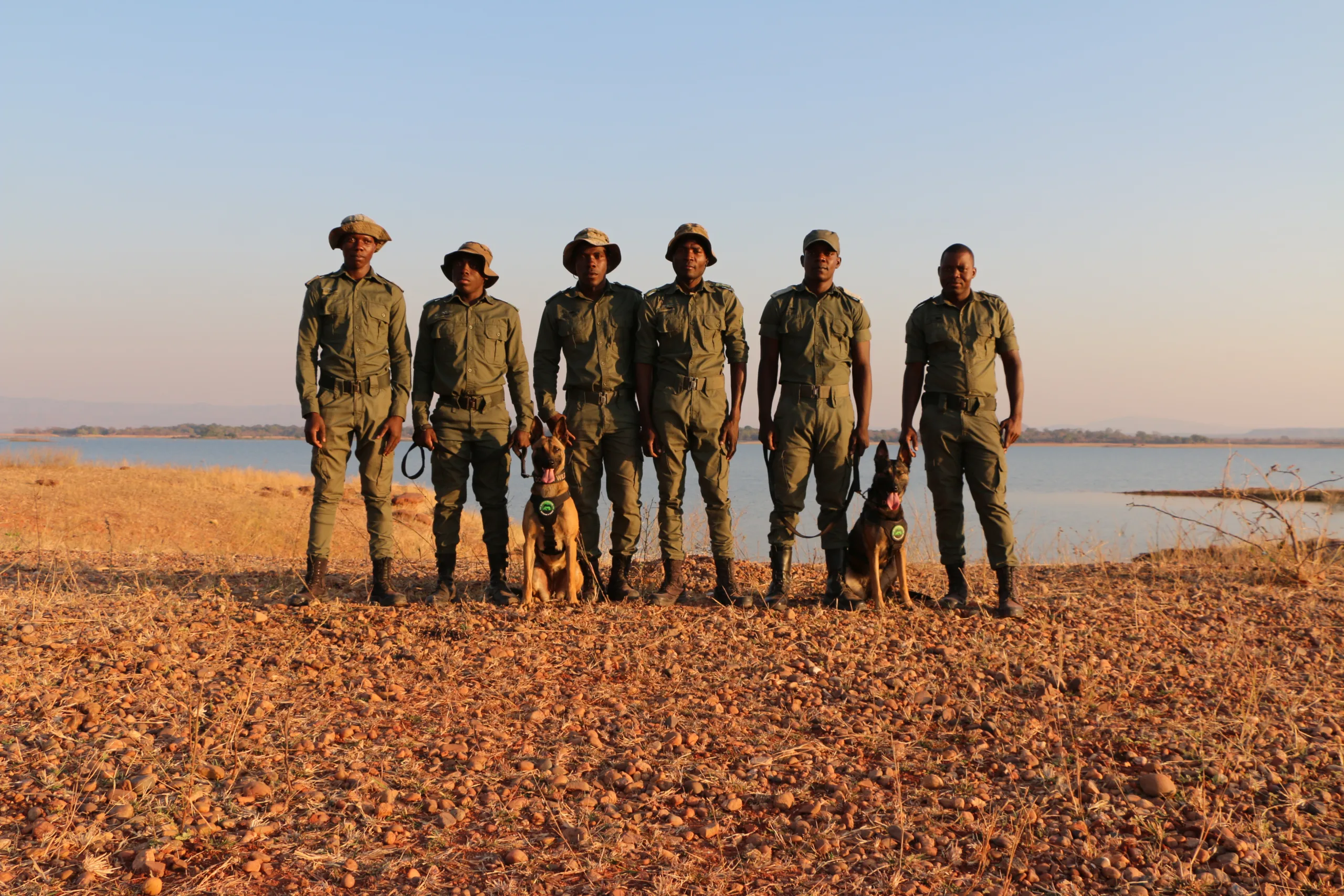
Two specialist conservation dogs have arrived at Matusadona National Park in Zimbabwe after being flown from London to Harare via Dubai by Emirates SkyCargo, in partnership with UK charity Dogs 4 Wildlife.
Vega and Kuda, both Belgian Malinois, are now operational as part of the park’s first dedicated K9 conservation unit. Since landing, they have logged more than 185 hours of practical training alongside six specialist handlers and completed over 60 human-scent tracking exercises, consistently showing the ability to detect and track illegal poaching activity.
The first phase of the programme has also produced an operational framework for the unit, including animal welfare protocols and Standard Operating Procedures for the handlers.
“At Emirates SkyCargo, we believe that the protection of wildlife is a core responsibility and we are delighted to partner with Dogs 4 Wildlife to support their mission to protect endangered ecosystems. Transporting live animals by air requires the highest standards of safety, precision and care and we are proud to leverage Emirates SkyCargo’s world-class handling expertise and infrastructure to transport Vega and Kuda from the UK to Zimbabwe on our flights. We are sure that the dogs will make a strong contribution, working in the front lines protecting the wildlife of Matusadona National Park,” Badr Abbas, Divisional Senior Vice President, Emirates SkyCargo said in a statement.
Beyond the Zimbabwe mission, Emirates SkyCargo maintains a full ban on transporting hunting trophies and has trained frontline teams globally to identify and report potential wildlife trafficking.
Emirates is a founding signatory of the Buckingham Palace Declaration, a United for Wildlife initiative targeting trafficking across the aviation industry.
The carrier recently hosted a multi-stakeholder workshop in Dubai on illegal wildlife trade, bringing together representatives from the Emirates Group, the Ministry of Climate Change and Environment, Dubai Customs, Dubai Police, Dubai Airports, Al Ain Municipality, and the International Fund for Animal Welfare. The session covered detection procedures, cross-entity coordination, and biosecurity considerations through case studies and scenario exercises.