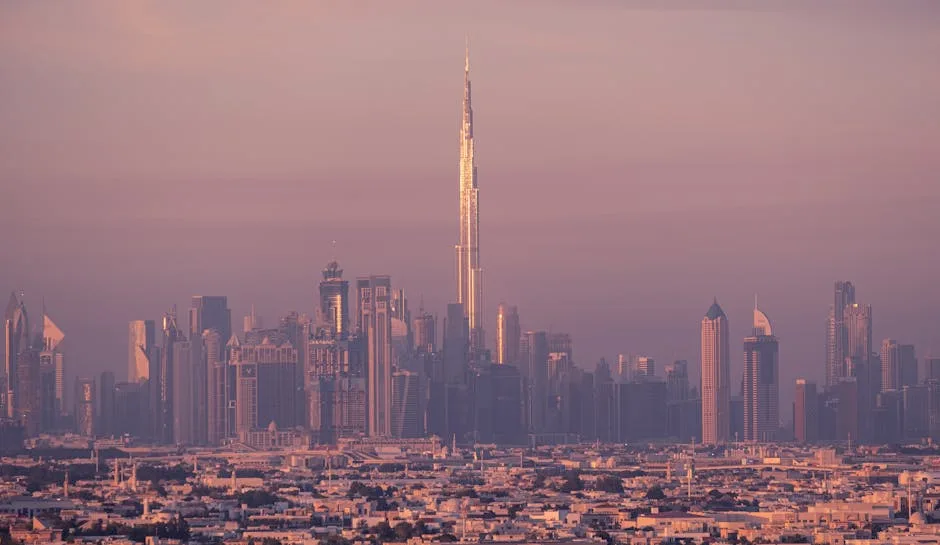
Developers in Dubai are bullish on the city’s resilience to regional conflict, with experts noting that while disruption may exist, the problem is cyclical, and the fundamentals underpinning it have not moved.
The backdrop is a market that entered the turbulence at full strength. “The real estate sector achieved its strongest performance in 2025, with over 270,000 transactions worth AED 917 billion, up 20 percent year on year, reflecting strong growth in both volume and value,” says Blagoje Antic, CEO and Founder of DHG Group, the Swiss group that has crossed $350 million in gross development value across three Dubai projects in roughly a year. What gives Dubai its staying power, he argues, is structural: the city “offers a level of visibility, infrastructure, and regulatory clarity that supports growth and allows developers to plan with confidence.”

Where the conflict has bitten hardest is on construction costs, and here developers are candid. “On the construction side, costs have moved up meaningfully in recent months, with overall increases in the range of 25-30 percent across projects,” says Madhav Dhar, CEO of ZāZEN Properties. He attributes the jump to “material shortages over the past two months, higher fuel costs, and the rerouting of shipments through alternative ports.” The buffers that absorbed earlier shocks, including stock built up during last year’s boom, “has now largely been depleted.”

Yet the pressure is being managed rather than passed on. For homes already sold, Dhar is unequivocal: “pricing remains fixed, and there is a clear commitment to deliver as agreed.” Instead of pushing costs onto buyers, developers and contractors are working “more closely to share the burden and manage pressure across both sides of the balance sheet.” At DHG, the answer has been timing. Procurement for its flagship Jumeirah Village Circle project “has already been completed,” while later launches have budgeting strategies “structured in advance to accommodate potential changes in market conditions.”
The discipline extends to how both developers think about pricing, and notably, neither is banking on prices continuing to climb. “We do not build around assumed price growth or underwrite appreciation into the product,” says Dhar. Antic echoes the conservatism, describing projects “planned based on current market comparables and existing fundamentals,” then “tested against a range of scenarios.”
That restraint shapes their read on demand. Dhar is honest that buyers have grown cautious, expecting many investors to “adopt a wait-and-watch approach for at least the next six months as confidence rebuilds.” But both locate the softness precisely. The parts of the market that wobble first, says Antic, “are typically those driven by momentum, including speculative positions and segments where underwriting is based on short-term appreciation.” End-user demand, where both developers concentrate, “tend to be more stable.”
On the worry that fast-growing districts could face a glut, the picture is one of supply self-correcting. Dhar sees “a natural slowdown in new supply entering the market,” with delayed projects likely to moderate the pipeline over the next 12 to 18 months. The result, he says, is “a recalibration of both, with supply becoming more disciplined and demand becoming more deliberate.”
For investors who bought off-plan expecting quick gains, both acknowledge a pause rather than a loss. “There is currently a timing gap between projected and realised returns,” says Dhar, with upside “simply being deferred by 12 to 18 months rather than lost.”
The candid note is on what could genuinely hurt the market: not prices, but indecision. “The biggest risk at the moment is the status quo of prolonged uncertainty,” Dhar says. “Markets are generally able to absorb pressure, but when there is no clear resolution, it slows decision-making.”
Still, the conviction holds. As Antic puts it, “A market built over more than two decades, supported by consistent infrastructure development, regulatory evolution, and population growth, tends to maintain its pace rather than change direction abruptly.” On whether the fundamentals have shifted, his answer is that they “remain in place.”