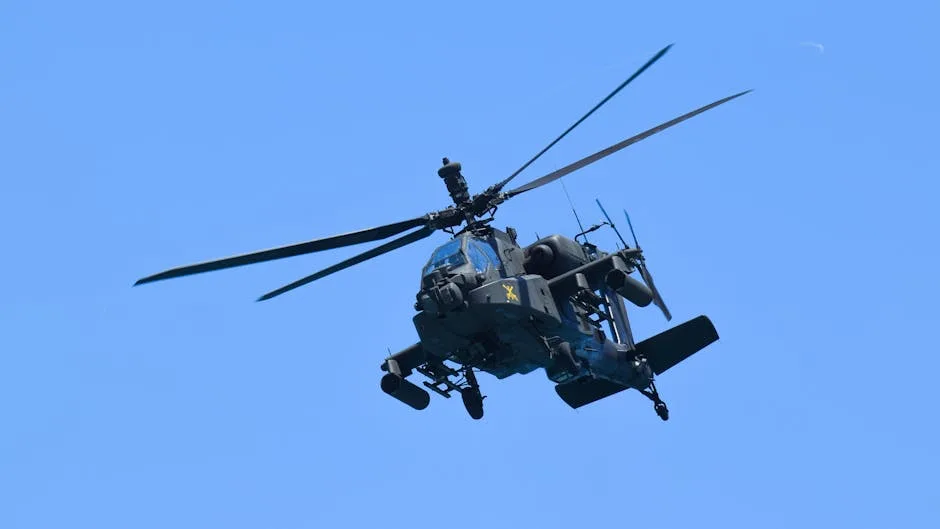
President Donald Trump has accused Iran of shooting down a US Army Apache helicopter near the Strait of Hormuz and warned that Washington would respond “out of necessity,” even as both crew members were confirmed safe.
The AH-64 Apache went down near the coast of Oman while on patrol Monday night. US Central Command said the two soldiers were rescued at 19:33 EDT, within approximately two hours of the crash, and described them as in stable condition. Trump confirmed the outcome on Truth Social: “There were two pilots involved, both are safe and uninjured. Nevertheless, the United States must, of necessity, respond to this attack.”
The rescue was carried out by an uncrewed surface drone operated by Task Force 59, a Bahrain-based US Navy unit that launched in 2024 to focus on unmanned maritime operations across the Middle East. Centcom said the effort also involved the 82nd Airborne Division and US Air Force and Navy units under the 5th Fleet.
It is the first loss of an Apache since the conflict with Iran began. The incident lands at a delicate moment: Trump had said earlier that Washington was in “the final throes” of a deal with Tehran to end the broader regional conflict.
Minutes before Trump posted his warning, Iran’s top negotiator Mohammad Baqer Qalibaf took to social media with a pointed message: “We prefer the language of diplomacy, but we speak other languages far more fluently. Break your commitments, and we’ll switch to what we speak best.”
What the US response will look like remains unclear.