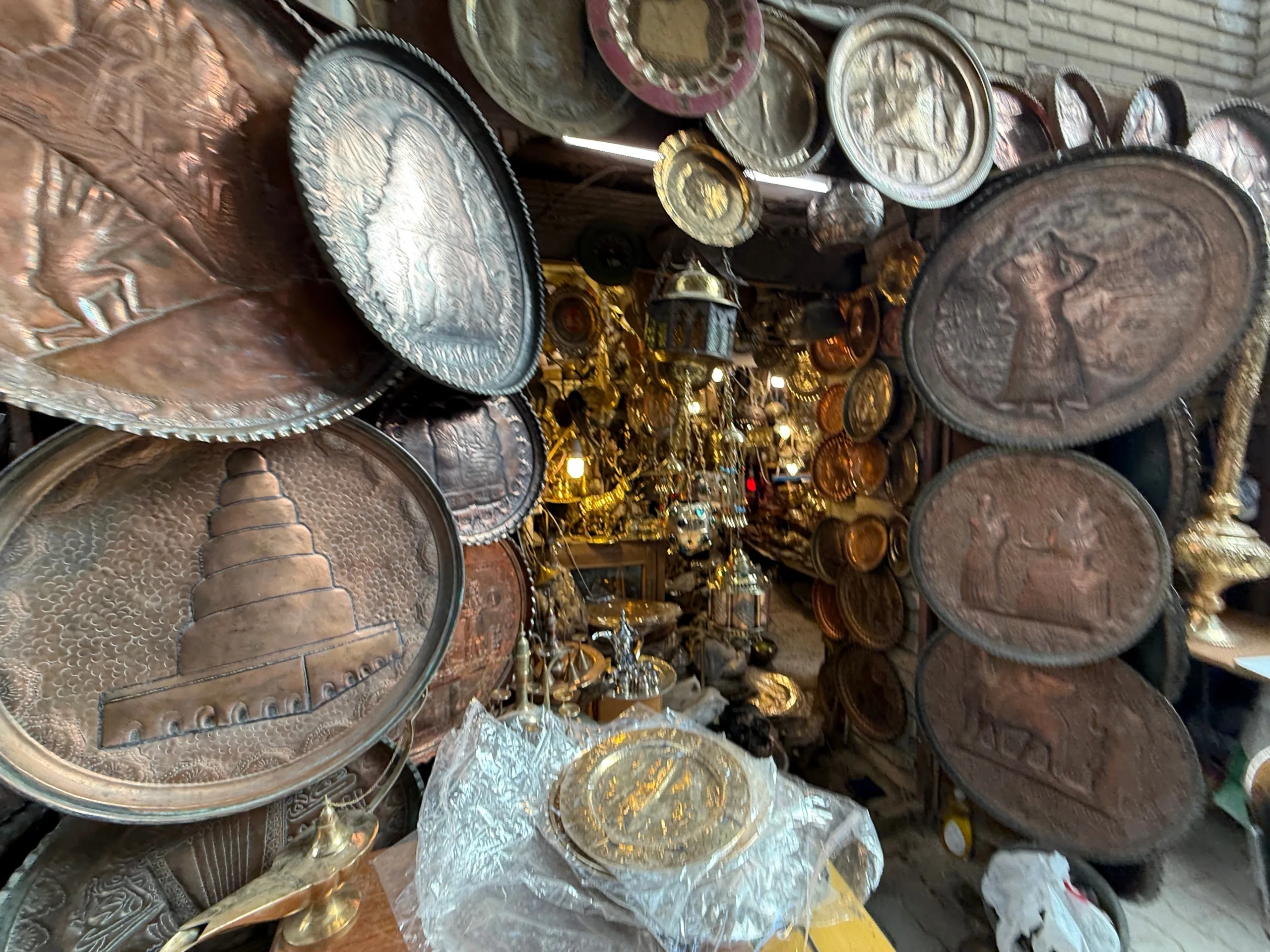
Baghdad’s markets are more than places to shop — they are living museums of the city’s history, culture, and community. From centuries-old souqs to modern shopping streets, here are the top bazaars worth visiting.
1. Souq al-Safafeer (Copper Market)
One of Baghdad’s oldest and most iconic markets, located off Al-Rashid Street. Traditionally specializing in handmade copperware — trays, pots, and decorative items — it remains a symbol of Baghdad’s artisan heritage.
Many of the craftsmen are hereditary artisans, keeping centuries-old techniques alive. Over time, the souq has diversified, with some shops now selling fabrics and other goods.
2. Al-Shorja Market / Bab al-Sharqi Area
Baghdad’s largest and oldest general marketplace, located in the Shorja neighborhood. Here you’ll find foodstuffs, spices, textiles, household goods, and everyday wares.
The market has deep historical roots, once part of the city’s Jewish quarter and a key trade hub. Today, it remains a bustling center where visitors can experience the full sensory scale of a Baghdad bazaar — smells, colors, sounds, and bargaining.
3. Al-Mutanabbi Street & Souq al-Saray
Al-Mutanabbi Street is Baghdad’s legendary “book street,” lined with bookstores, stalls, literary cafés, and street vendors of print media. Souq al-Saray, just adjacent, was once a leather-goods souq and is now known for stationery, school supplies, and crafts.
Together, these spaces embody Baghdad’s intellectual and cultural life — a blend of books, art, and local craftsmanship in a single district.
4. Souq al-Ghazil (Ghazil Bazaar)
A historic bazaar along Al-Jumhuriya Street, best known for its pet and animal trade, especially active on Fridays. In earlier times, the market sold cotton thread and fabrics before shifting to animals, birds, and related goods.
Today, it remains a lively, if unconventional, glimpse into local commerce and tradition.
5. Commercial Streets & Modern Shopping Districts
Baghdad is not only about traditional souqs — modern commercial arteries also thrive. Palestine Street (Falastin Street) is one of the city’s busiest shopping avenues, filled with retail shops, boutiques, and vendors.
Several shopping malls and mixed-use retail centers also offer climate-controlled convenience for clothing, electronics, and international brands, blending modern comfort with local character.
Visiting Tips
- Timing: Visit early morning or late afternoon to avoid heat and catch peak activity.
- Haggling: Bargaining is expected — keep it polite and friendly.
- Security: Markets are crowded; stay alert and carry minimal valuables.
- Dress: Modest clothing is best, especially near religious or historic areas.
- Shoes: Wear sturdy shoes for narrow, uneven alleys.
- Support Artisans: Buying from local craftspeople helps sustain Baghdad’s heritage.
- Pace: Explore one or two markets per day — each has its own unique rhythm and character.