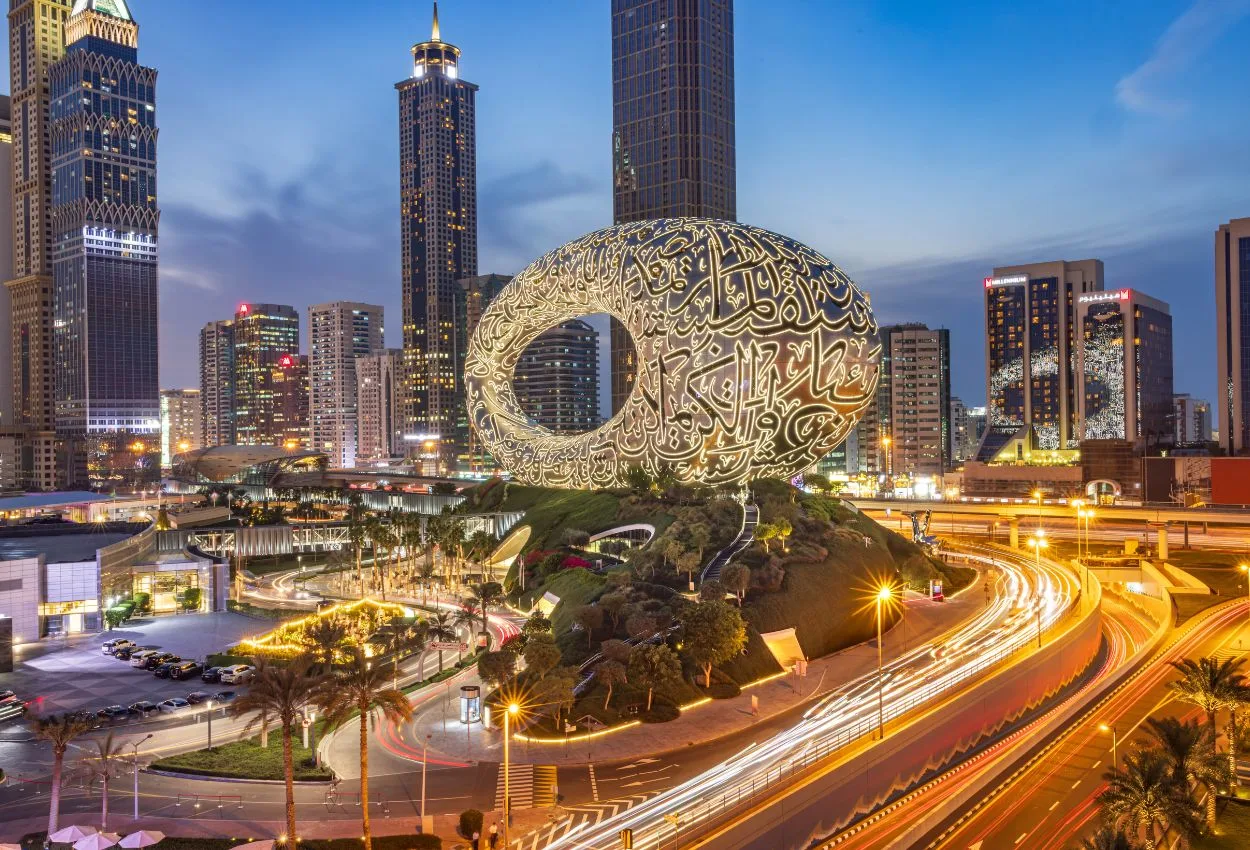
Dubai welcomed 19.59 million international overnight visitors in 2025, a 5 per cent increase compared with 18.72 million arrivals in 2024, according to data published by the Dubai Department of Economy and Tourism (DET). The figure marks the third consecutive year of record visitor numbers for the city.
The emirate also recorded a milestone in December 2025, welcoming 2.04 million international overnight visitors, the first time arrivals exceeded two million in a single calendar month. The previous record month was January 2025, when Dubai received 1.94 million visitors.
“Dubai’s strong tourism growth momentum has been driven by the leadership’s commitment to building a city that connects the world, creates opportunity, and offers distinctive and enriching experiences for global travellers. By further enhancing the city’s exceptional infrastructure and forging strong global partnerships, we continue to consolidate Dubai’s emergence as one of the world’s most sought after destinations. Dubai’s success also reflects the city’s diversity, cultural vibrancy, and its ability to continuously evolve its tourism and hospitality offerings. Through close collaboration between all stakeholders, we are focused on driving greater innovation and raising service excellence across the tourism ecosystem,” Sheikh Hamdan bin Mohammed bin Rashid Al Maktoum, Crown Prince of Dubai, Deputy Prime Minister, Minister of Defence of the UAE, and Chairman of The Executive Council of Dubai said in a statement.
Dubai tourism grows 5% in 2025 with record December arrivals
Sheikh Hamdan said tourism remained a key contributor to economic diversification and aligned with the D33 goal to reinforce Dubai’s position as a global destination for business and leisure.
DET said its year-round market strategy, delivered with domestic stakeholders and more than 3,000 international partners, supported growth across both established and emerging markets.
For the full year, GCC and MENA markets accounted for a combined 26 per cent share of visitors, with 2.99 million arrivals from the GCC (15 per cent) and 2.17 million from MENA (11 per cent).
Western Europe remained the largest source market with 4.1 million visitors (21 per cent), up from 3.74 million in 2024. This was followed by CIS and Eastern Europe (2.89 million; 15 per cent), South Asia (2.89 million; 15 per cent), North East and South East Asia (1.85 million; 9 per cent), the Americas (1.40 million; 7 per cent), Africa (897,000; 5 per cent), and Australasia (401,000; 2 per cent).
Helal Saeed Almarri, Director General of DET, said the city’s tourism performance reflected an economic model based on public-private collaboration and alignment with D33.
“Under the visionary leadership of His Highness Sheikh Mohammed bin Rashid Al Maktoum and His Highness Sheikh Hamdan bin Mohammed bin Rashid Al Maktoum, Dubai’s 2025 tourism performance reflects the strength of our economic model, one anchored in effective public-private collaboration and aligned with the Dubai Economic Agenda, D33. Tourism continues to be a key driver of economic diversification, delivering tangible impact through GDP growth, investment inflows, and global talent attraction. Our focus remains on scaling sustainable, accessible growth and accelerating progress toward the D33 ambition to double Dubai’s economy by 2033,” he explained.
DET said tourism and hospitality contributed to the emirate’s position as the world’s leading hub for Greenfield Foreign Direct Investment projects. Data from the Financial Times Ltd fDi Markets database showed that in the first half of 2025, hotels and tourism accounted for 21.3 per cent of estimated FDI capital flows into Dubai, ranking among the top five sectors.
Hotel sector reports higher occupancy and ADR
The emirate’s hotel inventory reached 154,264 rooms across 827 establishments by the end of December 2025, placing the city ahead of Bangkok, New York, Paris and Singapore, and close to London in total room supply.
New openings in 2025 included Ciel Dubai Marina, Jumeirah Marsa Al Arab, Mandarin Oriental Downtown, Dubai, Cheval Maison – Expo City, and Vida Dubai Mall.
Average hotel occupancy reached 80.7 per cent, up from 78.2 per cent in 2024. Occupied room nights rose 4 per cent to 44.85 million, while average length of stay stood at 3.7 nights.
The average daily rate increased to AED579, up from AED538, while RevPAR rose to AED467, compared with AED421 in 2024.
DET launched the Hotel Incentive Programme in October to encourage development in areas including Dubai South, Palm Jebel Ali, Dubai Parks, and the Dubai Islands.
In December, DET also introduced a contactless hotel guest check-in solution, allowing guests to bypass in-person procedures once implemented across hotels and holiday homes.
The Dubai Corporation for Tourism and Commerce Marketing (DCTCM) launched global campaigns in 2025 including Find Your Story, Dubai. That’s How You Summer, and Dubai, Ready for a Surprise?.
DET also signed partnerships with Marriott International, Visa, Hyatt, Premier Inn, and Amadeus, and unveiled the Beautiful Destinations Academy, Powered by Dubai, in partnership with Beautiful Destinations.
The emirate was also recognised in April as the first Certified Autism Destination™ in the Eastern Hemisphere.
Other recognitions in 2025 included rankings among the top ten safest cities globally, the best city for solo female travellers, and the inclusion of three Dubai hotels in The World’s 50 Best Hotels 2025 list.
Dubai retains world’s busiest airport status in 2025
Dubai International Airport (DXB) retained its position as the world’s busiest airport for international passengers, recording 70.1 million travellers in the first nine months of 2025.
Major events such as the Dubai Shopping Festival, Dubai Summer Surprises, and the Dubai Fitness Challenge continued to attract visitors, with over three million participants recorded for DFC in 2025.
DET also reported progress in education, sustainability initiatives, gastronomy, and infrastructure, including expansion plans for Al Maktoum International Airport and the Dubai Metro Blue Line.
Looking ahead, the emirate plans further infrastructure development, cultural programming linked to the Year of the Family, and continued progress under the Dubai Economic Agenda D33, with the aim of supporting tourism growth and long-term economic development.