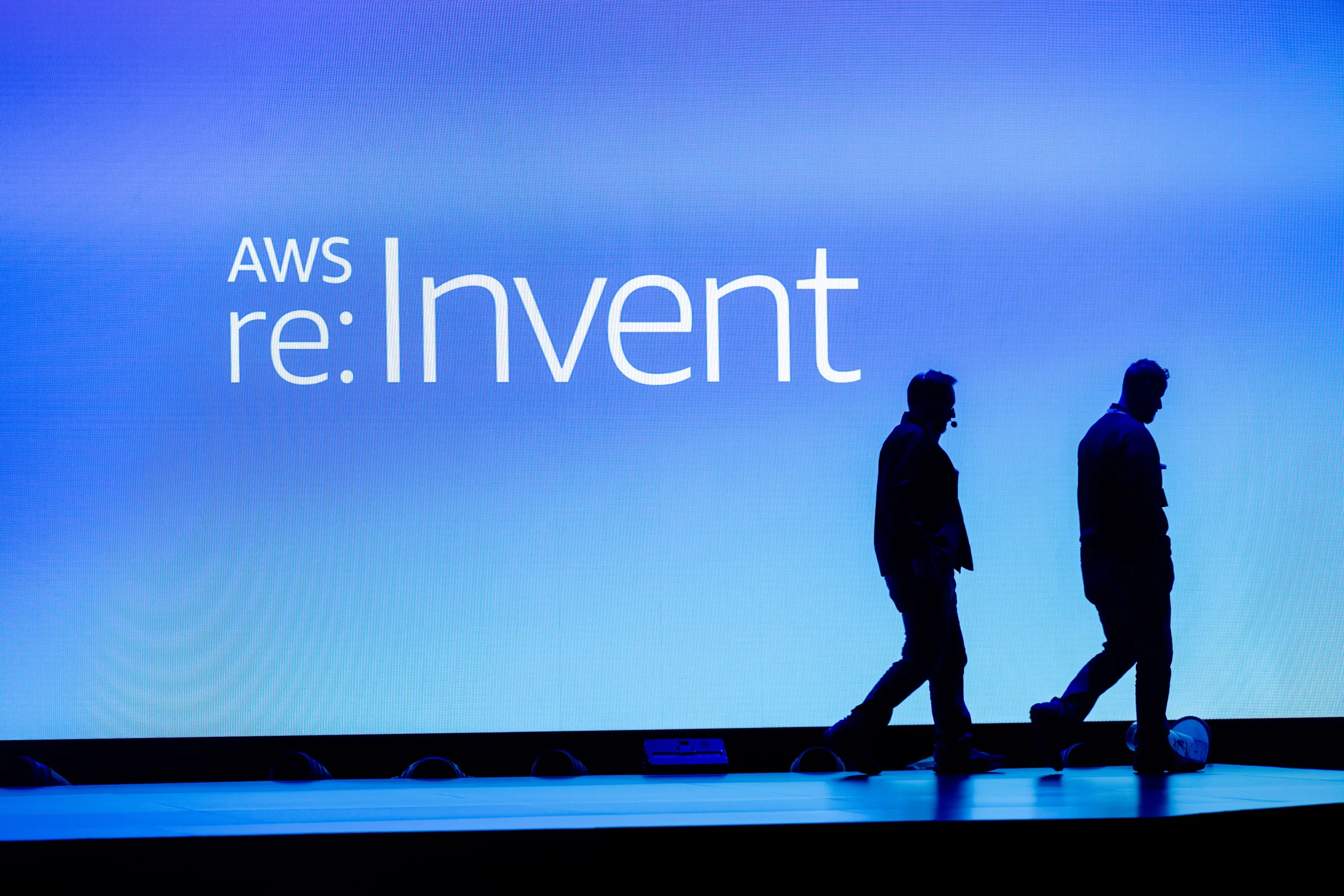
In Las Vegas, where hope and luck are traded like commodities, over 60,000 technology leaders convened this week for AWS re:Invent 2025. On the surface, it was a raucous celebration of technology: thumping bass, laser shows, and a relentless cadence of product launches. But for those reading between the lines – and listening to the hushed conversations in the backrooms of The Venetian – the story was markedly different.
This was not merely a flex of technical muscle from a company boasting $132 billion in annual revenue. It was a serious, almost existential attempt to answer the question haunting the entire tech industry: ‘The world has spent hundreds of billions on AI in the last two years. Where is the economic return?’
Throughout 2024, reports from major financial institutions like Goldman Sachs and Sequoia Capital have warned of an ‘AI Bubble,’ highlighting the massive chasm between capital expenditure (CapEx) and actual revenue. Corporations bought the dream, but they have yet to see the productivity.
Hence, the ‘Pivot of 2025.’ The message emanating from Las Vegas is clear: the era of chatting with Generative AI is over. The era of Agentic AI – software that does not just talk but acts on your behalf – has begun.
The Escape Forward: From ‘Encyclopedia’ to ‘Teenager’
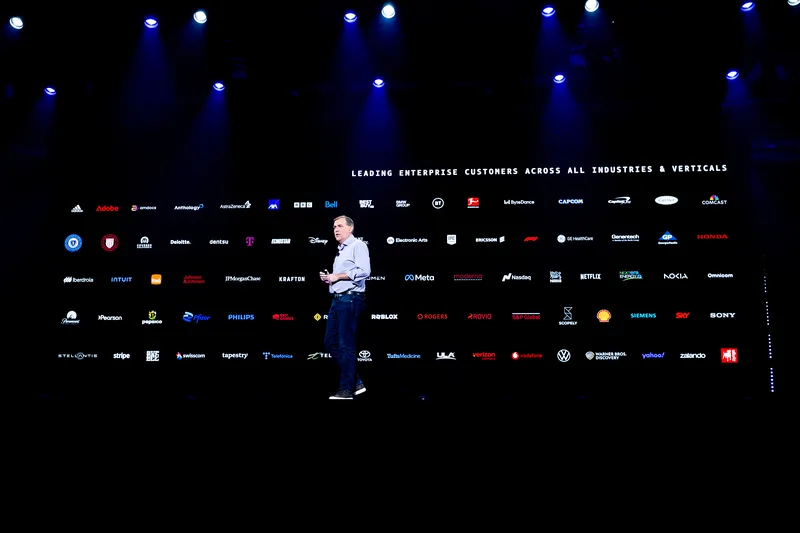
To understand this paradigm shift, one must grasp the fundamental difference between what we had and what is now being sold.
The previous generation of AI (like early ChatGPT) was akin to a ‘Genius Encyclopedia.’ You asked, it answered. But it was passive. It could not open your email, write and execute code, or patch a server vulnerability.
What AWS CEO Matt Garman unveiled this week – the concept of the ‘Agent’ – is a software entity with digital hands and decision-making authority. But how do you sell powerful, autonomous technology to risk-averse enterprises? Garman deployed a clever, if slightly unsettling, metaphor, describing these agents as ‘like teenagers.’
“It’s a bit like raising a teenager,” Garman told the crowd. “You must start giving them more autonomy and freedom so they can learn to ‘adult,’ but you also want to put some guardrails in place to ensure they don’t cause a disaster.”
This analogy lays bare the central tension in the industry today: the desire for speed versus the fear of chaos.
In an exclusive briefing, Tom Soderstrom, Executive in Residence at AWS, touched on the economic wound driving this haste. “The biggest problem facing AI today is unrealistic expectations,” he told us plainly. “CEOs are asking: Where is the ROI? And expecting to save money immediately is an unrealistic expectation.”
Thus, the industry is pushing ‘Agents’ because they promise tangible productivity – writing code, processing data, managing supply chains – that can justify the massive bills, even if the technology is still in its ‘adolescence.’
‘Verification Debt’: The Hidden Cost of Speed
If the ‘Agent’ is the magic bullet for productivity, what is the price?
The answer came on the final day from Werner Vogels, Amazon’s legendary CTO, and the ‘conscience’ of its engineering culture. He introduced a profound new concept: ‘Verification Debt.’
To simplify for the non-technical reader: Imagine you have a superhuman employee (the AI) who writes 1,000 pages of reports in a minute. You, the human manager, lack the time to read them, so you sign off immediately. You have not completed the work; you have accumulated ‘debt.’ That debt is the probability of catastrophic errors buried in those pages, waiting to explode.
“AI can generate code faster than you can understand it,” Vogels warned. “Code arrives instantly, but comprehension does not. This gap allows software to move to production before anyone has truly validated what it actually does.”
This warning intersects alarmingly with insights from Mark Ryland, Director of AWS Security. In a closed session, Ryland noted that the new security threat is not traditional hacking, but ‘trust deception.’
“Attackers today build trust with developers,” Ryland explained. “They act normally for a long period, then slip in malicious code.”
Analysts are now asking: If the code writer is an AI agent (a teenager), and the reviewer is an exhausted human burdened by Verification Debt, are we creating the perfect environment for a security catastrophe?
The Reality Clash: Hollywood Studios vs. Factory Floors

It is easy to discuss ‘Agents’ in digital-native companies. But what about the physical world – factories, hospitals, and live broadcast infrastructure?
In an exclusive interview, Steph Lone, Global Leader for Media & Sports at AWS, revealed fascinating, yet high-stakes use cases. “In Formula 1, they have built an agent to analyse root causes and fix issues during the live race broadcast,” she said. This means we are past the ‘experimental’ phase. A robot is intervening in critical infrastructure during an event watched by millions.
However, speaking with Steve Blackwell, Global Tech Leader for Manufacturing, the tone shifts to one of harsh reality. Factories cannot be run by teenagers.
“In factories, the biggest challenge is proving financial return,” Blackwell stated firmly. “We go into a factory, and if we cannot prove ROI within six weeks, the project stops.”
He added a critical point of physics that demolishes the ‘Cloud for Everything’ narrative: “Factories cannot rely 100% on the cloud. Physics governs us. Machines need IO control with zero latency. There will always be a need for edge computing.”
This contrast between Lone (seeking speed and innovation in media) and Blackwell (demanding precision and rigor in manufacturing) illustrates that Agentic AI is not a one-size-fits-all solution. What works for a movie studio could cause a disaster in an oil refinery.
The Liability Dilemma: Who Pays the Bill?
As we navigated the conference halls, the most pressing question whispered among executives was: ‘If the Agent makes a mistake, who goes to court?’
Tech companies market these tools as ‘coworkers,’ but when it comes to legal liability, the definition shifts.
We posed this direct question to Dr. Rowland Illing, Chief Medical Officer at AWS: If an AI agent misdiagnoses a patient, who is responsible?
His answer was decisive, clarifying the rules of the game: “We operate under the Shared Responsibility Model. We secure the cloud, but the end-user is responsible for the security and reliability of the application they build.”
In other words: AWS sells you the ‘self-driving car’ and provides the ‘paved roads,’ but if there is an accident, you are the driver liable under the law, and you pay the damages.
This ‘Liability Gap’ remains the single biggest barrier to adopting this technology in sensitive sectors. No CEO wants to hand the keys of a hospital to a ‘teenager’ who cannot be sued.
The Future: The Machine-to-Machine Economy
Despite these challenges, where are we heading?
Tom Soderstrom, effectively the futurist of AWS, painted a picture of the world beyond 2030 that transcends mere task automation.
Soderstrom described a new economy where humans do not just transact with agents, but agents transact with each other. “In the future, when an agent needs a service from another agent, it will pay for it,” he said. “We are talking about micropayments – fractions of a cent – executed via stablecoins.”
This implies we are moving toward an ‘automated economy’ running parallel to the human one. But as Soderstrom admitted, the barrier is not technology; it is trust. How do we trust a network of agents buying and selling services at lightning speed?
Verdict: Are We Ready for the Era of the ‘Auditor’?
The takeaway from Las Vegas this year is that we are witnessing the forced maturity of technology. Economic pressures are pushing companies to adopt Agentic AI before the frameworks of trust and safety are fully complete.
For the average employee, and for businesses in the Middle East, the message is clear: AI will not replace humans with ‘robots’ in the traditional sense. Rather, it will fundamentally alter the nature of human work.
Previously, an employee was evaluated on their ability to produce (write, code, design). In the Agentic Era, employees will be evaluated on their ability to verify, judge, and manage risk.
We are not losing our jobs to machines; we are all being promoted to ‘managers’ of these machines. And as we learned from Matt Garman: managing ‘teenagers’ can be far more difficult than doing the work yourself.
The companies that survive 2026 will not be those that buy the fastest technology, but those that possess the smartest humans capable of catching the technology’s mistakes before it is too late.