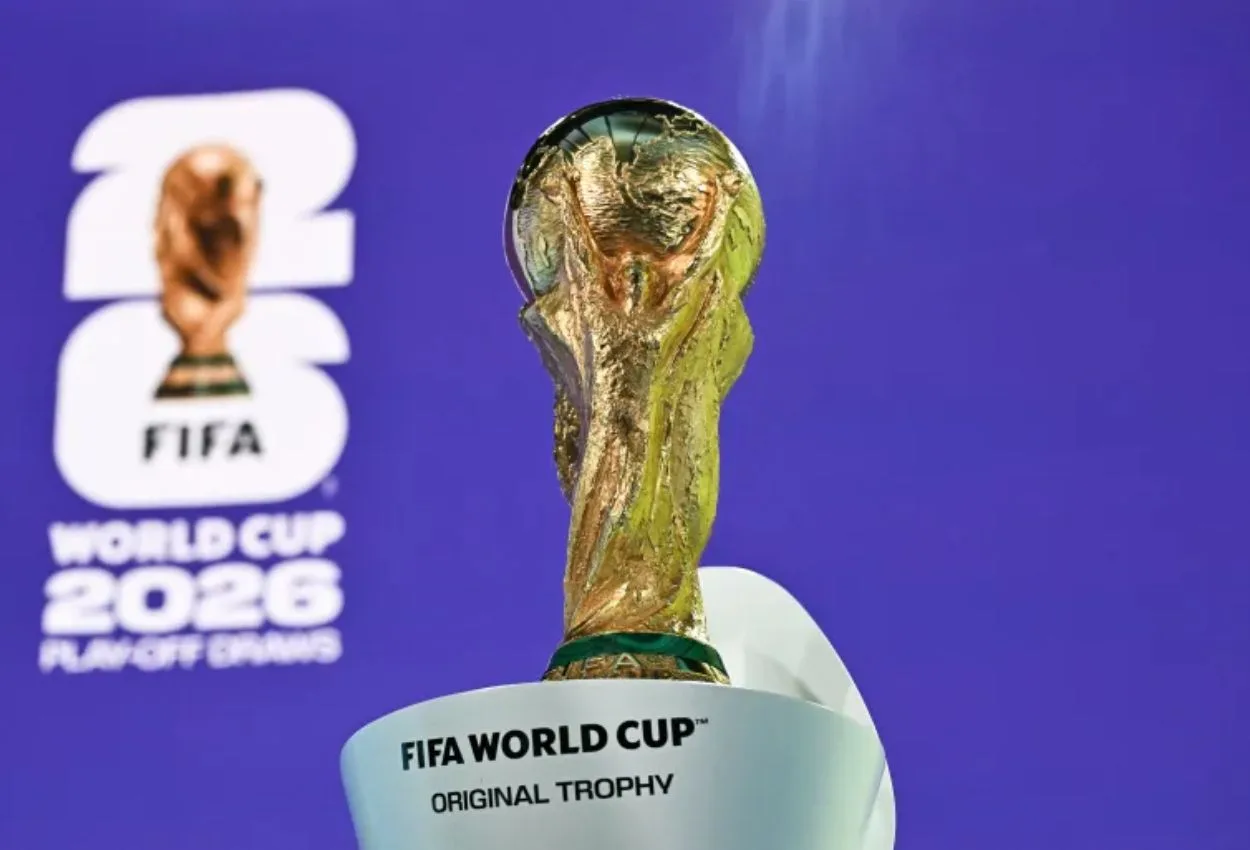
FIFA will introduce VAR checks for corner kicks at the 2026 World Cup after domestic leagues rejected the proposal for use in regular competitions.
The International Football Association Board met in October and agreed to expand VAR to cover incorrectly shown second yellow cards leading to red cards, the BBC reported. However, Ifab rejected FIFA’s proposal to review corners for the wider game.
FIFA will create a trial to implement the measure at the World Cup in the United States, Mexico and Canada. The plans will be discussed at the next Ifab meeting in January.
FIFA World Cup 2026 will feature VAR corner reviews after Ifab rejects proposal for domestic leagues
Pierluigi Collina, FIFA’s head of referees, supports the change as part of a review of VAR protocol, according to the report. Collina believes any error that can be identified by the VAR could be communicated to referees.
The former referee cited an incident in the Euro 2016 final when Portugal received a free-kick in extra time for handball on the edge of the area that almost resulted in a goal.
The Premier League averages 10 corners per match. VAR checks on wrongly issued second yellow cards are likely to be approved because there are fewer incidents per season compared to corners.
Resource constraints present challenges for domestic leagues, particularly in lower tiers. At the 2022 World Cup, group-stage matches had five people working in the VAR room. Domestic leagues use two people.
FIFA appointed an offside VAR, a support VAR and a support assistant VAR in addition to the VAR and assistant VAR at the World Cup.
FIFA can position cameras in the correct places to make decisions. The technology in the Adidas ball, unavailable to leagues, allows the VAR to identify who touched the ball last in close cases.
“This would all be impossible to replicate for domestic leagues,” the document states.
The Premier League has experienced issues with camera coverage of the goalline. Newcastle’s winning goal against Arsenal two years ago was controversial when the VAR lacked evidence the ball was out.
If corners were added to protocol, all leagues with VAR would have to check them, including the Scottish Premiership, the Dutch Eredivisie and second divisions in Germany, France, Italy and Spain.
How the system will work at the World Cup
The Laws of the Game state a referee cannot change a restart decision after play resumes. Once the corner is taken and play is live, the game must continue.
Every corner will be reviewed by the VAR, though in most cases the decision will be obvious. FIFA believes it has the resources to make all decisions without delay.
The system represents a departure from VAR protocol, which examines four areas: goals, penalties, red cards and mistaken identity. Corner kicks will be added to that list at the World Cup.
If only corners that lead to goals were checked, attacking teams might take short corners after an incorrect award, knowing a goal scored directly from the corner would be disallowed, the report said, adding they could work an opening after taking a short corner and the goal would stand because it was not scored directly from the kick.
FIFA has used trials in its competitions before. Semi-automated offside technology and referees announcing VAR decisions to the crowd are examples of measures tested at World Cups before wider adoption.