
Sheikh Hamdan bin Mohammed bin Rashid Al Maktoum, Crown Prince of Dubai, Deputy Prime Minister, Minister of Defence, and Chairman of The Executive Council of Dubai, has approved the Architectural Identity for Dubai’s road projects.
The initiative has been developed to enrich the character of urban elements across the emirate’s network of roads, corridors, and streets.
The initiative aligns with Dubai’s vision to build an city that enhances the experience of both residents and visitors.
AED1.3 billion Dubai roads initiative to reduce travel time by 75 per cent
Sheikh Hamdan reviewed the progress of the Trade Centre Roundabout and Al Mustaqbal Street projects, which involve the construction of seven bridges and three tunnels spanning 6,500 metres at a cost of AED1.3 billion.
The projects serve seven areas, including Dubai World Trade Centre, Dubai International Financial Centre (DIFC), Emirates Towers, Museum of the Future, and Downtown Dubai. They are expected to benefit over one million residents and visitors and reduce travel time by 75 per cent.
Sheikh Hamdan also reviewed the Dubai Tunnels initiative, which aims to transform urban infrastructure into landmarks through collaboration with local artists to design murals for tunnels on Dubai’s roads.
Upon arrival at the Trade Centre Roundabout project site, Sheikh Hamdan was welcomed by Mattar Al Tayer, Director-General, Chairman of the Board of Executive Directors of Dubai’s Roads and Transport Authority (RTA).
Al Tayer briefed Sheikh Hamdan on the scope of Dubai’s road and transport network, which extends over 25,000 lane-kilometres and serves more than 3.5 million vehicles daily.
Dubai has earned recognition for the speed and efficiency of its transport infrastructure development. The RTA constructs an average of 829 lane-kilometres of roads each year, more than double the average of around 400 lane-kilometres in other locations.
The cost efficiency per kilometre in constructing highways and metro lines is 1.5 to 2.5 times that in cities such as Moscow, Shenzhen, and Milan.
RTA plans 72 new projects worth AED35 billion between 2025 and 2027
Road and transport projects have contributed to increases in property values of 6 per cent to 16 per cent. Between 2025 and 2027, the RTA plans to deliver 72 projects, including those serving areas, at an estimated cost of AED35 billion.
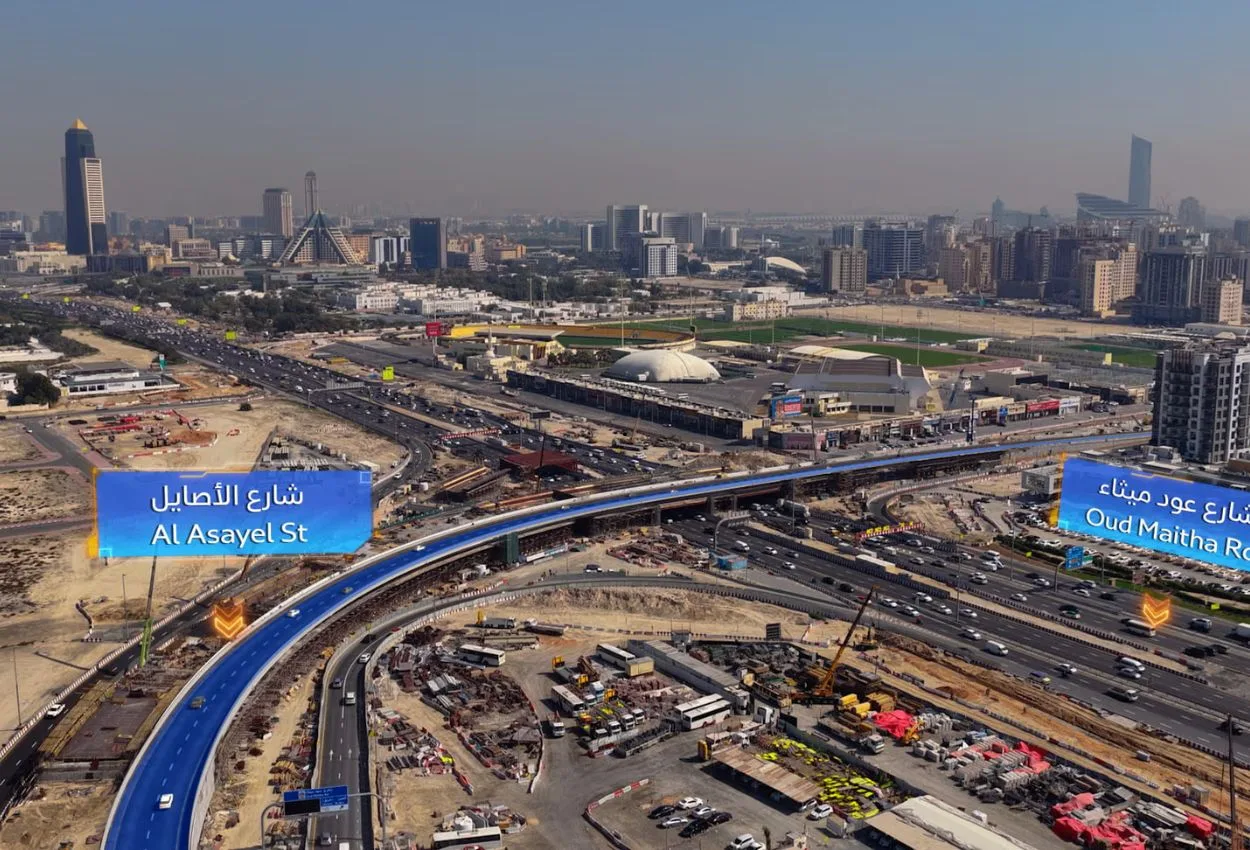
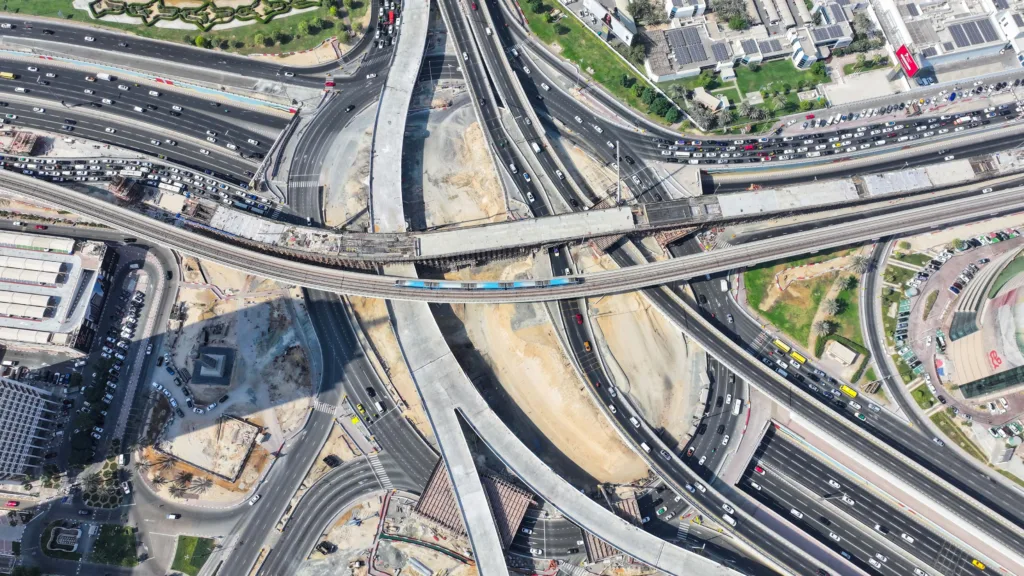
Sheikh Hamdan reviewed the progress of the Trade Centre Roundabout Improvement Project, one of Dubai’s interchanges linking Sheikh Zayed Road with five arterial streets: Sheikh Khalifa bin Zayed Street, Sheikh Rashid Street, 2nd December Street, Zabeel Palace Street, and Al Majlis Street.
The project has reached 40 per cent completion and will open in stages, starting in January next year with the inauguration of two bridges serving traffic from 2nd December Street towards Al Majlis Street and Sheikh Rashid Street.
In March next year, the bridge connecting Sheikh Zayed Road to Sheikh Khalifa bin Zayed Street is scheduled to open, followed by two bridges in October 2026 serving traffic from Sheikh Rashid Street and Al Majlis Street towards 2nd December Street.
Al Tayer explained that the project involves constructing five bridges with a length of 5,000 metres and converting the roundabout into a surface-level intersection to improve traffic flow from Sheikh Zayed Road towards 2nd December Street and from Al Mustaqbal Street towards Sheikh Zayed Road in the direction.
The project will facilitate traffic from 2nd December Street towards Al Majlis Street, connecting to Al Mustaqbal Street, and from Sheikh Rashid Street towards Deira. It will also provide movement through a bridge linking Sheikh Zayed Road with Sheikh Khalifa bin Zayed Street.
Upon completion, the project will double the junction’s capacity, cut delays from 12 minutes to 90 seconds, and reduce travel time from Sheikh Zayed Road to Sheikh Khalifa bin Zayed Street from six minutes to one.
Al Mustaqbal Street enhancement specifications
Sheikh Hamdan was briefed on the Al Mustaqbal Street Improvement Project, which extends from its intersection with Zabeel Palace Street to Financial Centre Street. Scheduled for completion in 2027, the project features bridges and tunnels with a length of 1,500 metres and will widen the street from three to four lanes in each direction.
The upgrade will boost the street’s capacity by 33 per cent, from 6,600 to 8,800 vehicles per hour, while reducing travel time from 13 minutes to six minutes.
The project includes the construction of three tunnels totalling 1,100 metres at the intersection of Al Mustaqbal Street and Trade Centre Street, in addition to a 400-metre bridge serving traffic from Dubai World Trade Centre towards the intersection of Zabeel Palace Street and Al Mustaqbal Street.
It also entails widening Al Mustaqbal Street from its intersection with Financial Centre Street to Zabeel Palace Street over 3,500 metres, increasing the lanes from three to four in each direction.
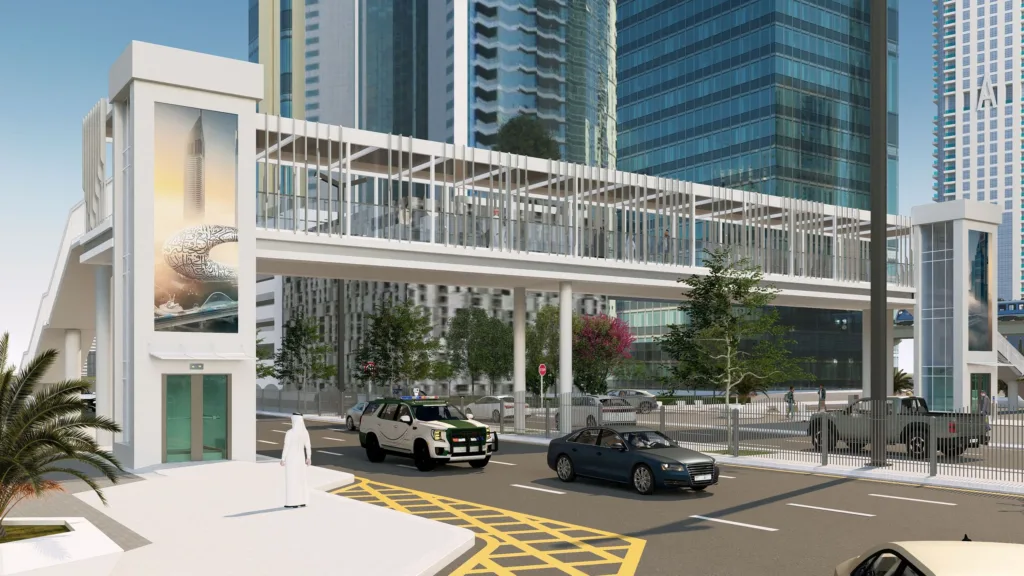
The project features connections to improve traffic movement at the intersections of Al Mustaqbal Street with Exhibition Street and Trade Centre Street, the construction of a pedestrian bridge on Sukuk Street, and upgrades to junctions along the corridor.
Dubai’s six-zone architectural classification system
Sheikh Hamdan reviewed the Architectural Identity for Dubai’s road projects, developed to enrich the city’s character, enhance the quality of its landscape, and standardise design criteria for infrastructure and road projects across the emirate.
The strategy aligns with the Dubai 2040 Plan, which seeks to elevate the quality of life, reinforce the city’s identity, and enhance the efficiency of the environment through designs inspired by Dubai’s heritage, presented within a framework that reflects the city’s evolution and leadership.
The Architectural Identity establishes a framework for infrastructure elements such as bridges, canopies, street furniture, lighting, and components, ensuring harmony across all projects. It also integrates sustainability and principles using materials and by balancing performance with value.
The implementation of this Architectural Identity will reinforce Dubai’s character and showcase its landscape on the stage, positioning the city as a model that blends heritage with modernity and as a leader in unifying standards for infrastructure and road projects.
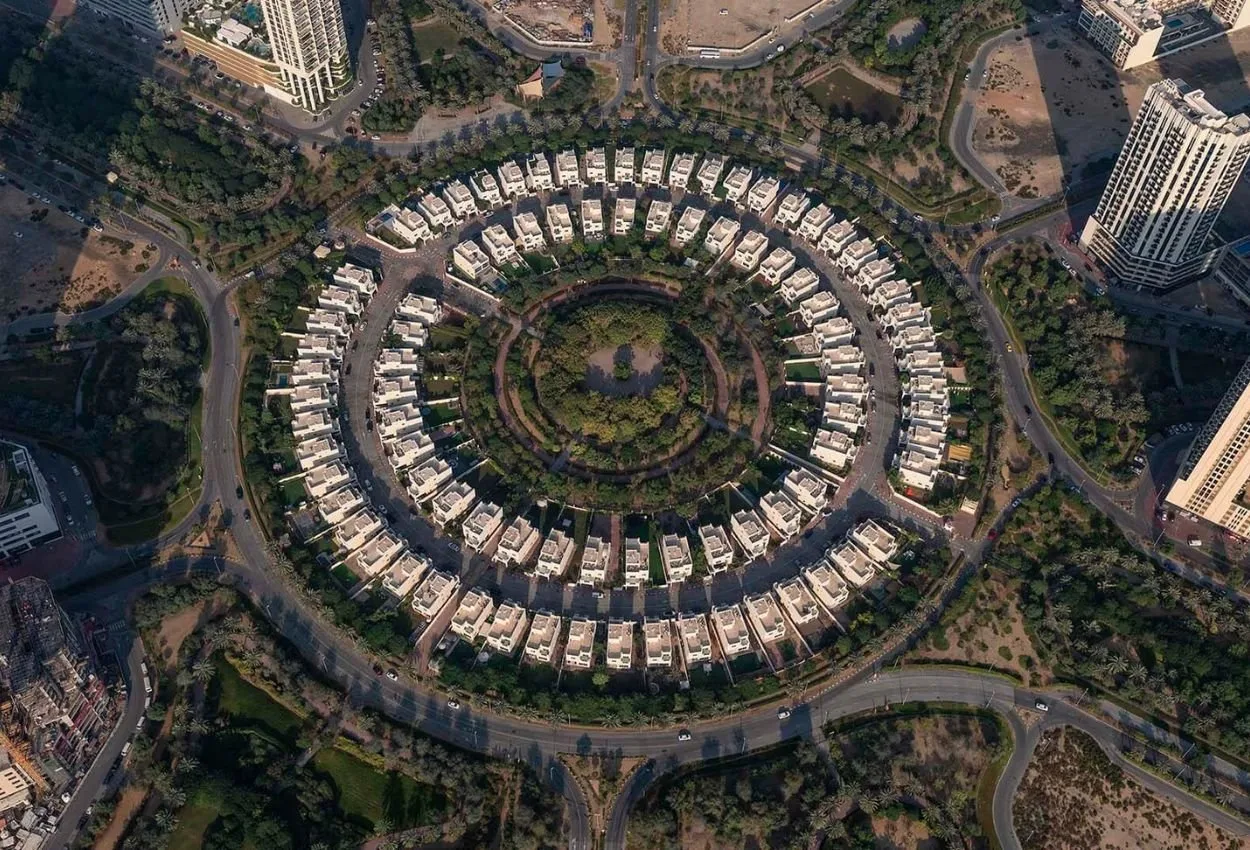
Dubai has been classified into six zones based on land use, activities, and the form and façades of buildings. The aim is to establish design standards for each zone to ensure harmony within the landscape and reinforce the identity and character of areas across the emirate.
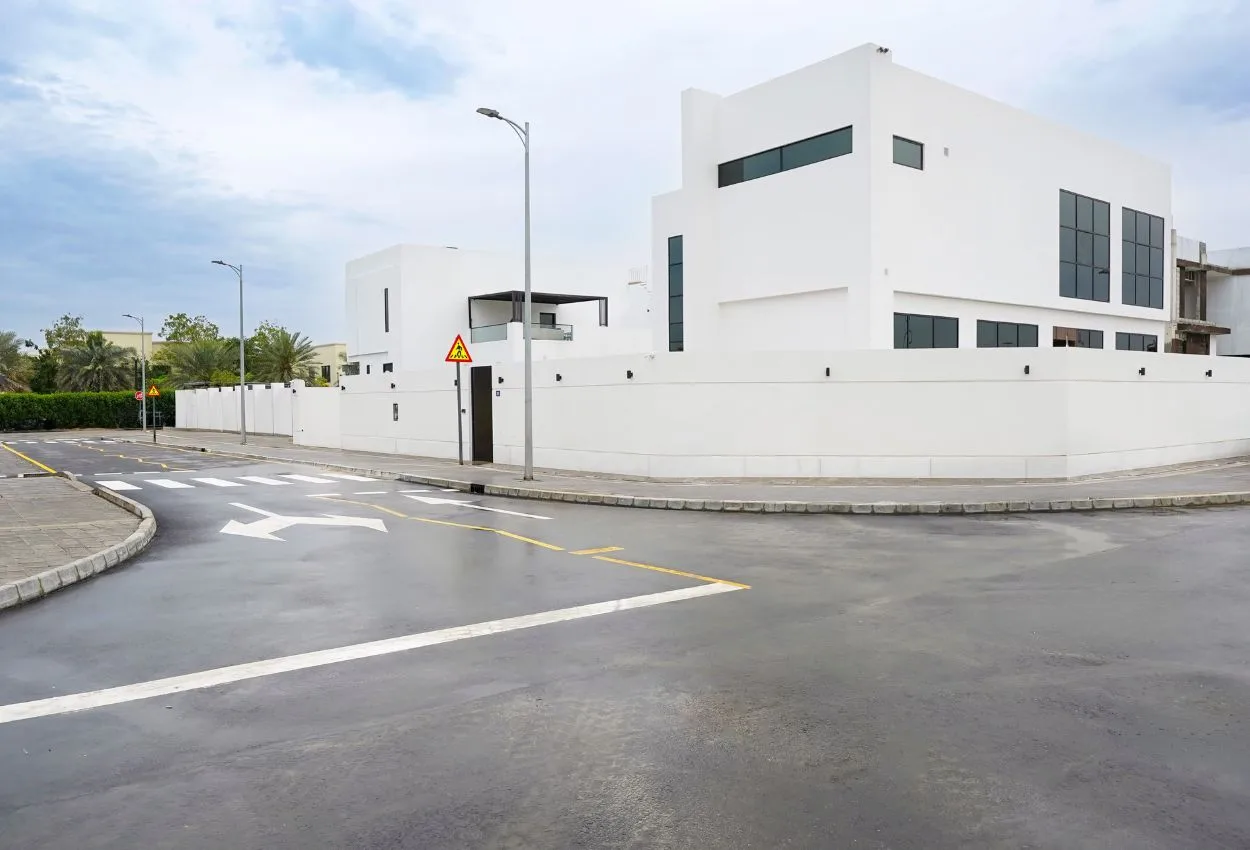
The classification includes residential zones, which emphasise privacy and tranquillity, featuring colours and materials inspired by the environment; rural zones, which reflect a character through materials and tones; and industrial zones, characterised by simplicity and function, using materials and colours suited to the nature of activities in these areas.
Mixed-use zones combine residential and functions, adopting a language that allows integration between spaces.
The fifth category encompasses zones, which highlight Dubai’s and heritage identity through details inspired by design and ornamentation. The sixth category comprises zones, distinguished by façades, forms, and materials that embody the spirit of and excellence defining the city.
Each area has been assigned materials, colours, and styles to ensure coherence within its area while preserving the diversity that reflects the richness of Dubai’s identity and the variety of its character.
Dubai Urban Challenge competition results
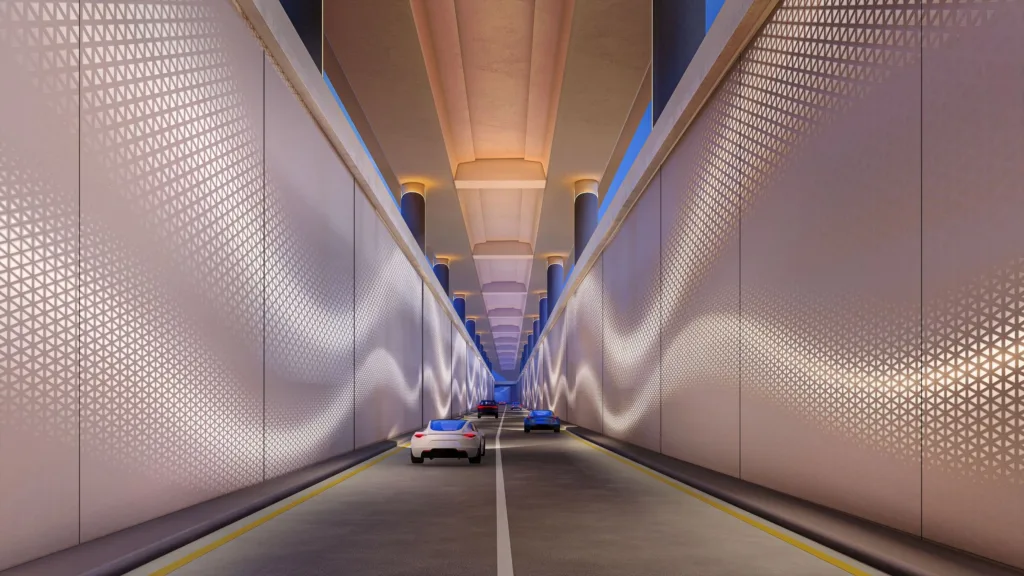
Sheikh Hamdan was briefed about the results of the Dubai Urban Challenge, a competition launched by the RTA to develop an Architectural Identity for Dubai’s roads through designs that capture the city’s spirit while balancing function, aesthetics, and sustainability.
The competition attracted more than 500 artists and designers from 91 countries. Entries were evaluated by a panel comprising architects.
The winners included Oliver Charles from the United Kingdom for his design A Thread Through Time; Mohammed Ayash from Saudi Arabia for his design Breathing Masonry; and Giulietta Debrutti from Argentina for her design Echo.
Dubai tunnels initiative and artistic integration
At the conclusion of the visit, Sheikh Hamdan reviewed the Dubai Tunnels initiative, which aims to enhance Dubai’s landscape by engaging artists in shaping the city’s identity. The initiative covers the beautification of 18 tunnels in three phases.
The first phase includes three tunnels along Al Khaleej Street, Umm Suqeim Street, and Oud Metha Street; the second phase comprises five tunnels on Museum of the Future Street, Trade Centre Street, and Al Sukook Street; and the third phase features 10 tunnels along Al Wasl Street, Jumeirah Street, and Umm Suqeim Street.
The review also covered technologies adopted by the RTA in the design and construction of the tunnels. These include smart lighting systems that enhance the experience while providing a and environment, as well as wall panels to humidity and heat, developed to highlight Dubai’s identity.
The technologies also incorporate and materials, in line with Dubai’s vision of reimagining infrastructure as an extension of the city. This approach showcases the emirate’s distinction through an integration of function, beauty, and sustainability.