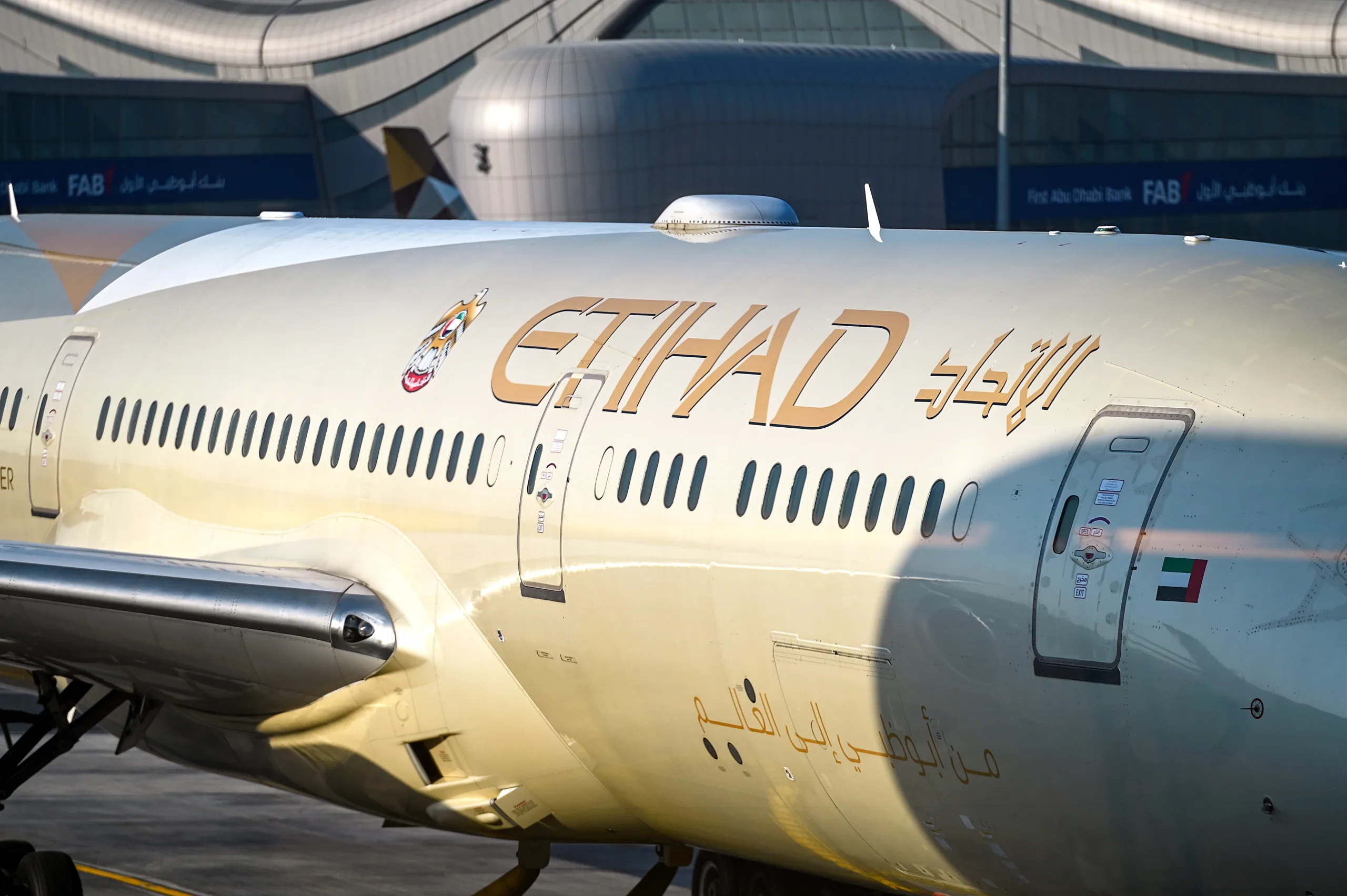
Etihad Airways has launched daily flights between Abu Dhabi and Addis Ababa, marking its entry into Ethiopia and adding capacity on a corridor linking the Middle East and Africa.
The service connects Zayed International Airport in Abu Dhabi with Addis Ababa Bole International Airport. Etihad said the inaugural flights were full in both directions, indicating strong demand between the two capitals and underscoring Ethiopia’s position as one of Africa’s fastest-growing aviation markets.
The route debut coincides with the formal start of Etihad’s joint venture with Ethiopian Airlines, announced earlier this year. Under the partnership, both carriers will operate daily services on the Abu Dhabi–Addis Ababa route, providing a combined twice-daily schedule. The agreement allows the airlines to coordinate timetables, share resources and jointly develop routes, aimed at giving passengers more choice and smoother connections.
Through Ethiopian’s Addis Ababa hub, Etihad customers will gain access to more than 55 destinations in 33 African countries, expanding links to East, West and Southern Africa. Ethiopian passengers will be able to connect through Abu Dhabi to over 20 destinations across Asia, Australia and the Middle East.
This move brings a deeper commercial tie-up between a Gulf carrier and Africa’s largest airline by network, reinforcing Abu Dhabi’s role as a transfer point between Africa, the Middle East and Asia. It also adds competition on key flows where Gulf and African carriers are stepping up capacity to meet rising trade and travel demand.
“This partnership creates a bridge between two regions with expanding connections and growing economic relations,” Etihad Group CEO Antonoaldo Neves said, calling it a step that “redefines connectivity between Africa, the Middle East, and Asia.”
Addis Ababa is a major African aviation and diplomatic hub, home to the African Union and several international bodies. Its role as a transfer gateway and commercial centre makes it a strategic addition to Etihad’s route map and broadens access to both heritage destinations and fast-growing regional markets.
The launch forms part of a wider African expansion for the Abu Dhabi carrier. Etihad plans to double flights to Nairobi to 14 per week by December, raise frequencies to Casablanca and Johannesburg, and start services to Tunis and Algiers next month. It is also expanding cooperation with Air Seychelles and intends to resume seasonal flights to Zanzibar in June 2026.
Addis Ababa is Etihad’s tenth new destination in 2025, according to the airline, and the carrier plans to add 20 more routes through 2026 as Abu Dhabi seeks to deepen its position as a global aviation hub. The airline’s growth strategy targets a mix of business and leisure markets and relies on partnerships to extend reach, with Africa emerging as a key focus area as economies develop and demand for intra-Africa and intercontinental connectivity rises.
By pairing a daily service of its own with Ethiopian’s daily operation under the new venture, Etihad is increasing frequencies on a route that feeds long-haul traffic at both ends. The combined network breadth is designed to attract transfer passengers while improving options for point-to-point travel between the United Arab Emirates and Ethiopia.