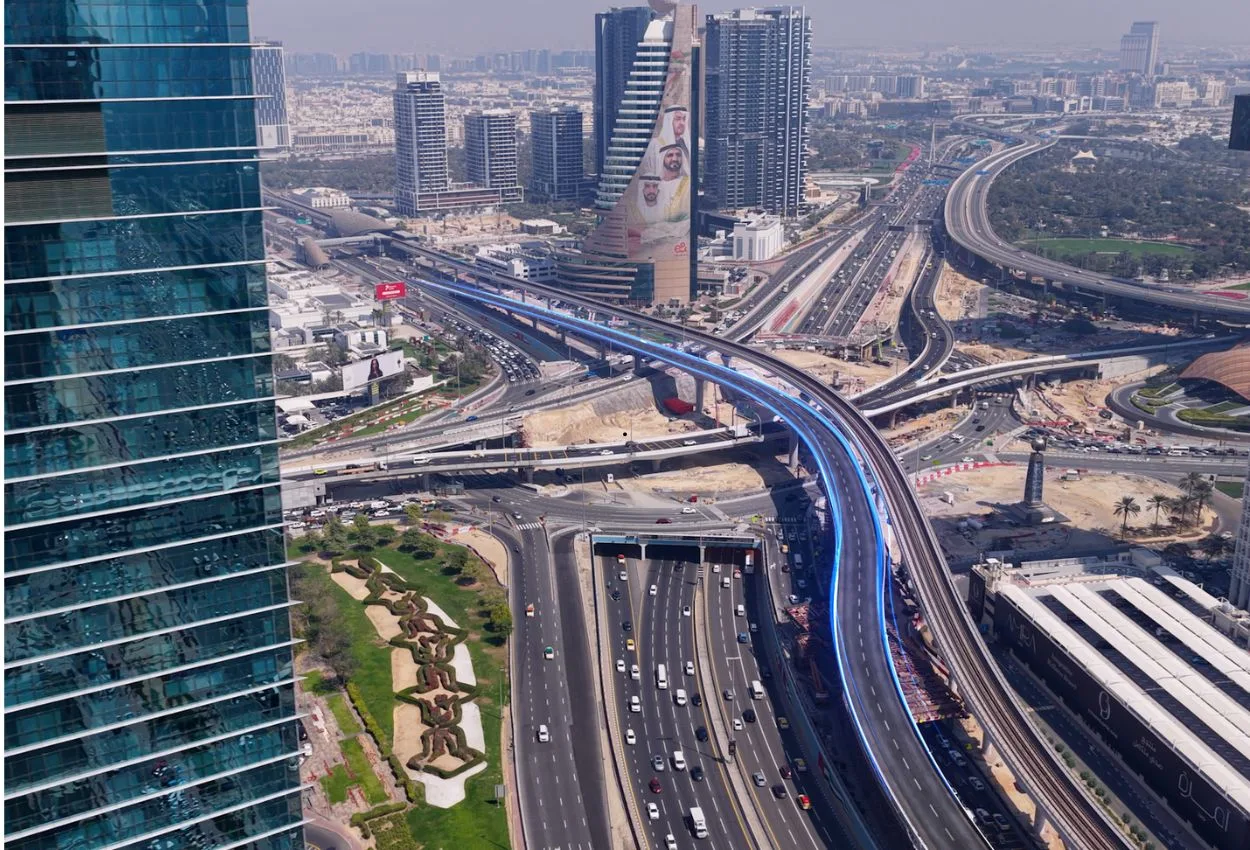
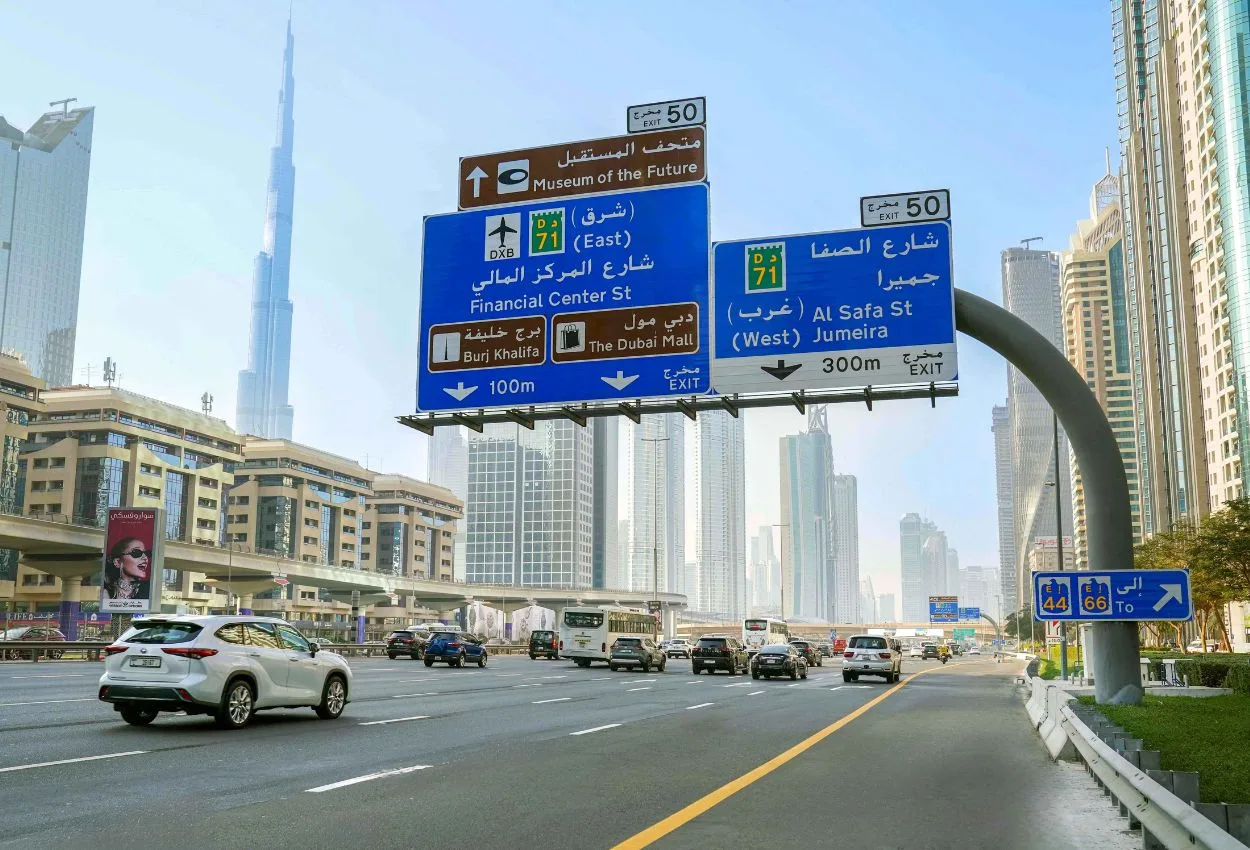
Dubai’s Roads and Transport Authority (RTA) has begun implementing a series of traffic solutions across eight locations in the emirate, as part of a 2026 plan that encompasses more than 45 traffic enhancements.
The works form part of RTA’s effort to improve road network efficiency and safety standards for all road users, in line with Dubai’s urban and population growth and rising vehicle density.
RTA’s 45-point traffic plan: What Dubai drivers need to know in 2026
The eight locations covered under the plan are: Emirates Road from Sharjah towards Wadi Al Amardi Street; Umm Amara Street from Sheikh Zayed Road towards Al Wasl Street; Jebel Ali–Lehbab Street; the area between Sama Al Jaddaf and Al Jaddaf Waterfront near Al Jaddaf Metro Station; Al Na’ayat Street in Al Barsha 1; Al Maktoum School in Al Satwa; the intersection of Al Ittihad Street and Al Quds Street; and Sheikh Rashid Street near Grand Hyatt Dubai towards Bur Dubai.
The solutions include widening selected streets from one lane to two lanes, converting roundabouts into signalised intersections, and constructing links to improve connectivity between main roads and adjacent residential and commercial districts.
At-grade upgrades will also be carried out, alongside the provision of parking spaces at schools and facilities, and a package of traffic safety enhancements.
Upon completion, RTA expects to reduce congestion levels and shorten journey times by between 15 per cent and 30 per cent across the locations covered.
Dubai RTA to widen roads and build new links under 2026 traffic enhancement plan
The authority said the projects will improve the daily mobility experience and strengthen the operational efficiency of the road network in these areas.
RTA applies three criteria when delivering road upgrades. The process begins with monitoring of road network performance, traffic studies, and data analysis to identify congestion hotspots.
Traffic control centres provide real-time monitoring to detect bottlenecks, while field inspection teams evaluate conditions on site and recommend solutions. The authority says this methodology ensures improvements in traffic flow and helps reduce congestion during peak hours.