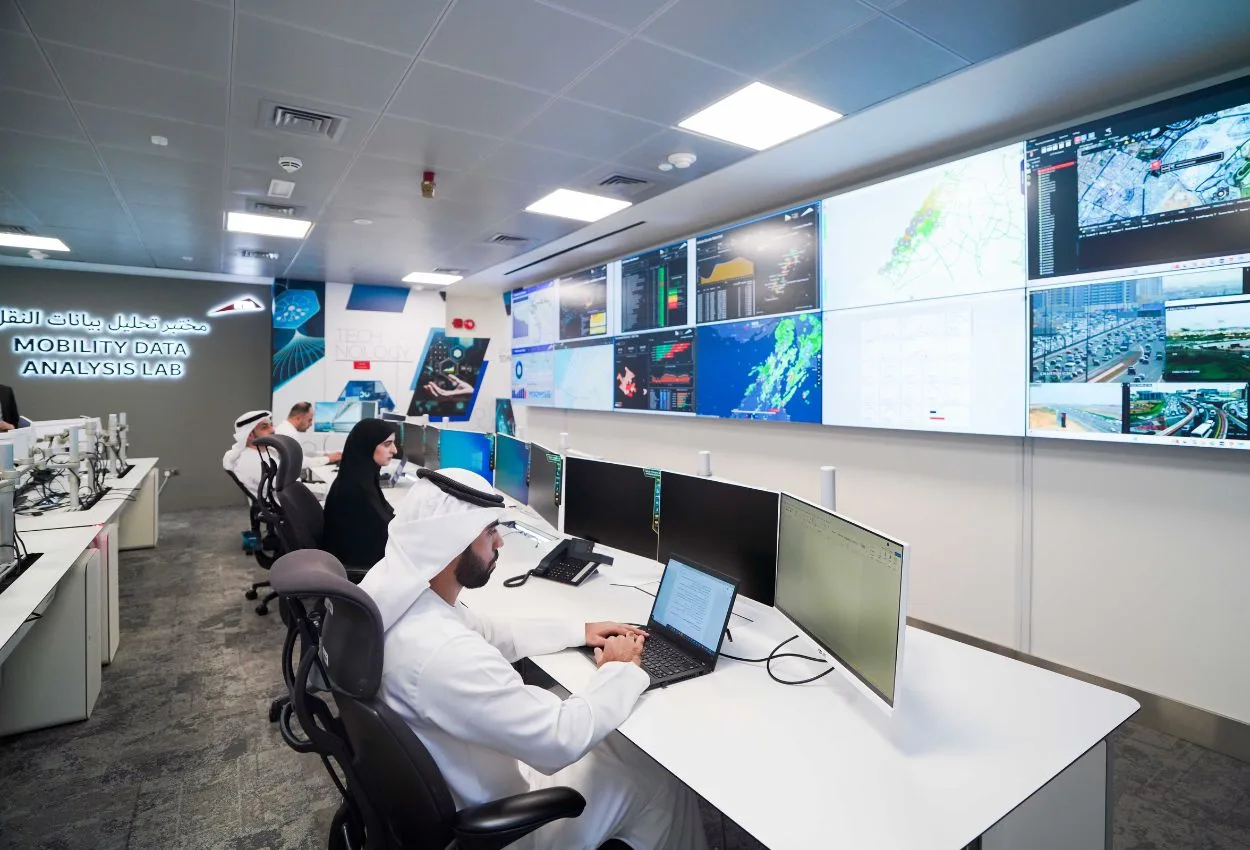
Dubai’s Roads and Transport Authority (RTA) has launched the Transport Data Analysis Laboratory at the Enterprise Command and Control Centre.
The laboratory monitors, collects, and analyses transport data and prepares studies and reports that support decision-making systems at strategic and operational levels.
The laboratory strengthens readiness for transport planning and the management of events and emergencies. The establishment serves as an enabler of the Enterprise Command and Control Centre’s role as a platform for linking and governing RTA’s control centres.
RTA opens new Transport Data Lab to monitor Dubai’s roads and traffic systems
The system unifies operational monitoring processes and activates artificial intelligence technologies and models for scenario analysis. The initiative supports the delivery of solutions, enhances efficiency, and improves response times during events and activities.
“The establishment of the Transport Data Analysis Laboratory represents a qualitative shift in the operational analytics ecosystem. It strengthens integration between monitoring systems and artificial intelligence and converts large volumes of operational data into predictive indicators that support accurate and rapid decision-making. These indicators contribute to smoother traffic flow, higher operational efficiency, and enhanced sustainability of the transport system across the emirate,” Mohammed Al Ali, Director of the Enterprise Command and Control Centre said in a statement.
He described the initiative as a step within RTA’s efforts to harness technologies in support of its vision for mobility. The laboratory reinforces the role of the EC3 as a hub for innovation and transformation within Dubai’s transport ecosystem.
The laboratory receives data from more than 35 sources covering modes of transport, in coordination with operational centres and departments. These include buses, the metro, the tram, marine transport, soft mobility means, taxis, limousines, and vehicles.
The laboratory automates more than 150 operational performance indicators, enhancing planning effectiveness, coordination, response speed, and the evaluation of policies.
“The laboratory represents a practical step towards translating RTA’s vision and expanding the scope of research collaboration with academic institutions and strategic partners to develop best analytical practices in the transport sector,” Al Ali added.
Dubai Transport Data Lab analyses GITEX 2025 traffic to enhance event management
The laboratory supports decision-making through a framework focused on preparing studies and reports and leveraging artificial intelligence and data to build models. These models contribute to forecasting traffic movement and demand levels across modes of transport, enhancing operational readiness under times and conditions.
The Director noted that the laboratory analysed transport movement during the GITEX 2025 event. The Data Drive platform was utilised to analyse traffic patterns before and during the event, with the aim of identifying congestion points and improving traffic flow throughout the exhibition. The outcomes will be leveraged to enhance operational efficiency and support planning for seasons.
Through its systems, the laboratory contributed to identifying locations with a likelihood of traffic accidents, enabling the implementation of measures in coordination with entities. This supports traffic safety and ensures traffic movement across the emirate’s streets and roads.