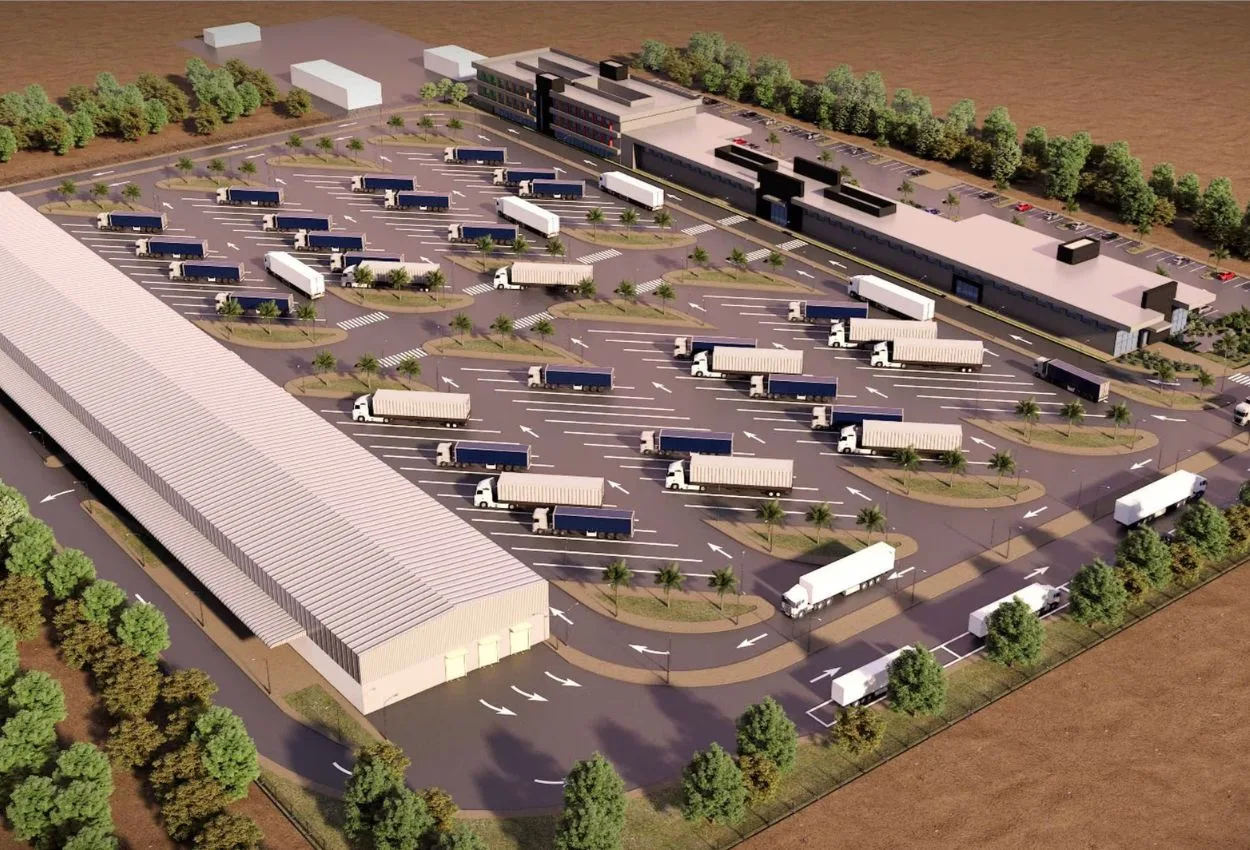
Dubai’s Roads and Transport Authority (RTA) has awarded a contract for three truck rest areas across the emirate, in partnership with the private sector, spanning more than 210,000 square metres with capacity for 490 trucks and heavy vehicles.
Dubai’s Roads and Transport Authority (RTA) has awarded a contract for the development of three integrated truck rest areas across the emirate, under a public-private partnership model.
The facilities will be positioned along corridors and within logistics hubs that record volumes of truck traffic daily. Entry and exit points will be designed in accordance with international standards.
Dubai to build three truck rest areas with capacity for 490 heavy vehicles
“Awarding the contract for the development of three integrated truck rest areas in partnership with the private sector marks a key strategic step in advancing Dubai’s transport and logistics ecosystem that enhances the efficiency of the land transport sector and reinforces the emirate’s position as a global hub for trade and logistics services,” Mattar Al Tayer, Director General, Chairman of the Board of Executive Directors of the Roads and Transport Authority (RTA) said in a statement.
Al Tayer noted that Dubai records more than 500,000 truck trips on its roads daily, with internal truck movement accounting for approximately 83 per cent of total truck traffic. The number of trucks registered in Dubai has reached 85,000.
“The development of truck rest areas responds to this rapid growth and seeks to enhance operational efficiency and road safety by providing an integrated and secure environment for drivers. It helps in reducing random stopping and improving traffic flow across the road network, thereby supporting the sustainability of supply chains,” Al Tayer added.
“The freight and logistics sector in the UAE represents a strategic pillar and a key driver of sustainable economic growth, as well as a core enabler of the Dubai Economic Agenda D33. It reinforces the emirate’s position as a global hub for trade and supply chains, and requires accelerating the development of smart, integrated infrastructure built on innovation and advanced technologies. It will enhance the efficiency, resilience, and sustainability of logistics operations, and strengthen Dubai’s competitiveness on the global economic map,” he further explained.
“The partnership with the private sector in the development and operation of these facilities reflects RTA’s direction towards adopting modern models for infrastructure delivery, enhancing economic sustainability and improving operational efficiency. The three facilities have been designed as integrated service complexes offering accommodation, maintenance, training, and commercial services, thereby enhancing the quality of life for truck drivers and elevating the working environment in this vital sector,” he said.
Site selection was guided by technical studies and criteria aimed at maximising utilisation. Proximity to roads, areas, and logistics cities was taken into account to serve the largest number of trucks on a daily basis.
Jebel Ali 3 – The facility near Jebel Ali 3 spans 100,000 square metres and has capacity for up to 250 trucks and heavy vehicles. It will include a heavy vehicle testing centre, a driver training centre focused on safety requirements, a light vehicle maintenance centre, a periodic maintenance facility, retail outlets, and logistics warehouses. Accommodation, recreational lounges, electric vehicle charging points, and diesel refuelling stations will also be provided.
Saih Shuaib / Dubai Industrial City – The second facility, near the entrance to Dubai Industrial City, spans approximately 51,000 square metres and accommodates up to 120 trucks and heavy vehicles. Services will include accommodation, a periodic maintenance centre, retail outlets, logistics warehouses, recreational lounges, and electric vehicle charging points.
Madinat Hind 2 / Emirates Road – The third facility, located along Emirates Road adjacent to Al Tayy Racetrack, spans over 59,000 square metres and accommodates approximately 120 trucks and heavy vehicles. It will include a heavy vehicle testing centre, a driver training centre, a periodic maintenance facility, retail outlets, logistics warehouses, accommodation, recreational lounges, and electric vehicle charging points.
RTA is conducting a study of truck movement across Dubai, incorporating field surveys, interviews, and workshops with relevant entities and companies. The study aims to develop a model for planning future truck movement.
Areas under examination include the need for dry ports and freight consolidation and distribution centres, a review of truck restriction policies, timings and routes, the need for routes designated for trucks, and matters relating to the management of truck and freight movement in the emirate.
In a separate initiative, RTA, in collaboration with Abu Dhabi National Oil Company (ADNOC), has already developed 14 truck rest areas across six locations along corridors and logistics hubs.
These are distributed along Sheikh Mohammed bin Zayed Road, Emirates Road, Dubai–Hatta Road, Dubai–Al Ain Road, Jebel Ali–Lehbab Road, and Al Awir Road. Each rest area spans between 5,000 and 10,000 square metres and accommodates between 30 and 40 trucks and heavy vehicles.
“The strategic distribution of these facilities near logistics cities and key corridors strengthens the integration of Dubai’s transport system and supports the emirate’s readiness to accommodate future growth in freight movement. This aligns with the vision of the wise leadership to position Dubai as a leading global model in advanced infrastructure and quality of life,” Al Tayer said.