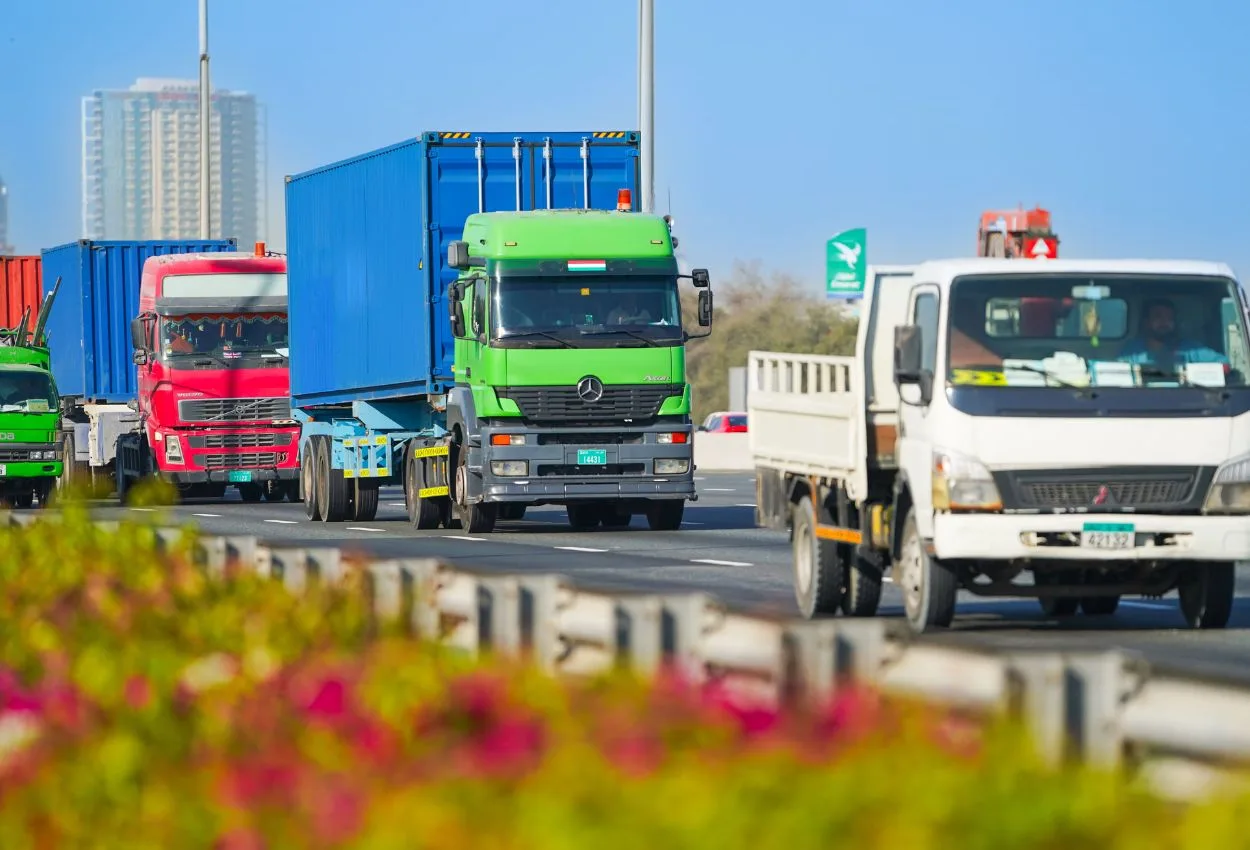
Dubai’s commercial transport sector recorded growth in 2025, with the number of licensed companies rising by more than 40% compared with 2024, the Roads and Transport Authority (RTA) has announced.
Mattar Al Tayer, Director General and Chairman of the Board of Executive Directors of the RTA, said the total number of vehicles registered in the sector surpassed 500,000, an increase of approximately 25 per cent on the previous year.
The number of licensed commercial transport companies rose from 12,100 in 2024 to 16,917 in 2025. Al Tayer said this underscored “the expansion of the sector’s business base and sustained investor confidence in Dubai’s economic landscape,” adding that the results “reaffirm the emirate’s established position as a leading global hub for transport and logistics.”
Dubai’s commercial transport sector contributes $2.29bn to economy in 2025
The direct contribution of the commercial transport sector to Dubai’s economy exceeded AED8.4 billion annually, the RTA confirmed.
“The number of licensed commercial transport companies rose from 12,100 in 2024 to 16,917 in 2025, underscoring the expansion of the sector’s business base and sustained investor confidence in Dubai’s economic landscape. These results reaffirm the emirate’s established position as a leading global hub for transport and logistics,” Al Tayer said in a statement.
“This robust growth has been driven by several strategic factors, most notably accelerated digital transformation, the wider deployment of smart solutions, rising demand for app-based delivery services, and the continued expansion of logistics operations, vehicle rental services and related commercial transport activities. These trends reflect the rapid evolution of trade patterns and global supply chains,” he added.
Al Tayer further explained that the sector’s performance was “fully aligned with the objectives of Dubai Commercial and Logistics Land Transport Strategy 2030, which aims to strengthen the sector’s contribution to sustainable economic development and consolidate its role as a fundamental pillar of Dubai’s integrated economic ecosystem.”
The RTA also introduced a regulatory framework in 2025 governing the operation of autonomous heavy vehicles within the logistics sector. Al Tayer described the framework as supporting “the adoption of advanced technologies and reinforcing Dubai’s competitiveness in advanced transport.”
The authority also launched the digital ‘Logisty’ platform for logistics operations, which Al Tayer said had achieved “strong market uptake and growing engagement among operators and users.” The platform received the ideasUK Idea of the Year 2025 – Innovation Award.
As part of its sustainability agenda, the RTA signed a partnership agreement with a company to establish a network of battery-swapping stations for delivery bikes across Dubai. The initiative is intended to accelerate the shift towards low-emission mobility solutions.
In parallel, the RTA developed a network of rest areas for delivery drivers throughout the emirate, with the aim of enhancing road safety and supporting working conditions for drivers in the sector.
Al Tayer said the sector played a role in advancing the Dubai Economic Agenda (D33) by “facilitating the movement of goods, enhancing the efficiency of global supply chains, strengthening Dubai’s global competitiveness, and generating positive social and environmental impact.”
He added that the RTA remained committed to “strengthening the governance of commercial transport activities in Dubai, fostering effective strategic partnerships with the private sector, and streamlining commercial licensing procedures, in support of the leadership’s vision to cement Dubai’s standing as a leading global hub for business and trade.”
“Continued innovation, deeper integration between the public and private sectors, and broader adoption of advanced technologies and smart solutions will propel the commercial transport sector to new levels of growth in the coming phase. This will reinforce Dubai’s leadership in commercial transport and land logistics, attract local and international investment, and ensure the sustainability of business activities across diverse economic sectors,” he concluded.