
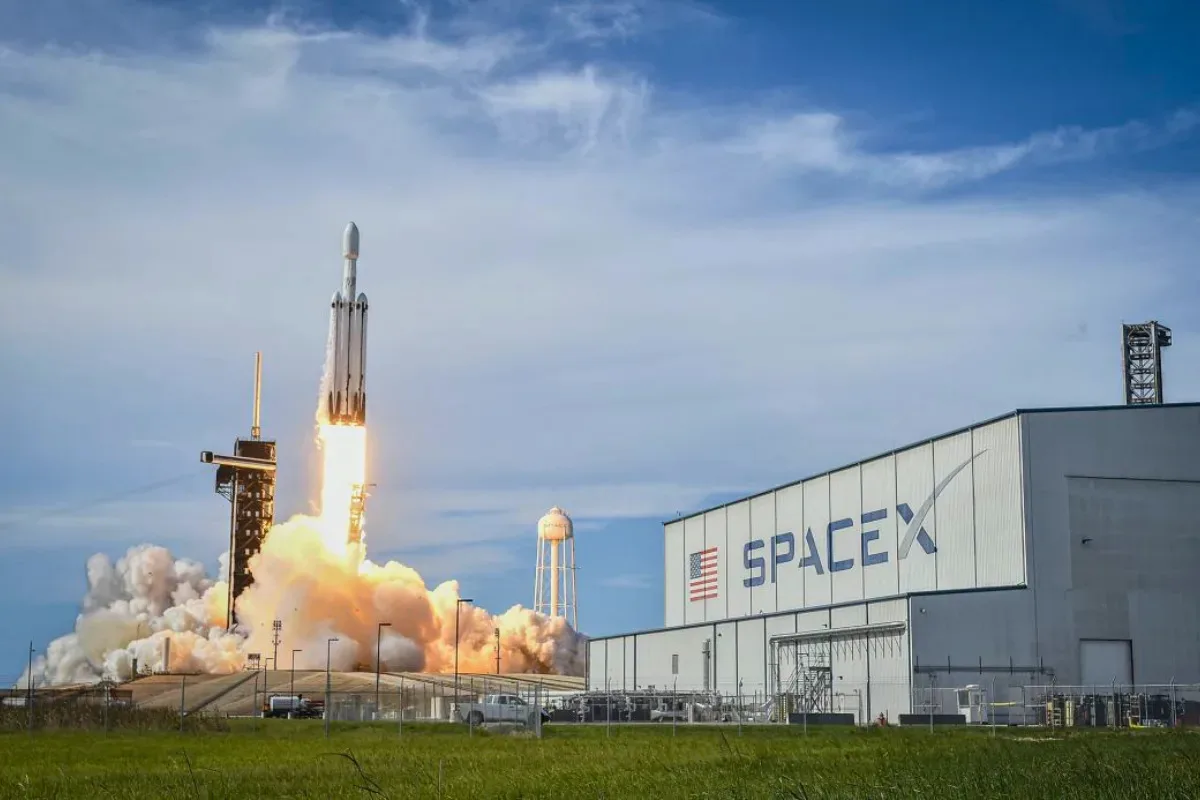
Crypto traders running perpetual futures contracts on SpaceX ahead of its public listing are pricing in a strong first-day gain when the company begins trading on Nasdaq this Friday.
The SpaceX perpetual futures contract was trading at around $162 on Hyperliquid, a derivatives platform dominated by active, high-leverage traders, according to CNBC. That implies a premium of roughly 20% over the company’s IPO price of $135 per share. The contract hit highs above $220 shortly after it launched in May, and similar levels were recorded on Binance.
SpaceX’s IPO was reportedly around four times oversubscribed, meaning investor demand outpaced available shares by that margin. At its IPO price, the company would carry a market capitalisation of approximately $1.77 trillion, which would make it the seventh-largest listed company in the United States and would place it ahead of Tesla, currently valued at around $1.6 trillion.
Eric Chen, co-founder and CEO of DeFi infrastructure firm Injective Labs, offered a measured read of the futures signal. “The perps trading on Hyperliquid indicate interest in the SpaceX IPO, but enthusiasm isn’t at euphoric levels,” he said. He noted that the market is dominated by traders with high risk tolerance, and that the premium being priced in is not outsized compared with other recent IPO candidates.
Chen added that while perpetual futures serve as a useful gauge of investor appetite, they carry no guarantee of how the broader market will respond once actual shares begin trading. One risk he flagged: even the most bullish traders are not pricing in extreme enthusiasm, raising questions about whether demand will hold once real price discovery begins.
The pullback in SpaceX futures from their May highs mirrors the wider crypto market downturn. Bitcoin has fallen around 20% and Ethereum around 23% since the contract launched on May 18.
Perpetual futures, or “perps,” are derivatives that allow traders to speculate on asset price movements without an expiry date, using leverage and without holding the underlying asset. They account for more than 70% of total trading volume on centralised crypto exchanges, according to CoinGecko data.