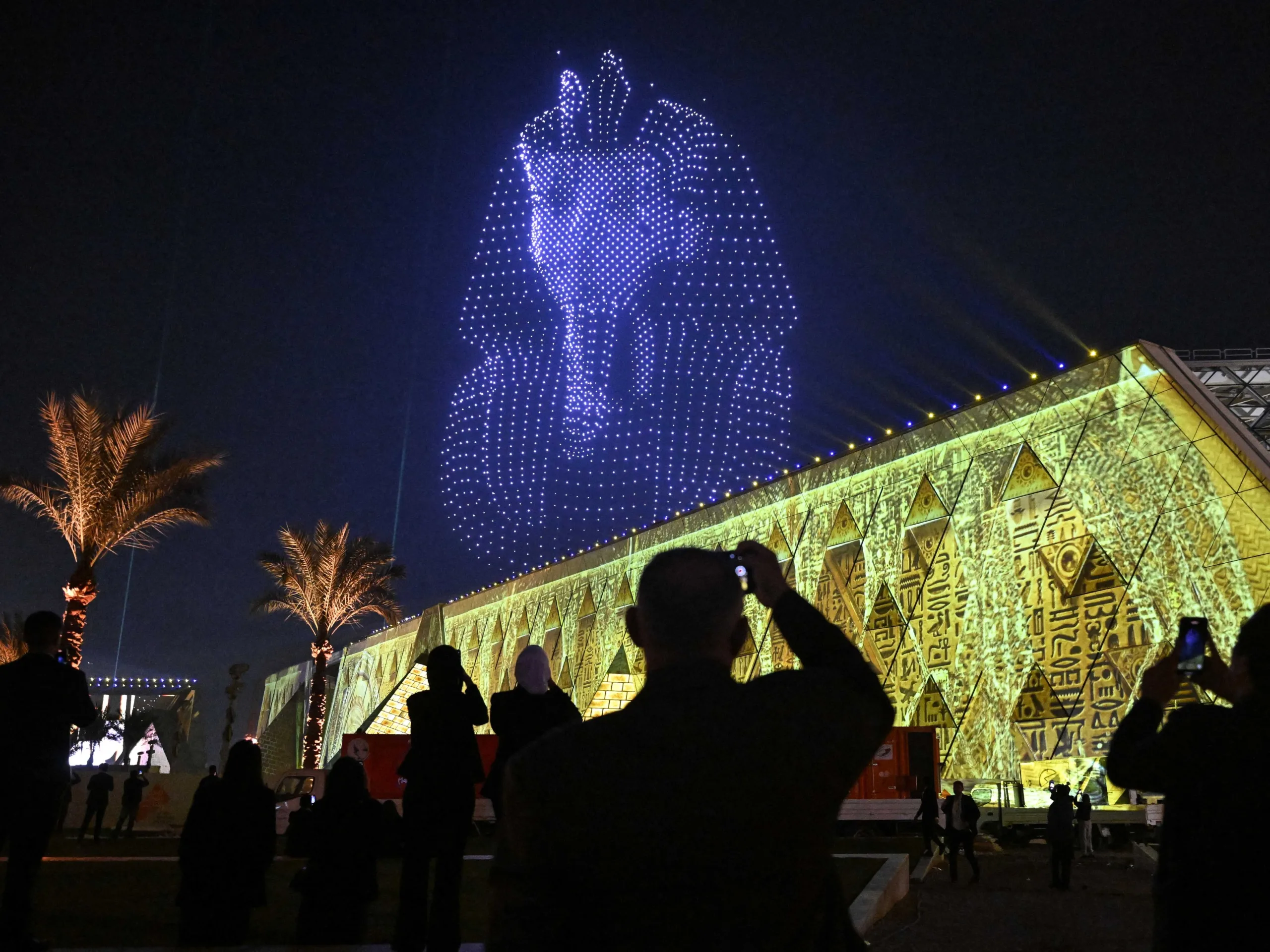

Canadian-Egyptian actor Mena Massoud recently shared an emotional Instagram post celebrating the grand opening of the Grand Egyptian Museum in Cairo. In his heartfelt message, the actor expressed profound admiration for the architectural marvel and national achievement, describing it as “the best new museum on planet Earth.” Massoud’s genuine enthusiasm reflected not merely professional appreciation but deep personal pride in his ancestral homeland and its civilizational heritage.
The Post and Its Significance
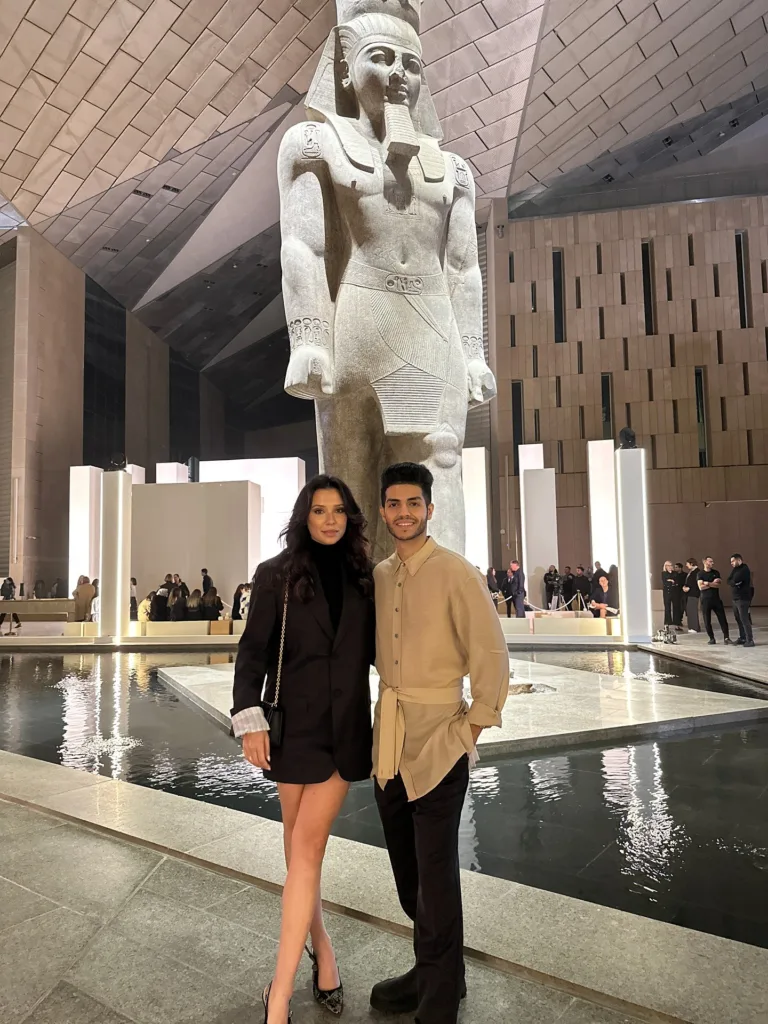
Massoud’s Instagram caption reveals the depth of his connection to the project and to Egypt itself. He wrote that he had the “great privilege” of visiting the museum during its construction phase, emphasizing that even in its incomplete state, the building left him breathless. This visit reflects Massoud’s deliberate efforts to maintain ties with his birthplace, despite having left Egypt at age three when his family emigrated to Canada. The actor extended congratulations to “all of my countrymen and countrywomen who had a hand in building” the museum, acknowledging the collective effort behind this massive undertaking.
The Museum’s Grandeur and Global Opening
The Grand Egyptian Museum officially opened on November 1, 2025, with an extraordinary inaugural ceremony attended by 39 heads of state and government from around the world. President Abdel Fattah El-Sisi presided over the event, which featured elaborate musical performances and cultural presentations celebrating Egyptian heritage. The ceremony included a composition by renowned Egyptian composer Hisham Nazih and captivating dance performances in authentic Pharaonic costumes.
Spanning approximately 490,000 square meters, the museum represents a 20-year construction journey and a 1.2 billion dollar investment. It houses over 100,000 rare archaeological artifacts, with approximately 50,000 pieces available for public viewing. The museum features the most comprehensive display of Tutankhamun’s treasures ever assembled, occupying 7,500 square meters of exhibition space. This represents the first time all of the young pharaoh’s treasures have been displayed together since their discovery.
The facility also includes the largest restoration center in the Middle East, spanning 32,000 square meters with 16 specialized laboratories. Uniquely, the museum allows public access to observe restoration operations, democratizing the conservation process and educating visitors about archaeological preservation.
Mena Massoud: From Cairo to Hollywood
Born on September 17, 1991, in Cairo to Egyptian Coptic Orthodox Christian parents Gorgit and Mansour Massoud, Mena grew up during a formative period when his family felt compelled to seek safer opportunities abroad. He has explained that his parents “felt like things were getting a little too dangerous when I was growing up in Egypt” and chose immigration to provide their children with better prospects. At age three, Mena relocated to Toronto, Canada, where he grew up while maintaining close connections to Egyptian culture through his family’s deliberate preservation efforts.
Massoud began his acting career in 2011 with minor television roles, including appearances in the series “Nikita” and “Combat Hospital.” These early experiences proved instrumental in shaping his professional identity and social consciousness. Notably, his initial role as a terrorist in “Nikita” motivated him to set a personal goal: to actively seek characters that challenge stereotypical portrayals of Arabs and people of color. This commitment to representation became a defining characteristic of his career choices.