Kempinski Hotels has acquired Augustine Hotel, Prague, in the group’s first property purchase in more than 50 years, as Europe‘s oldest hospitality group repositions itself towards direct ownership of hotel assets.
The acquisition, which is wholly owned by Kempinski, marks the group’s first since its investment in Hotel Vier Jahreszeiten Kempinski Munich in 1970.
The transaction signals a shift in strategy under the leadership of Barbara Muckermann, Chief Executive Officer of Kempinski Group, towards what the company describes as an “asset-heavier approach” to its global portfolio.
Europe’s oldest luxury hotel group buys Prague’s Augustine Hotel in historic deal
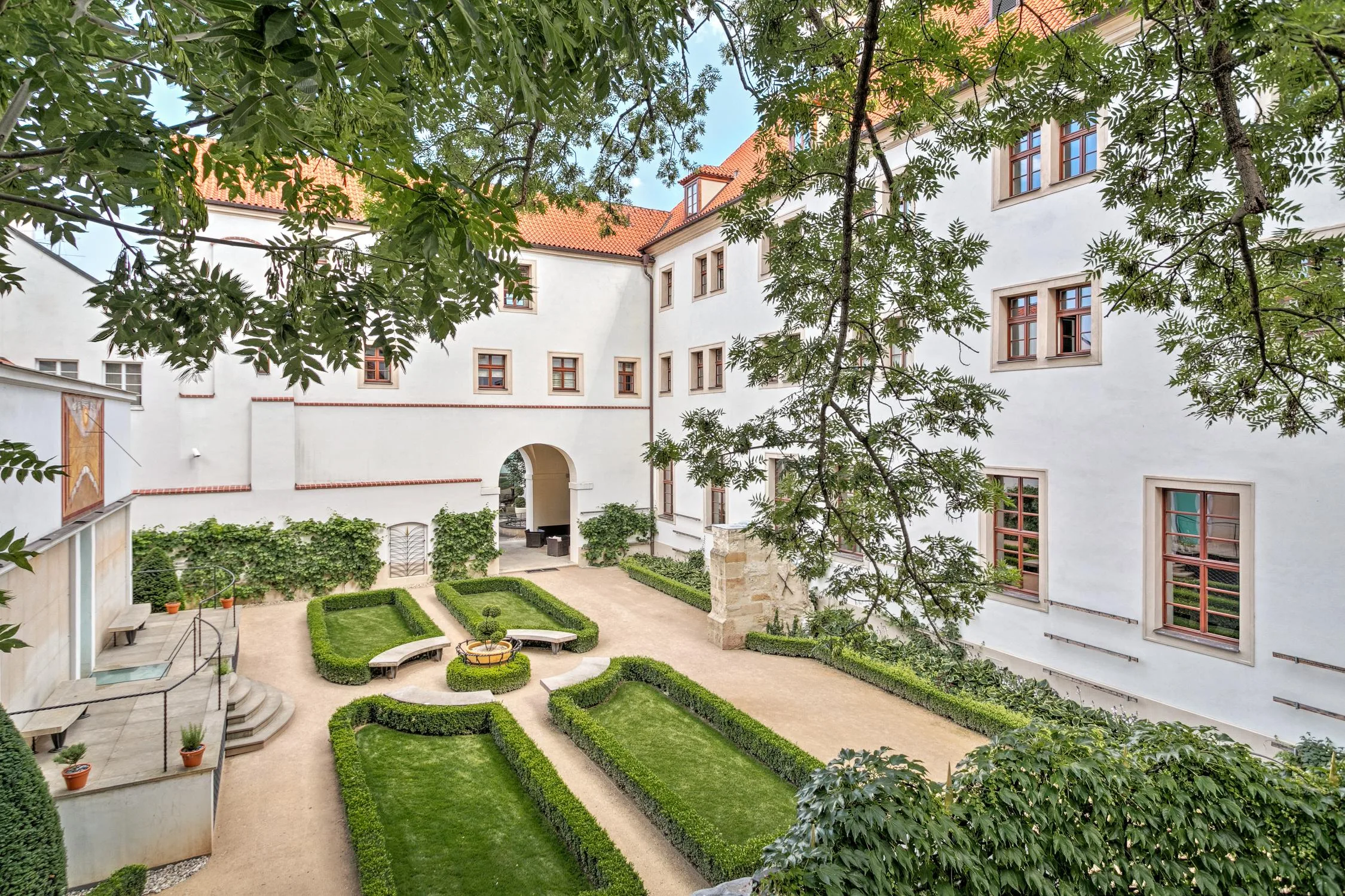
Augustine Hotel, Prague sits in the Malá Strana district, also known as the Lesser Town, at the foot of Prague Castle. The property is located within the walls of the Augustinian Monastery of St. Thomas, a site with a history spanning more than 800 years. The monastery remains a working community of Augustinian monks, who continue a routine of worship, work and study.
The hotel comprises 101 guest rooms, including 20 suites. Many rooms retain features from the monks’ former living quarters, including vaulted ceilings and wooden beams.
The property also includes two bar concepts – among them The Refectory Bar, housed in the monastery’s former dining hall – as well as restaurants, a spa and fitness centre, The Monastic Library, more than 400 square metres of meeting space, and in excess of 650 square metres of outdoor terraces and gardens.
The hotel has previously attracted heads of state, cultural figures and business leaders from across the world. Muckermann said the acquisition represented a broader repositioning of the group’s business and brand strategy.
“Kempinski was founded on a simple belief: that hospitality should enable guests to experience the best of The Good Life. Since its origin, Kempinski has defined luxury not as status or formality, but as generosity and joy; curating experiences from the heart of the destination and deriving richness from its culture and communities. As we evolve our business and brand strategy we are bringing this heritage back to life with the modern day traveller in mind,” she said in a statement.
She added that opportunities to acquire properties of this nature were rare. “This investment offered a unique and compelling opportunity to secure a heritage asset in a top-tier European luxury destination while also creating a grand showcase for The Good Life as the future of Kempinski as an ultra luxury brand.”
Muckermann described the hotel as a property that would serve as a marker for the group’s direction. “Rather than pursuing uniformity, we believe that Kempinski’s brand strength lies in its collection of highly individual properties, many of which are historic, architectural landmarks and are deeply resonant of the destinations’ culture and community. Augustine Hotel, Prague is not only an ideal addition to Kempinski’s heritage-led, global portfolio, it is set to become the first truly physical and experiential representation of the Kempinski of the Future.”
Gordon Drake, Chief Financial Officer of Kempinski Group, pointed to the financial rationale behind the purchase. “From a business perspective, well-located luxury hospitality assets with strong brand equity and cultural significance offer resilience across market cycles and an opportunity for a significant return on investment,” he said. “Furthermore, through direct ownership we are better placed to reposition the Augustine Hotel, Prague as being one of the very finest hotels in Prague and create significant value from the asset elevation.”
Kempinski was advised on the transaction by A&O Shearman, Hill International, Alvarez & Marsal and Christie & Co. Erste Bank acted as the group’s senior debt lender for the acquisition.
From April 1, 2026, Augustine Hotel, Prague will operate as a white label hotel until late 2026, when it will be formally rebranded under the Kempinski name. The group has committed to a programme of refurbishments across all rooms and public spaces, in keeping with what it calls the “Kempinski of the future blueprint,” while preserving the architectural and historic character of the buildings.
Kempinski was founded in 1897 and describes itself as Europe’s oldest luxury hospitality group.