
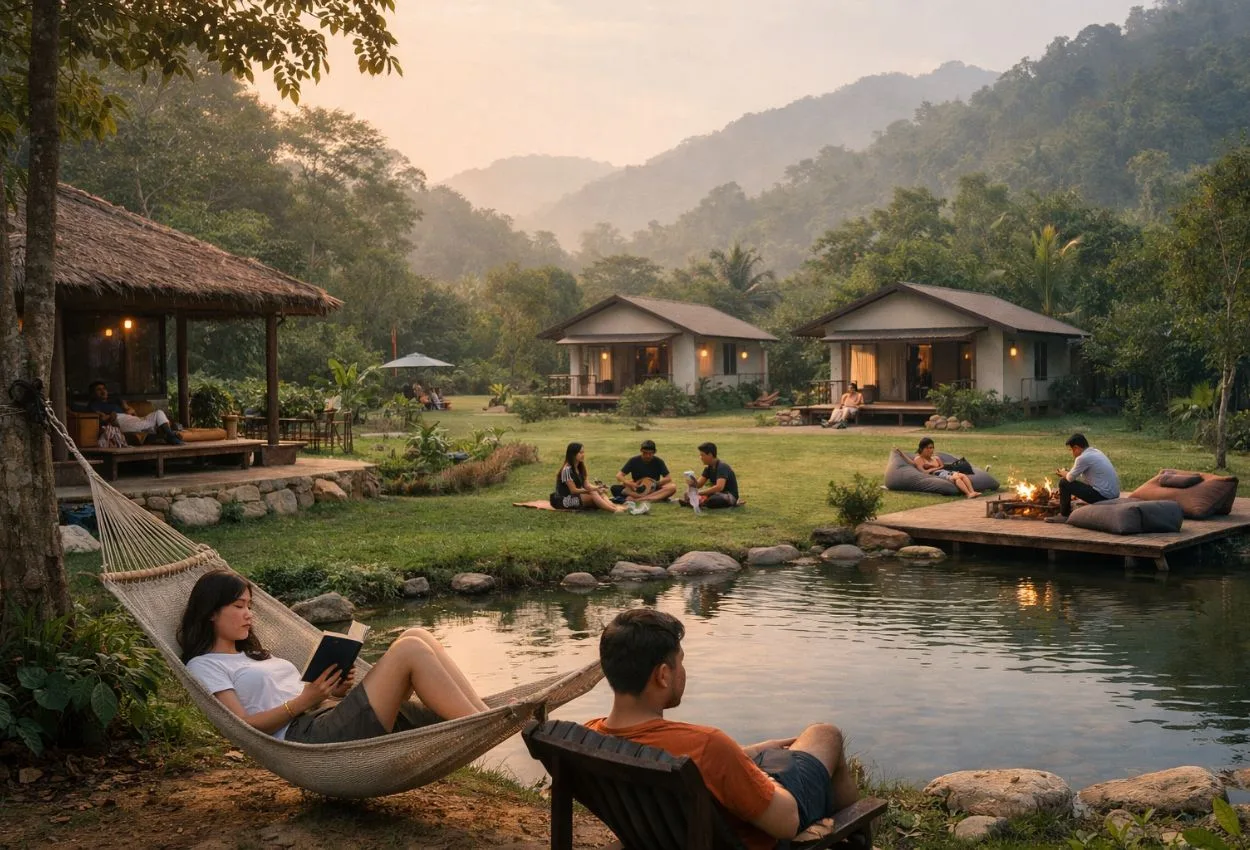
A youth retirement home may sound like a contradiction – or even a joke – especially for those in their 20s. But in a quiet corner of Gopeng, Malaysia, the concept has gained high popularity among Gen Z.
The country’s first Youth Retirement Home offers young adults a month-long escape from hustle culture, productivity pressure, and the expectation of always having a goal.
For RM2,000 (around $430), residents move into an eight-acre compound and do what many only fantasise about doing – absolutely nothing.
While the idea may sound absurd, the Gopeng facility – which opened this year and sold out its first month – reflects a growing trend among Gen Z as young people seek to disconnect, rest, and step away from the relentless pace of modern life.
However, the trend reflects more than a passing internet trend, mental health professionals told Lana.
Why ‘youth retirement homes’ resonate with a burned-out generation
“We live in increasingly overstimulating and overwhelming environments that do not allow us to slow down. Gen Z, even young millennials, seem drawn to trends that allow access to a level of rest and slowness that is hard to find in our fast paced lives,” Dina Shamlawi, a CDA-licensed psychologist at Thrive Wellbeing Centre explained.
According to her, the trend signals a generation grappling with chronic stress, anxiety, and burnout in environments that offer little opportunity to slow down.
But the real question is: does this trend represent a genuine mental health crisis, or merely another expression of internet culture?
The desire to escape goes beyond simple burnout symptoms, Shamlawi explained.
“It could reflect symptoms of burnout and anxiety but there is a lot more at play. What is causing the burnout and anxiety? The rising costs of living, always having to be connected/online/on social media, even this pressure to be successful very quickly in an instant gratification society like the UAE, those elements push people to feel a need to get away,” she said.
Echoing the sentiment, Hiba Salem, Psychologist, Adult & Families Specialist at Sage Clinics explained that the concept of a youth retirement home also speaks to a “deep emotional need,” which is resting without the feeling of guilt.
“For many in Gen Z, adulthood has arrived alongside constant pressure to perform, stay productive, and remain visible. A “retirement home” becomes a symbolic way of expressing the wish to be cared for and allowed to pause, rather than constantly proving one’s worth through achievement,” she said.
Both Shamlawi and Salem explained that the pressures facing Gen Z differ from those of previous generations not in severity but in nature.
Where earlier generations faced economic uncertainty or political upheaval, today’s young people navigate a world of constant digital surveillance, perpetual comparison, and an economy that promises less security despite demands for greater productivity.
How Gen Z burnout shows up in the UAE’s highly competitive environment

Young people seeking to “escape” in their 20s often experience chronic stress, anxiety, depression, emotional fatigue, and disillusionment, according to Shamlawi.
“The 20s are a time where most people experience identity confusion, uncertainty about purpose and direction, loneliness and lack of meaningful support systems, and pressure to meet cultural milestones and expectations,” she said.
The phenomenon extends beyond Malaysia. Young adults in the UAE face similar mental health strain including stress, loneliness, and emotional sensitivity, alongside social media and digital pressures, Shamlawi said.
Fear of stigma and barriers to accessing support like therapy can worsen these stressors, she added.
“We can also consider the high cost of living, the struggle to find balance between work and life, and continuous demands and a pressure to live up to the image of what success looks like here. The UAE is a place where so many people want to be, so the business environment, job market and career ladders are often competitive and fierce,” she explained.
“Young adults in the UAE frequently report high work intensity, financial pressure, and strong expectations around success and progression. Many are also living away from extended family support systems, which can increase feelings of loneliness and emotional strain during difficult periods,” Salem added, explaining that if a retirement home for youth existed in UAE, it would require “strong mental health oversight.”
“This includes screening processes, access to licensed professionals, clear crisis-response pathways, and defined boundaries around who the space is appropriate for. Importantly, it would also need a focus on helping individuals transition back into daily life with practical support and skills,” she said.
Temporary escape or lasting solution?
According to Salem, rest can be genuinely healing when it is intentional and well supported.
“Time away from daily stressors can help regulate the nervous system, improve sleep, and create space for reflection. However, rest alone is not enough if underlying stressors, emotional patterns, or unresolved difficulties are not addressed alongside it,” she said.
However, Thrive Wellbeing Centre’s Shamlawi described retreat-style “rest homes” as a temporary solution to a broader problem rather than a cure for mental health issues.
“The issues that Gen Z and even young Millennials are facing are more systemic than they are individual. To solve systemic issues like this, major changes need to happen in the way our societies operate as a whole – so that people can access a balance in their lives that is conducive to preventing this kind of burnout and the need for avoidance in the first place,” she said.
The key distinction, according to both professionals, lies in understanding the difference between healthy rest and unhealthy isolation.
“Healthy rest helps a person feel more grounded, emotionally regulated, and able to re-engage with life. Unhealthy isolation, by contrast, often increases withdrawal, rumination, and a sense of disconnection. The key difference is whether rest leads to renewal or deeper disengagement,” Salem said.
Shamlawi added that healthy rest is “intentional, planned, well-thought out and creates time where we engage in activities or down time that allows us to recharge and recentre in our bodies and minds.”
“Unhealthy isolation can be things specifically to get away from other people, from your responsibilities, and using avoidance as a tool to delay making decisions or changes in your life. In this case, going away and disconnecting for a while could be healthy temporarily, but coming back to the same potentially toxic environments you needed to escape from, with no change, is unhealthy long term,” she said.
Do you need a short break, therapy, or a bigger life reset?
For those struggling to determine whether they need a short break, therapy, or a major life change, both experts recommend seeking professional guidance.
“If rest and small adjustments bring noticeable relief, a short break may be sufficient. If distress continues, repeats, or begins to affect sleep, work, or relationships, therapy can help explore what’s happening beneath the surface. Major life changes are best considered thoughtfully, ideally with professional support, rather than during periods of acute exhaustion,” Salem said.
“Therapy is a good place to figure this question out. Once you talk to someone and explore the issues you are struggling with and dissect what areas of your life are serving or harming you, you’ll be able to better determine if you need a break or a life change. People often wait too long to get into therapy, mostly at a burnout stage, so it is good to go when you’re starting to feel even slight changes in mood, sleep, appetite, and overall motivation.
The most essential first step for someone feeling overwhelmed in the UAE, according to Salem, is reaching out early.
“Speaking with a licensed mental health professional or a trusted healthcare provider can offer clarity and reassurance. Early support often prevents difficulties from becoming more severe,” she said.
Shamlawi recommended multiple avenues for support beyond therapy, including talking to family and friends, creating time and space to make new friendships, and trying new things like exercise and movement.
“These are small tangible steps we can take that could help us manage the overwhelm while we all work together to change the ways our society operates in response to mental health concerns,” she explained.
But, are Gen Z less resilient or just more vocal about burnout?

However, both professionals rejected the narrative that young people are less resilient than previous generations. And whether Gen Z burnout is truly worse than past generations or just more visible remains a complex question.
“Burnout is more visible today because Gen Z is more willing to talk openly about emotional wellbeing. At the same time, research suggests they are experiencing genuinely elevated levels of stress and emotional exhaustion. Both increased visibility and real strain are contributing to what we are seeing,” Salem said.
“Social media is the main reason this is more visible now. We have more outlets to talk about these concerns and for people to share in them,” Shamlawi added.
The role of social media in increasing stress and emotional exhaustion cannot be overstated, according to both experts.
“Social media intensifies comparison and keeps young people mentally switched on for long periods. It blurs the boundary between rest and stimulation, making it harder to fully disconnect. Over time, this constant cognitive and emotional load contributes to fatigue and overwhelm,” Salem explained.
Shamlawi described the impact as “overstimulation, constant comparison, feelings of inadequacy, and unrealistic standards and expectations.”
Early warning signs of burnout UAE experts say should not be ignored
Both professionals also emphasised on the importance of recognising early signs of burnout before they escalate.
According to Salem, this includes “persistent tiredness, irritability, sleep disturbances, difficulty concentrating, emotional numbness, and feeling overwhelmed by tasks that once felt manageable. Many people dismiss these symptoms as ‘normal stress’ and continue pushing through.”
“This trend should be understood as a message, not a weakness. Many young people are asking for balance, recovery, and more sustainable ways of living. Responding with compassion and practical support creates an opportunity to strengthen mental wellbeing before crisis points are reached,” Salem said.
Shamlawi explained that it is important to “pay attention” to any small signs that the body sends when it first feels burnout.
“Think of our basic needs as humans; sleeping, eating, moving, if these change, even slightly we should take notice. Early signs of unusual tiredness, irritability, loss of motivation, and less or more emotional eating should be taken seriously,” she explained.
“Seeking therapy is a beautiful step towards knowing yourself better and finding the right tools and support to tackle these kinds of issues. There may still be a little bit of shame associated with seeking therapy and mental health support, but it is one of the ways we can all find spaces to slow down and tackle the pressures of our day to day for the betterment of ourselves and our communities,” Shamlawi concluded.