You are going to see a lot of recipes from us on LANA. Simple things, indulgent things, weeknight things and the occasional dish designed purely for pleasure. But good cooking rarely begins with the recipe. It begins with the tools. A well chosen kitchen kit does not need to be extensive or expensive, but it does need to work. The difference between frustration and fluency often comes down to the basics: a pan that heats evenly, a knife that holds its edge, a board that does not slip across the counter.
Think of this less as a shopping list and more as a foundation. The essential toolkit that allows you to execute almost anything we publish, with a few optional extras for when cooking becomes less about necessity and more about enjoyment.
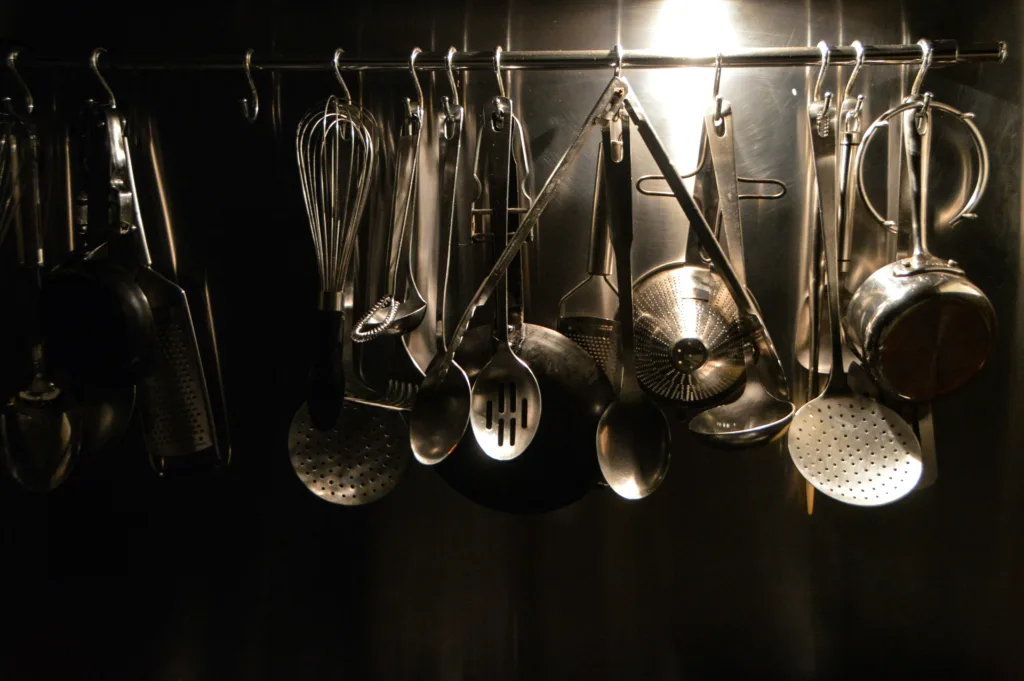
Essential Kitchen Toolkit:
1. A Good Frying Pan
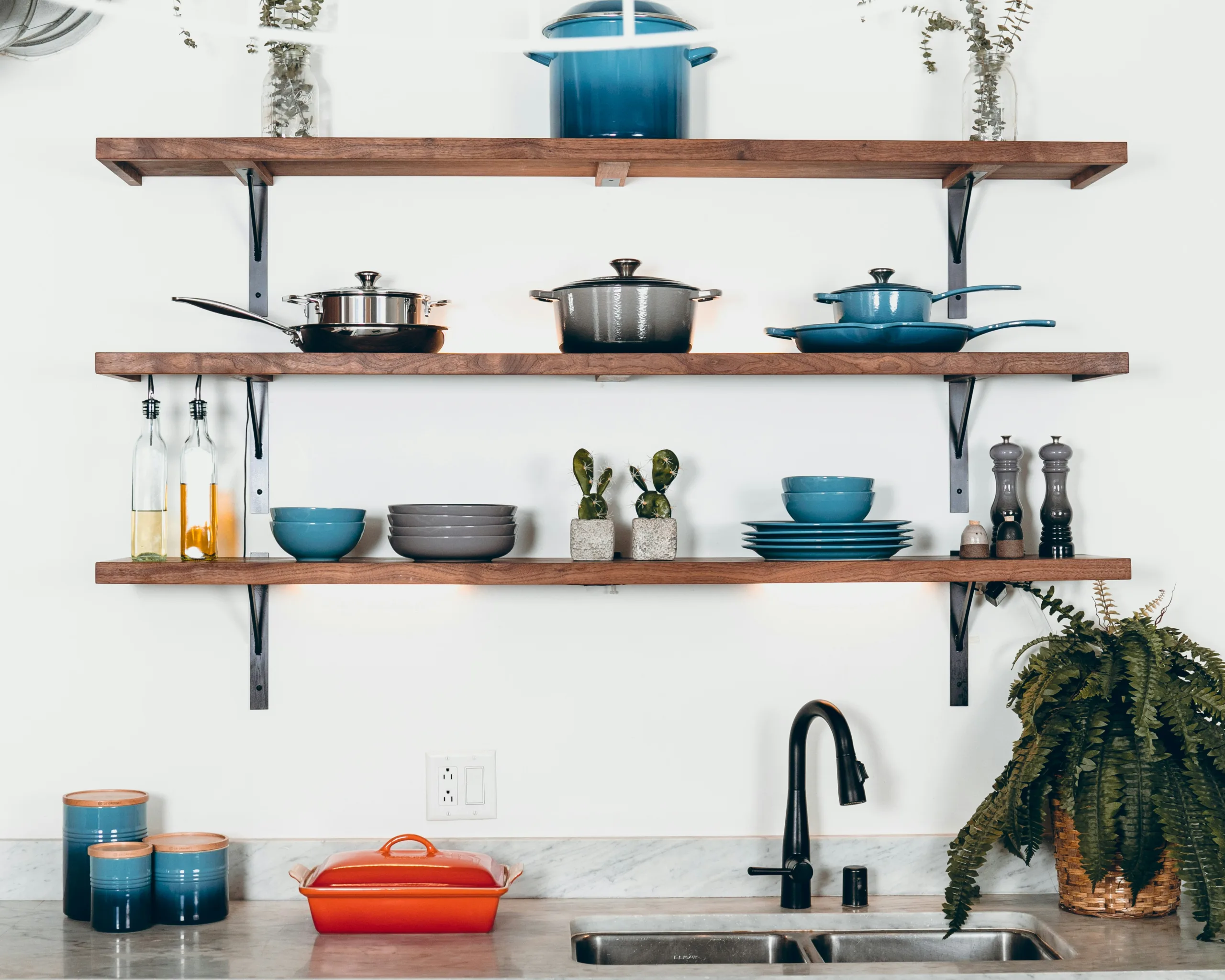
A reliable frying pan is the single most important piece of equipment in most kitchens. It is where eggs are scrambled, fish is seared and vegetables caramelise.
Look for something with a heavy base that distributes heat evenly. Stainless steel is durable and versatile, while cast iron holds heat beautifully once it is properly seasoned. A well made pan will outlive almost everything else in your kitchen.
2. A Medium Saucepan
This is the quiet workhorse. Pasta water, sauces, grains, soups, lentils, poached eggs. A medium sized saucepan with a thick base and tight fitting lid will cover an extraordinary amount of ground.
You do not need five sizes. One good one will do most of the work.
3. A Chef’s Knife
If there is one tool worth investing in, it is a proper chef’s knife. It should feel balanced in the hand and sharp enough to glide through vegetables without force.
Most professional kitchens rely on a blade somewhere between 20 and 25 centimetres. Treated well, a good knife will last decades.
4. A Serrated Knife
The unsung hero of the kitchen. Serrated blades cut cleanly through crusty bread, tomatoes and delicate cakes without crushing them.
You will reach for it more often than you think.
5. A Solid Chopping Board
Wooden boards are usually the best choice. They are gentle on knife edges and feel stable under pressure. Plastic boards are easier to sanitise, so many cooks keep both.
What matters most is size. A board that is too small becomes frustrating very quickly.
6. A Wooden Spoon
Simple, durable and heat resistant. A wooden spoon can stir sauces, scrape pans and mix batters without damaging cookware.
It is one of the few kitchen tools that has barely changed in centuries.
7. A Pair of Tongs
Think of tongs as an extension of your hands. They flip steaks, lift pasta, turn vegetables and retrieve toast without burning your fingers.
Once you start using them properly, they rarely leave the counter.
8. A Microplane or Fine Grater
Garlic, lemon zest, nutmeg, parmesan. A fine grater adds intensity and fragrance to dishes in seconds.
It is one of those tools that quietly elevates everything.
The Fun Extras
These are not strictly necessary. But they make certain moments in the kitchen far more satisfying.
A Pestle and Mortar
For grinding spices, crushing garlic or making fresh pesto. The texture is far superior to anything produced in a machine.
A Mandoline
For paper thin slices of potato, fennel or cucumber. It turns vegetables into something architectural, though it requires a little caution.
A Blowtorch
Technically unnecessary. Practically delightful. Perfect for brûléed sugar, caramelised fruit or finishing meringue.
A Cast Iron Grill Pan
When you want the flavour and char of grilling without leaving the kitchen.
The real secret of cooking is not having every gadget imaginable. It is knowing a handful of tools intimately and using them well. With the pieces above, you can cook almost anything we publish on LANA. The rest is curiosity, appetite and a willingness to make a little mess along the way.