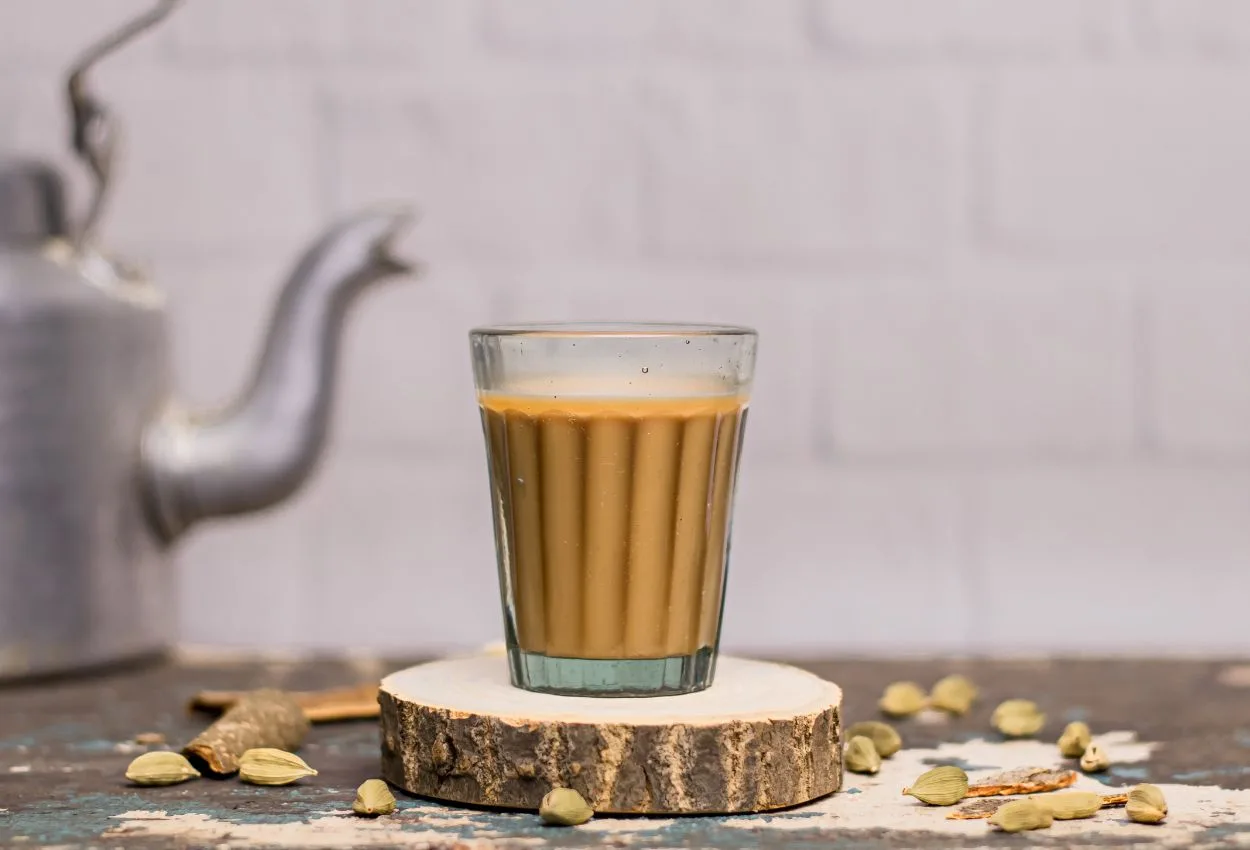
It costs AED1 and takes a few minutes to make.
Yet Karak chai – the sweet, cardamom-heavy milk tea found at every corner cafeteria – has become the UAE and the wider Gulf’s most democratic luxury, enjoyed equally by local and expat residents from all walks of life.
Consumed on pavements, in cars, and between shifts, Karak chai has become almost synonymous with emotions of joy and contentment in the region.
“Karak is for us what coffee is to most people. There’s a comfort to it that is hard to explain,” 29-year-old Sheikh Ashique Usman told Lana.
The Indian expat who works as a Graphic Design Specialist in the UAE, revealed that the “real attachment” with Karak chai began in college with his best friend, Muhammed Rizwan.
“Growing up as Malayalees [natives of Kerala, India], we were used to drinking milk tea, but being raised in Dubai meant we eventually switched to Karak,” Usman explained, adding that they would often drive for “almost an hour” to have a sip of this treasured tea.
“We would drive for almost an hour to our favourite spot in Satwa just to have a cup or two of [Karak] chai and relax with our friends before heading home,” he said.
Echoing the sentiment, Usman’s friend Rizwan added that this was part of their routine then on.
“After college, when we were roommates, we would still make late drives all the way to Jumeirah just for a cup of Karak and then head back. Even now, almost every time we step out, our first stop is always a cafeteria to pick up a cup of Karak. For us, nothing really begins without it,” he said.
But what makes Karak chai in the UAE and the wider Gulf so special?
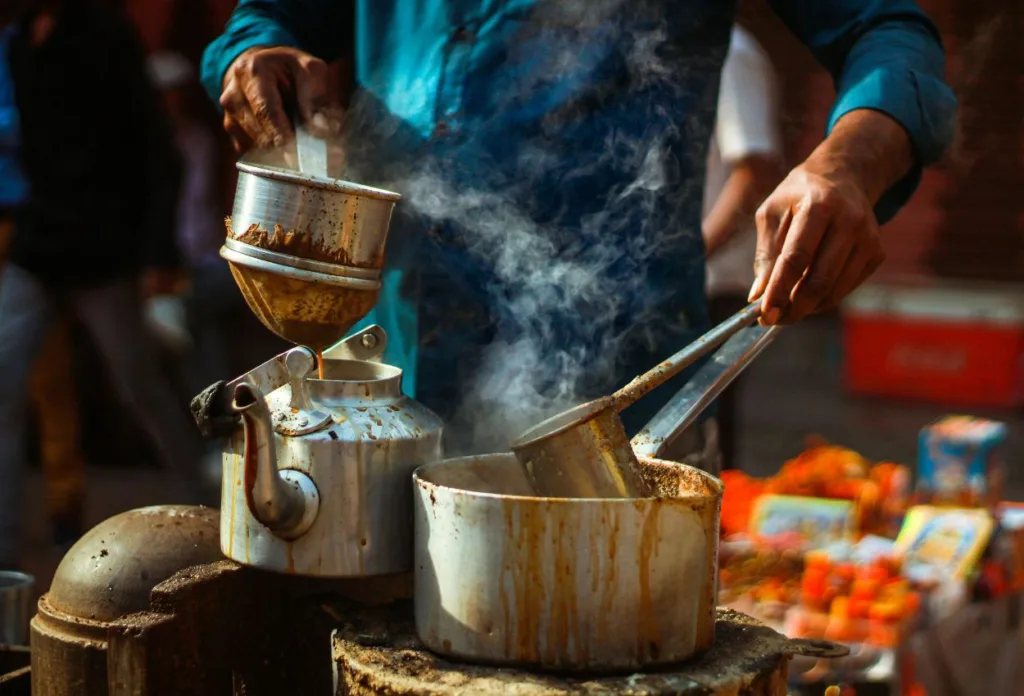
Lana reached out to Susmita Dasgupta – a tea artist, tea trainer and brand consultant and founder of Indian School of Tea & Tea with Susmita, in India – to learn about its origins and what makes this special spiced concoction different from existing counterparts.
“Karak chai has become one of the most beloved beverages in the Gulf – especially in the UAE, Qatar, and Oman. Yet, its story is deeply intertwined with India’s own tea culture,” she said.
Dasgupta, who has spent three decades exploring tea, teaching its traditions, and studying its global pathways, finds the journey of Karak chai both “fascinating and profoundly human.”
“It is a story of migration, adaptation, and how a humble cup of tea can carry cultures across borders,” she explained.
According to her, Karak chai’s origin lies firmly in the Indian subcontinent, where tea “evolved from a colonial commodity into a comforting daily ritual.”
“Indian milk tea – made by boiling black tea leaves (CTC) with milk, sugar, and sometimes cardamom – formed the foundation.
“The word karak (or kadak) comes from the Hindi/Urdu languages and literally means ‘strong.’ And strength is exactly what defines this style. While the Gulf popularised and perfected it, the roots of Karak chai are unmistakably Indian, carried abroad by the people who first brewed it in their homes,” she said.
A drink ‘carried by workers’ during South Asian migration
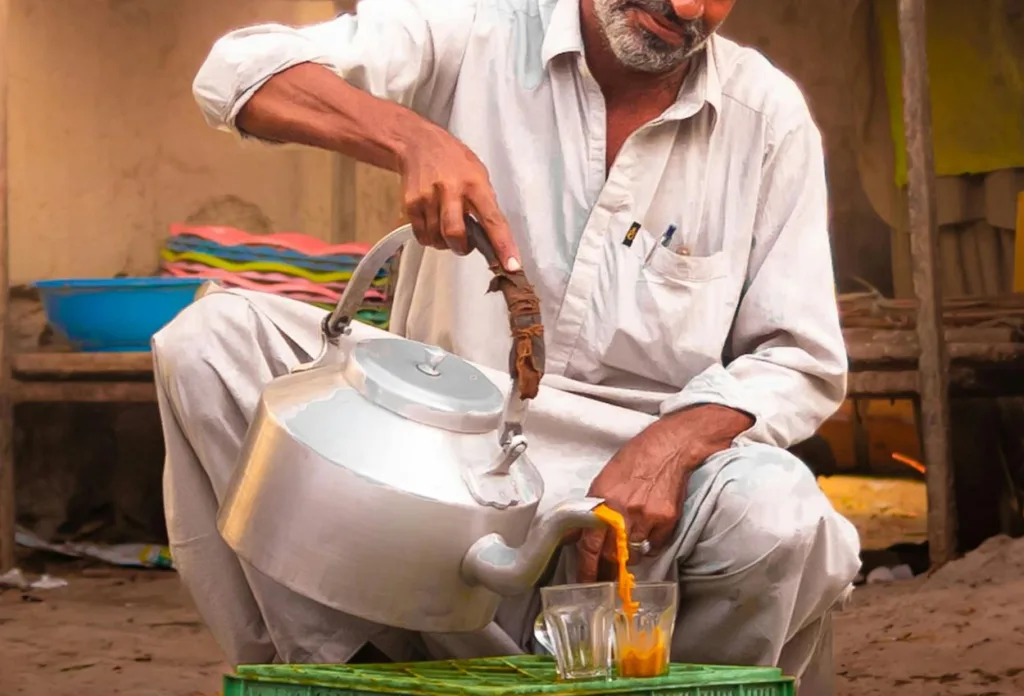
“From the 1950s through the 1970s, thousands of Indians and other South Asians migrated to the Gulf to support the region’s economic growth. With them, they brought their food, culture – and chai,” she said, adding that its popularity grew also because of three main reasons.
“Inexpensive to prepare, nourishing and energising – a perfect drink for long hours of labour in harsh desert conditions.
As its popularity caught on among many, several small cafés and tea stalls began to sell Karak chai, with small variations to the original recipe.
“Evaporated milk became common because it stored well in hot climates, and the tea was brewed extra strong to suit local preferences,” Dasgupta said, further explaining that over time, “Emiratis and other Gulf Arabs embraced Karak as their own.”
“Cardamom already held cultural importance in Arabic cuisine, making this chai instantly familiar,” she added.
As time went by, Karak chai was no longer a migrant drink by the 1990s and early 2000s, according to Dasgupta. “It had become a fixture of daily life – served in household gatherings, majlis traditions, late-night tea shops, and drive-through cafés.”
“Today, Karak chai is as much a part of the Gulf’s cultural identity as it is a reminder of the South Asian roots it came from,” she said.
Dasgupta further revealed Karak chai “is not simply a stronger chai” rather one that carries a “distinct brewing philosophy.” Key differences include:
| Regular Indian chai | Karak chai |
| Balanced strength | Extra strong, concentrated brew |
| Many spices (masala) or ginger | Usually cardamom-only |
| Fresh milk | Evaporated/condensed milk used commonly |
| Shorter brewing time | Longer, deeper brewing |
| Mild sweetness | Always sweet, often very sweet |
| Home-style drink | Street drink + café culture |
“In essence, Karak is stronger, creamier, sweeter, and far simpler in spice profile than regular chai,” she said, revealing the “earliest and most authentic form” of Karak chai was made using only four ingredients.
Strong black tea (CTC Assam tea), milk (which was quickly replaced by evaporated milk in the Gulf), sugar and cardamom.
“No masala, no ginger, no saffron – the beauty of early Karak Chai lay in its minimalism.”
Today, Dasgupta said, Karak chai has transformed from a staple in cafeterias to a “global phenomenon.”
“Karak Chai is served in modern cafés, at drive-through tea shops, in high-end restaurants, as packaged RTD beverages, and even at tea festivals worldwide. It has travelled far beyond the Gulf – becoming a worldwide symbol of comfort, culture, and connection,” she said, adding that it is “more than a beverage.”
“It is a testament to how culture travels – carried by people, shaped by circumstances, and transformed by new lands. From the hands of Indian workers to the heart of Gulf hospitality, Karak chai represents a shared story – one that belongs to both India and the Middle East. And as tea continues to evolve globally, Karak remains one of its most beautiful, humble, and unifying expressions,” she added.
Why Karak chai is ‘more than just tea’ for UAE residents
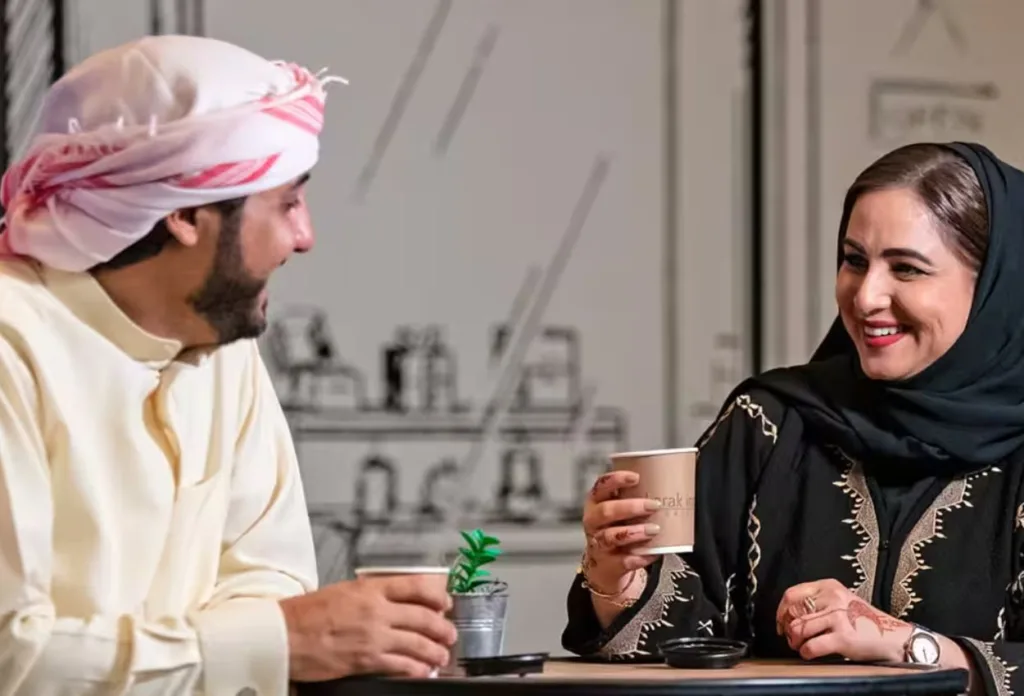
Like Dasgupta said, the journey of Karak chai is deeply human – carried by people and shaped by new lands.
This sentiment rings true for many who have made the UAE their home, each with their own story of how this humble tea became an essential part of their daily lives.
“My love for Karak chai didn’t start in one moment. It is something I grew up into. I was born in Dubai, and for as long as I can remember, Karak has been more than just tea – it is a feeling,” Achila Elsa Varughese, a 29-year Indian expat told Lana.
“For me, friends meeting up always means one thing: Karak in one hand and shawarma in the other. It never mattered if it was exam stress, heartbreak, a small celebration, or even just boredom. Somehow everything was understood after Karak chai – one sip and everything instantly felt calmer, warmer, and familiar,” the Brand Marketing Manager at Ajman Free Zones Authority said.
For Rabih Hammoud, a Clinic Manager at American Hospital Dubai, Karak is equal to companionship.
“Karak to me is the link that brings me and my friends together. When I think of Karak, I think of companionship. My friends and I once travelled from Dubai to Ras Al Khaimah (RAK) just to have Karak chai and came back – because it’s cheaper in RAK.
“As a Lebanese expat who was born and raised in RAK, Karak is practically the word we use when we want to hang out. I don’t know what I would have done without it – if it wasn’t for this, I’d probably be an introvert. All my friends, I found them through Karak,” he quipped.
Echoing the sentiment, Shahd Najmus, a Dubai-based expat told Lana that “tea is serious business” in their house, given her mixed Indian and Egyptian heritage and her husband Moiz’s Sudanese background.
“Moiz was born and raised in Abu Dhabi, so Karak just comes to him. It’s second nature. Now we live in Dubai and he commutes every weekend, but one thing never changes: after visiting family or friends, we always end the night the same way – passing by a cafeteria for chai. Always,” the 32-year marketing manager at C2 Comms, a Dubai-based independent advertising agency said.
Najmus revealed that her husband has a “deeper philosophy about the perfect Karak” than her.
“It can’t be too sweet, too milky, or too ‘tea-y.’ There’s a very fine balance, and honestly, not everyone gets it right. For me, the gold standard is a spot in Al Ain called The 70s Karak. They do it the proper local way – no shortcuts, no nonsense, just patience and precision,” 33-year-old Moiz Khalid added.
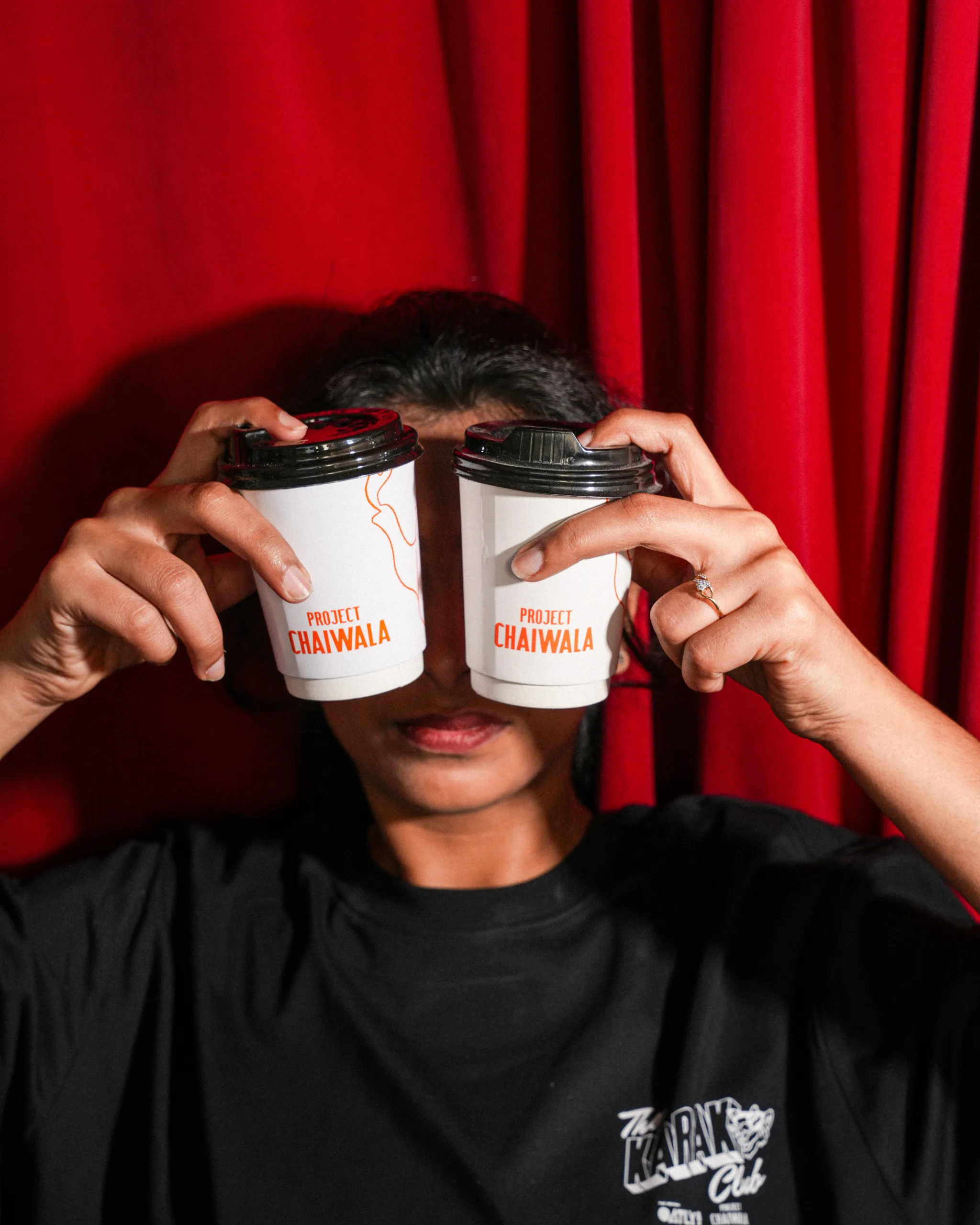
“And it must be served in a paper cup. Not glass, not ceramic, not something ‘aesthetic,’” the GP dentist working in Al Ain continued. “A thin paper cup that’s just hot enough to make you juggle it between your fingers. Something about that first sip from a paper cup – standing next to the car, windows down, engine still warm – is part of the ritual. Change the cup, and somehow the Karak changes too.”
Khalid also explained the “silent language” of ordering Karak in the UAE, where one does not have to roll the window down for the cafeteria boy to know they’re there for a hot cuppa.
“A quick hand signal, a small nod, maybe two fingers raised – and the cafeteria boy already knows. No words, no explanations. No one ever teaches you this; you just grow up knowing it. It’s a shared, unspoken national signal for chai,” he said.
However, when the couple makes it at home, their version of the Karak chai included condensed Rainbow milk – “the cardamom-flavoured one,” – extra cardamom pods with tea bags simmered slowly in a pot.
“And on extra-lazy days – Ali Tea classic sachets. It doesn’t quite hit the mark, but it’s good when we are tired,” Najmus said.
However, she said the experience of drinking Karak chai is “meant to be simple and honest.”
“One thing we both agree on is that Karak should never be overcharged. Karak is an AED1 drink. When places try to get fancy and charge AED4-AED5, it kind of ruins the whole experience. Even if the chai is good, it just doesn’t taste the same,” she concluded.