

A $5 million Rolex and a million-dollar Patek Philippe have landed in Dubai.
At the Bvlgari Yacht Club, FutureGrail’s exclusive preview is offering collectors a once-in-a-lifetime chance to see two of the rarest watches ever made – a 1942 Rolex Antimagnetique and a Patek Philippe Reference 2585A, pieces so scarce they have reached near-mythic status in the world of horology.
The 1942 Rolex “Antimagnetique” Reference 4113 alone represents one of 12 examples believed to have been produced, all in stainless steel within a single year, Arnaud Tellier, Head of Curation and Advisory at FutureGrail told Lana in an exclusive interview.
A true icon of Rolex’s history
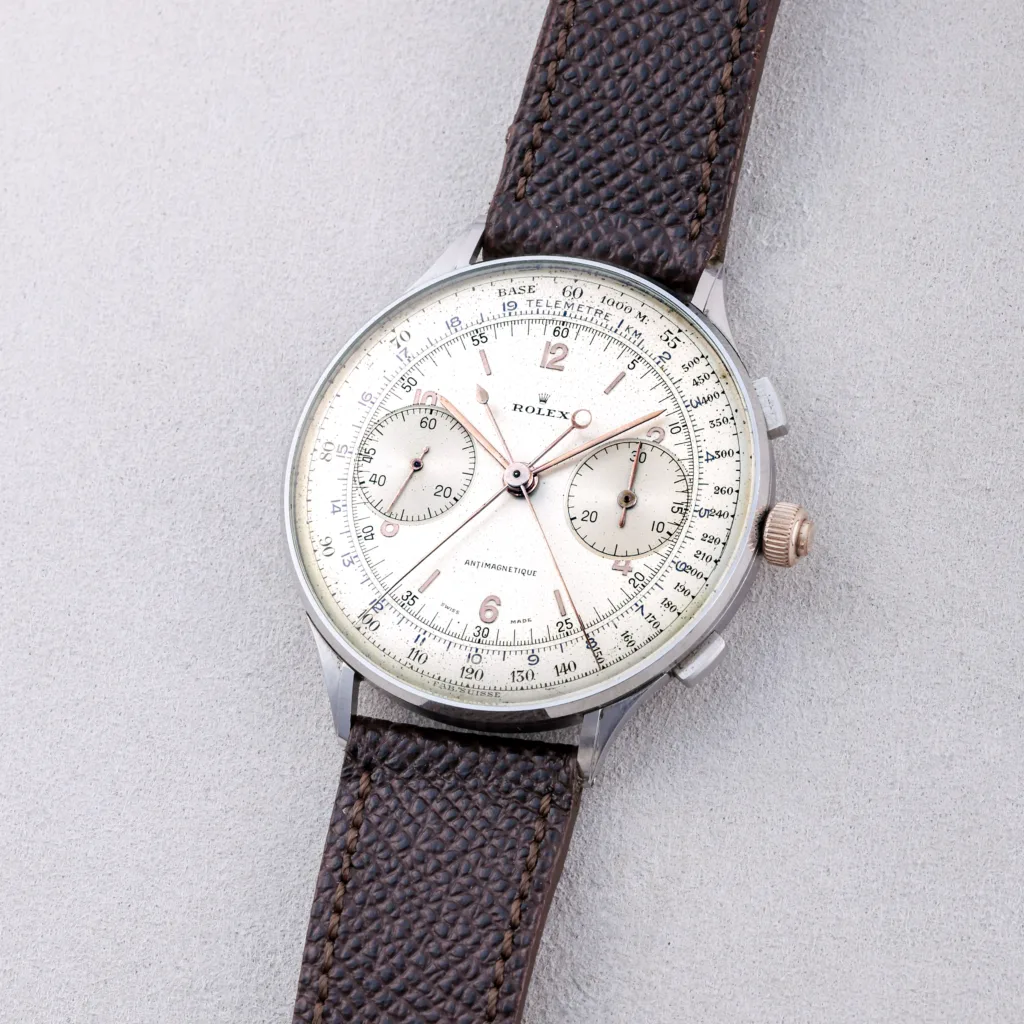
“Each carries a serial number within a narrow sequence, confirming an extremely limited and likely experimental production. It is also the only split-seconds chronograph ever made by Rolex – a technical complication allowing the timing of two events simultaneously, and one that the brand never repeated in any later model,” he added.
Tellier’s comments came on the sidelines of the FutureGrail preview, running in Dubai on November 12 and 13. The preview forms part of a series of viewings across Dubai, Geneva and Singapore ahead of the online auction.
The watch features a 44mm stainless steel case, the largest case ever produced by Rolex for a piece from that period. The model was never included in any Rolex catalogue “adding to its mystery,” Tellier said.
“Most of the known examples were associated with racing drivers and teams, suggesting that these watches were special presentations or prototypes intended for timing sports events,” he explained.
The example being auctioned has been described by scholars as “the best preserved and most beautiful known” among surviving pieces, he said, adding the dial, case and movement show minimal signs of age and no restoration.
“Because of this exceptional state of preservation, combined with its technical uniqueness, historical importance and extreme rarity, this watch occupies the highest tier of collectible Rolex timepieces. When such an example appears at auction, it inevitably sparks intense global competition among major collectors and institutions. The combination of rarity, provenance and condition explains why the 1942 Rolex “Antimagnetique” can command such valuations. It is what we refer to at FutureGrail as a true ‘grail’ timepiece, something so rare that it is almost mythical,” Tellier added.
Patek Philippe’s stainless-steel rarity
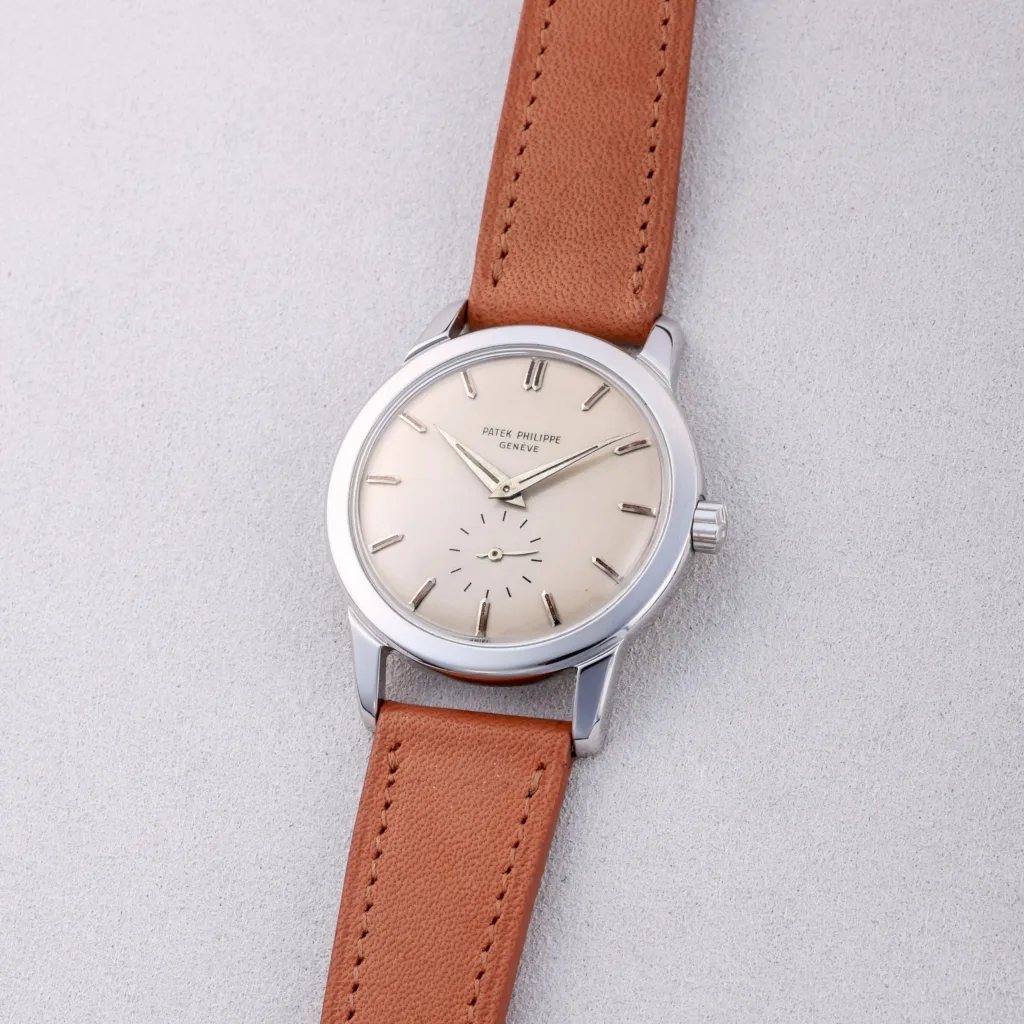
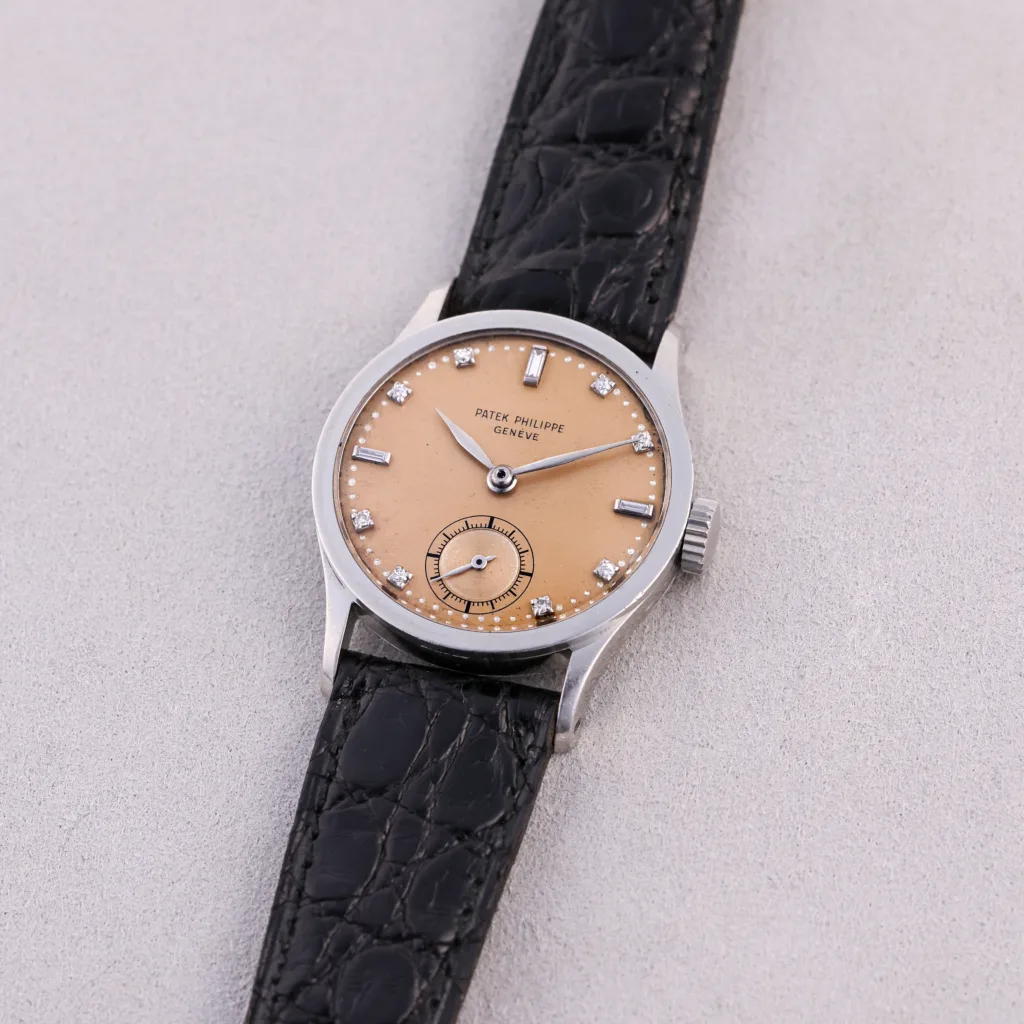
The Dubai auction also features the Patek Philippe Reference 2585A, described as the only automatic wristwatch ever made in stainless steel by the manufacturer during its period.
Three examples of the Reference 2585A are known to exist. The last example to be auctioned was acquired by the Patek Philippe museum for 758,000 Swiss Francs, just under one million dollars.
“We have a motto, ‘for collectors, by collectors’ and this reflects our team, who passionately scour the world for the rarest, most intriguing timepieces,” Mohsin Rizvi, Co-Founder and COO of FutureGrail told Lana.
“We have been chasing this watch for a long time through our networks and finally managed to secure it. For those who know little about auction houses, our watches come from many sources such as private collectors, and original owners. Sometimes they are ‘heirloom assets’ where someone passes away and leaves a legacy,” Rizvi said.
Among the pieces on display in Dubai is the Venus of Love dome clock, created by Patek Philippe in 1964 with a solar-powered winding system.
The clock operates through a photo-electric cell mounted on top of the dome, which converts light into energy. This powers a motor that winds the mainspring, keeping the mechanism running if it receives sufficient light.
However, “at its core, the clock remains a traditional mechanical timepiece: its movement is powered by a mainspring, just like a conventional watch. What makes it remarkable is the solar system used to wind that spring automatically,” Tellier added describing the system as “a technical marvel of its time.”
The time piece combines Patek Philippe’s traditional craftsmanship with the experimental innovation of the 1960s, “when advances in photo-electric technology began to inspire new approaches to timekeeping,” Tellier said.
“On top of the dome sits a discreet photo-electric cell, which converts light (whether natural or artificial) into electrical energy. This energy drives a tiny electric motor concealed within the base of the clock. The motor, in turn, winds the mechanical mainspring, keeping the clock running continuously as long as it receives sufficient light. In essence, it is an early hybrid between mechanical and electric energy, decades before the concept of solar-assisted horology became popular,” he added.
“Typically, the artwork on dome clocks is macro, but with this example, each panel is very micro in terms of details – comparable to a detailed mosaic. The enamelling is very intricate and from our research we believe it to be the only Patek Philippe dome clock with a ‘nude’ figurine, marking it as a museum-grade piece. We expect collectors to be highly interested in this item at auction,” Rizvi added.
But what are watch collectors really looking for?
The auction house reports that today’s collectors are showing interest in both periods of watchmaking.
“Vintage watches continue to fascinate because of their authenticity, rarity and historical depth. Each piece tells a story – of craftsmanship, innovation and the era that produced it,” Tellier said.
He noted that collectors value originality and period-correct details. “A great watch is a piece of history as much as a technical object,” he said.
However, modern pieces are attracting attention for different reasons, Tellier revealed. “Independent watchmakers, in particular, have redefined what mechanical horology can achieve, introducing new materials, escapements and designs that speak to a contemporary audience,” Tellier said.
“The most seasoned collectors no longer separate vintage from modern; they seek excellence, authenticity and emotion – whether that comes from a 1940s split-seconds chronograph or a 21st Century handmade tourbillon,” he added.
The preview includes the F.P. Journe “Chronomètre Bleu Byblos”, created in 2014 in a run of 99 pieces to mark the opening of F.P. Journe’s Beirut boutique, Rizvi revealed.
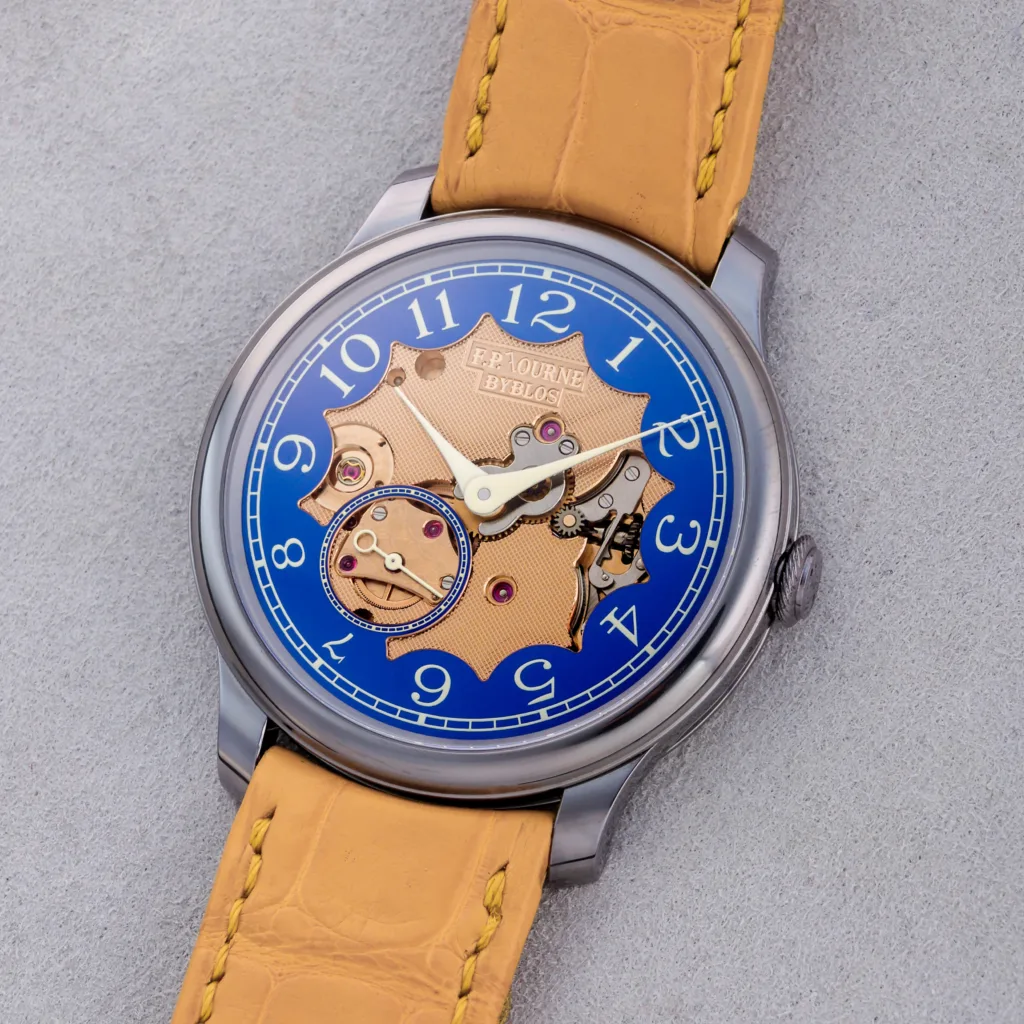
The watch features a tantalum case and a partially open-worked dial. The design includes the letter ‘J’ of Journe written in Phoenician style, referencing the UNESCO World Heritage site of Byblos.
“Given the regional importance of the item, we’re delighted to present this watch, which is practically unworn and in condition, to local collectors,” Rizvi said, adding Dubai was selected as a preview location because the city has become a hub for watch collectors.
In addition, when viewing watches in person, collectors look beyond authentication to assess condition and character.
“They study the condition above all, such as the sharpness of the case edges, the untouched surface of a dial, the honesty of the patina, and the crispness of the engravings. These elements reveal whether a watch has lived naturally or been altered over time,” Tellier said.
Collectors also examine proportions, weight and how light interacts with the piece, according to Tellier. “A truly exceptional piece has a tactile and harmony that can only be appreciated in hand,” Tellier said.
The movement receives scrutiny as well. “For many collectors, seeing the calibre under magnification connects them directly to the watchmaker’s craft,” he said.
Rizvi further added that previews serve collectors at different levels. “Genuine luxury watch buyers also want to see the quality upfront and understand more about the provenance. For others, previews are an opportunity to interact with pieces that are unattainable and, in the case of the Rolex 4113 may not be at auction again for another decade or more,” he said.
“There is something very special about experiencing these ‘grail’ pieces up close rather than reading about them. Even if you have a chance to hold it for a minute, it feels like you have been a part of that watch’s legacy. It is a chance to hold a piece of history,” Rizvi added.
Aside from this, Rizvi explained collectors are eager to learn more about the lots, with the team’s experts available to share their knowledge with bidders.
“When collectors view these watches in person, they are not simply verifying authenticity; they are looking for emotion, integrity, and the subtle details that photographs can never fully capture,” he said.
So, why bring an auction preview rather than online?
FutureGrail conducts its auctions online but maintains previews in three cities to allow collectors to examine pieces in person.
“The auction takes place online, but collectors also want to have a closer view and to understand more details about particular items – with an in-person event they can experience a direct, emotional encounter with the pieces. Collectors of rare watches respond not only to rarity and provenance but also to presence – the weight of the case, the depth of the dial, the beauty of the movement seen in natural light,” Tellier said.
Dubai’s Bvlgari Yacht Club was chosen as a venue that matches the quality of the items. “It is the perfect setting for that experience: elegant, private and in harmony with the fine spirit of watchmaking,” Tellier said.
“Collecting, at its best, is not about accumulation or speculation; it’s about passion, curiosity, and the joy of surrounding oneself with beauty and meaning. A great watch embodies time itself, not just in the way it measures minutes, but in the way it carries history, craftsmanship, and emotion across generations. If a rare piece speaks to you, if it moves you, that moment of connection is worth embracing.
“Because in the end, collecting fine watches is not just about owning time, it’s about making time truly yours,” Tellier concluded.
Collectors interested in attending the Dubai preview can contact [email protected]. The auction catalogue is available at www.futuregrail.com.