
A true visual phenomenon, Guillermo del Toro’s film Frankenstein is also a tour de force in costume design. Since its global release on Netflix on November 7, 2025, the film has garnered 29.1 million views within its first three days, making it one of the platform’s biggest movie debuts. Yet beyond the compelling narrative and stellar performances from Oscar Isaac, Jacob Elordi, and Mia Goth, the costumes emerge as a captivating visual element that has captured widespread attention across social media.
Behind this visual achievement stands New Zealand costume designer Kate Hawley, who previously collaborated with del Toro on Crimson Peak and Pacific Rim. In Frankenstein, Hawley transcended traditional historical costuming by creating an immersive visual universe blending gothic, scientific, and organic aesthetics, drawing inspiration from Hammer horror films and Caravaggio paintings.
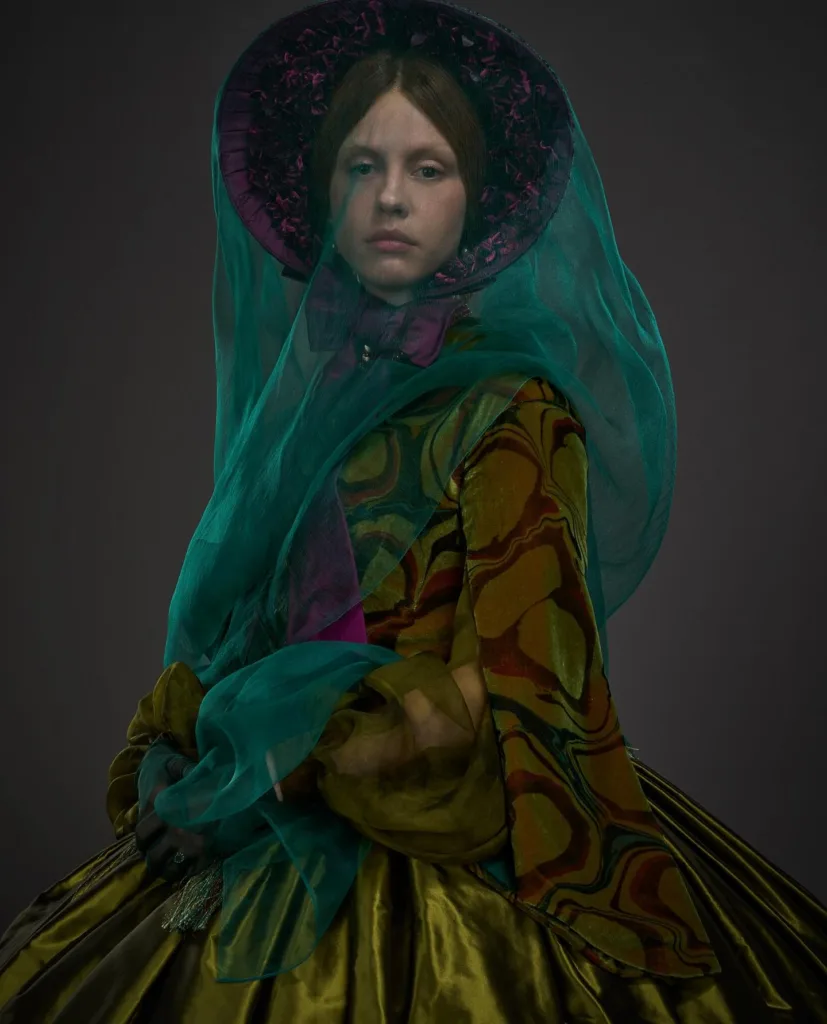
Elizabeth in Frankenstein Where Nature Meets Art and Science
The character of Elizabeth, portrayed by Mia Goth, stands as the film’s greatest costume achievement. The actress wore an exceptional collection of silk dresses painted in rich hues ranging from emerald green to cobalt blue to crimson red.
Hawley’s design philosophy for Elizabeth centers on the character’s fascination with entomology and botany, with garments adorned in organic patterns inspired by beetle wings and cellular formations. In an Instagram post, Hawley revealed details about crafting the “Cell Dress,” explaining that the patterns were inspired by the world of beetles, cells, anatomy, and even the marbled endpapers of Victorian-era books.
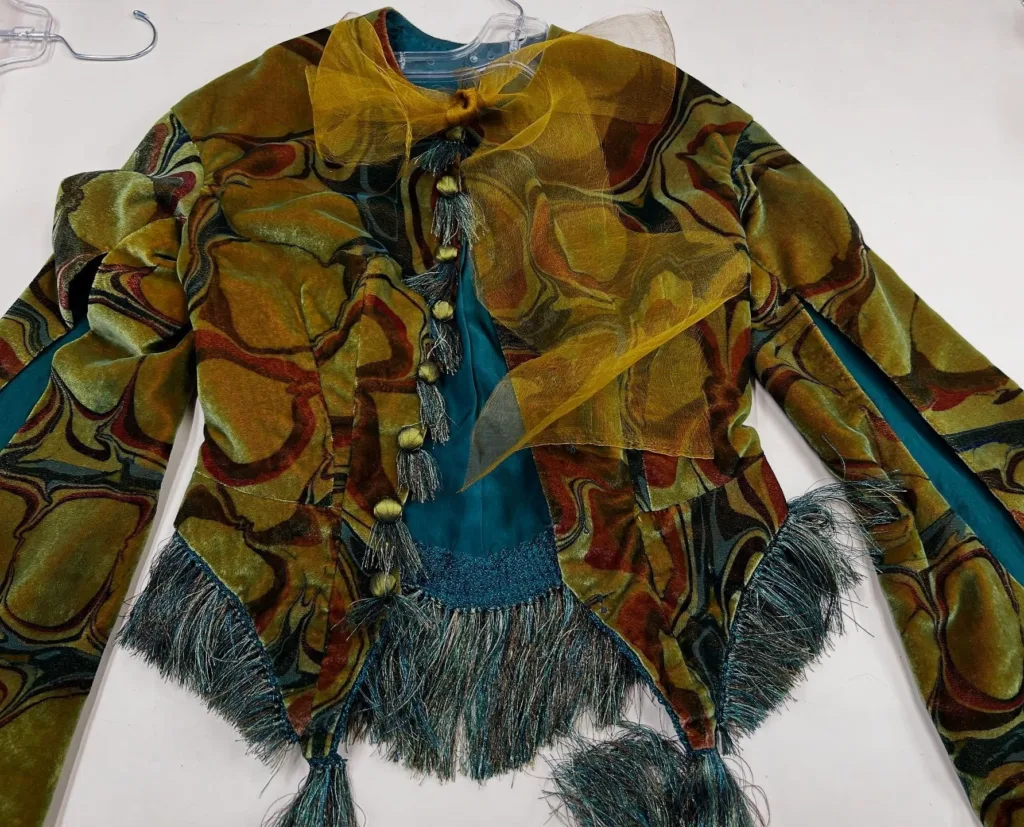
One standout design is the ethereal blue dress resembling an X-ray image, which required 60 meters of silk fabric to achieve the luminous quality del Toro envisioned for moonlight scenes. The green dress features embroidered fabric mimicking the fractal patterns of butterfly and beetle wings.
Tiffany & Co. Jewelry: Two Centuries of Heritage on Screen
For the first time in its nearly 200-year history, the luxury jewelry house Tiffany & Co. opened its archives and workshop to a film production, providing 27 pieces including necklaces, earrings, rings, and brooches. The collection comprises 10 historical pieces, six archival silver pieces, and five custom-designed items.
Among the most prominent pieces is a family heirloom necklace featuring over 40 carats of diamonds, and a scarab necklace designed by Meta Overbeck under the direction of Louis Comfort Tiffany, the legendary Art Director known for his reverence for nature. Hawley also created, in collaboration with Tiffany & Co., a red rosary necklace made from crimson agate, featuring a hand-carved cross concealing a small agate scarab—a symbol uniting nature and religion.
The Wedding Dress: An Architectural Masterpiece of Five Layers
Elizabeth’s wedding dress represents one of the film’s most intricate and imaginative designs. Built from the inside out, mirroring the Creature’s own construction, the dress consists of five layers of delicate silk organza, with Swiss ribbons placed on the exterior rather than hidden inside, echoing the Creature’s skeletal structure.
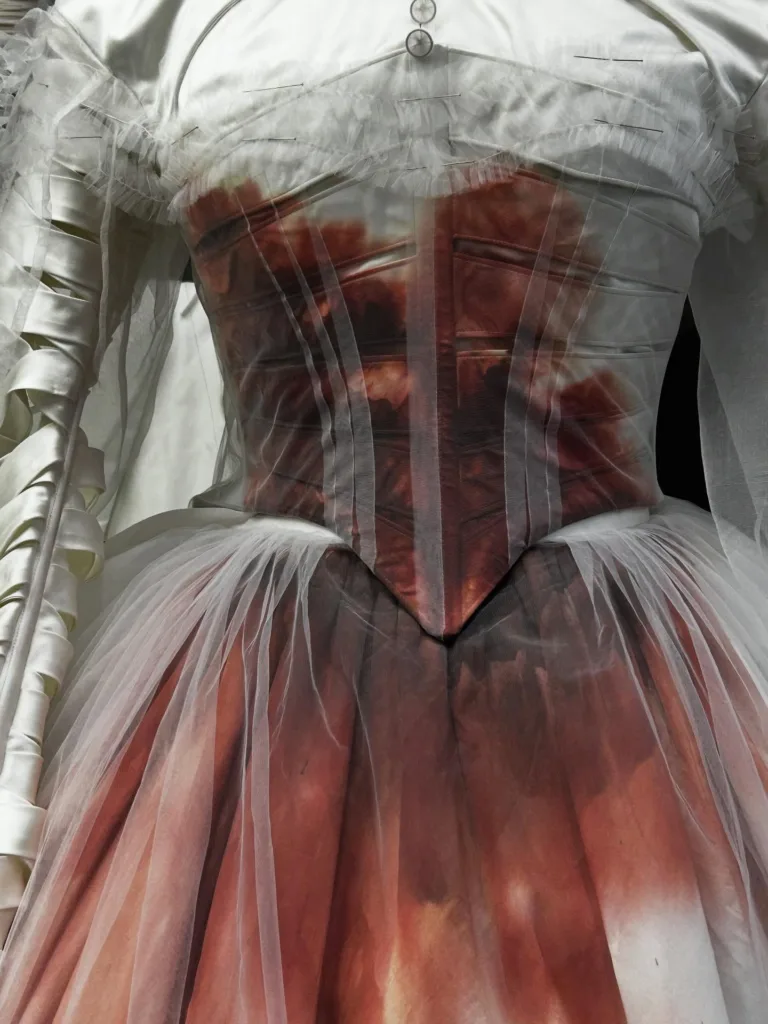
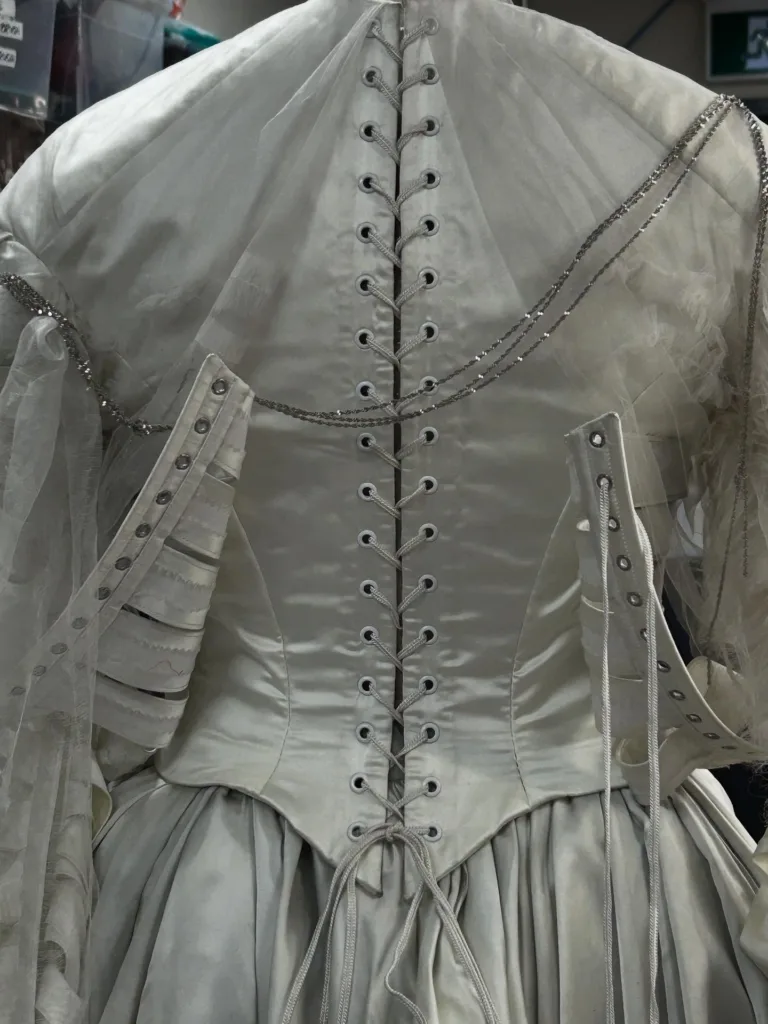
Hawley reveals that the white satin ribbons wrapped around Elizabeth’s arms were designed to mimic the Creature’s surgical bandages, serving as a symbolic reference to both the Creature’s origins and Elizabeth’s tragic fate. To execute the scene where the dress becomes soaked in blood, Hawley created nine versions of the gown, including replicas for stunt performers and digital doubles, with additional layers that could be removed to intensify the blood effect.
Victor Frankenstein: The Aristocratic Scientist with an Artist’s Soul
Hawley’s brilliance extended beyond Elizabeth’s wardrobe to Victor Frankenstein, portrayed by Oscar Isaac. Inspired by iconic artistic and musical figures like David Bowie during his “Thin White Duke” era and rock musician Mick Jagger, Hawley crafted designs reflecting Victor’s nature as a rebellious artist indifferent to sartorial conventions.
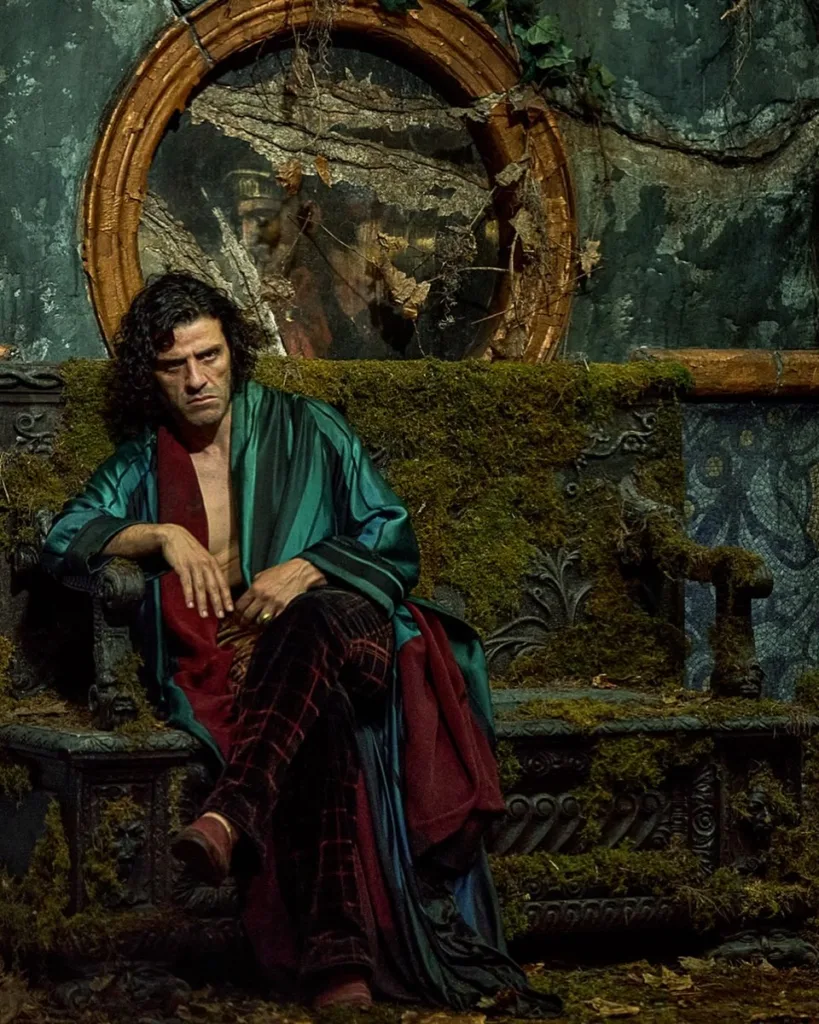
Victor appears in worn velvet coats and deep green silk robes lined with burgundy, paired with red checkered trousers, gloves, and scarves stained with blood. The red color in Victor’s costumes carries deep symbolic meaning—reminiscent of his mother’s love while simultaneously representing her death, continuing del Toro’s recurring use of this color throughout his filmography.
Comprehensive Artisanal Manufacturing Process
Nearly all costumes visible on screen were created from scratch, including those worn by background actors. Designing the Creature’s costumes, worn by Jacob Elordi, required assembling a dedicated team to continuously update and refresh the fabrics as the character traversed mud, snow, wolves, and explosives.
Hawley emphasizes that collaboration with cinematographer Dan Laustsen and production designer Tamara Deverell was essential, noting that even the most beautifully colored gown cannot display properly without lighting carefully selected to complement it. The art department’s “Moss Squad” even added green moss to the tower’s exterior to echo the intense green tones in Mia’s costumes.