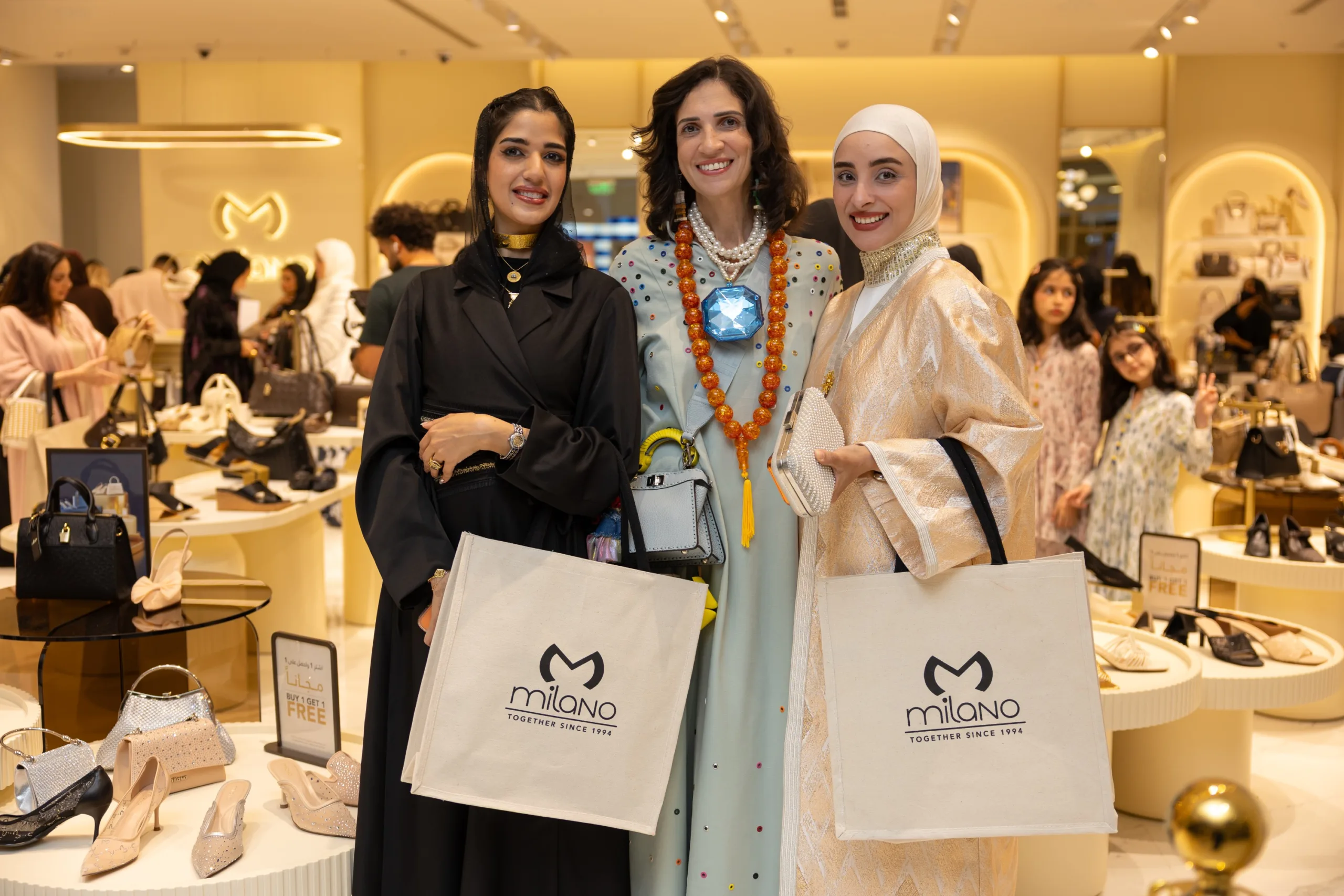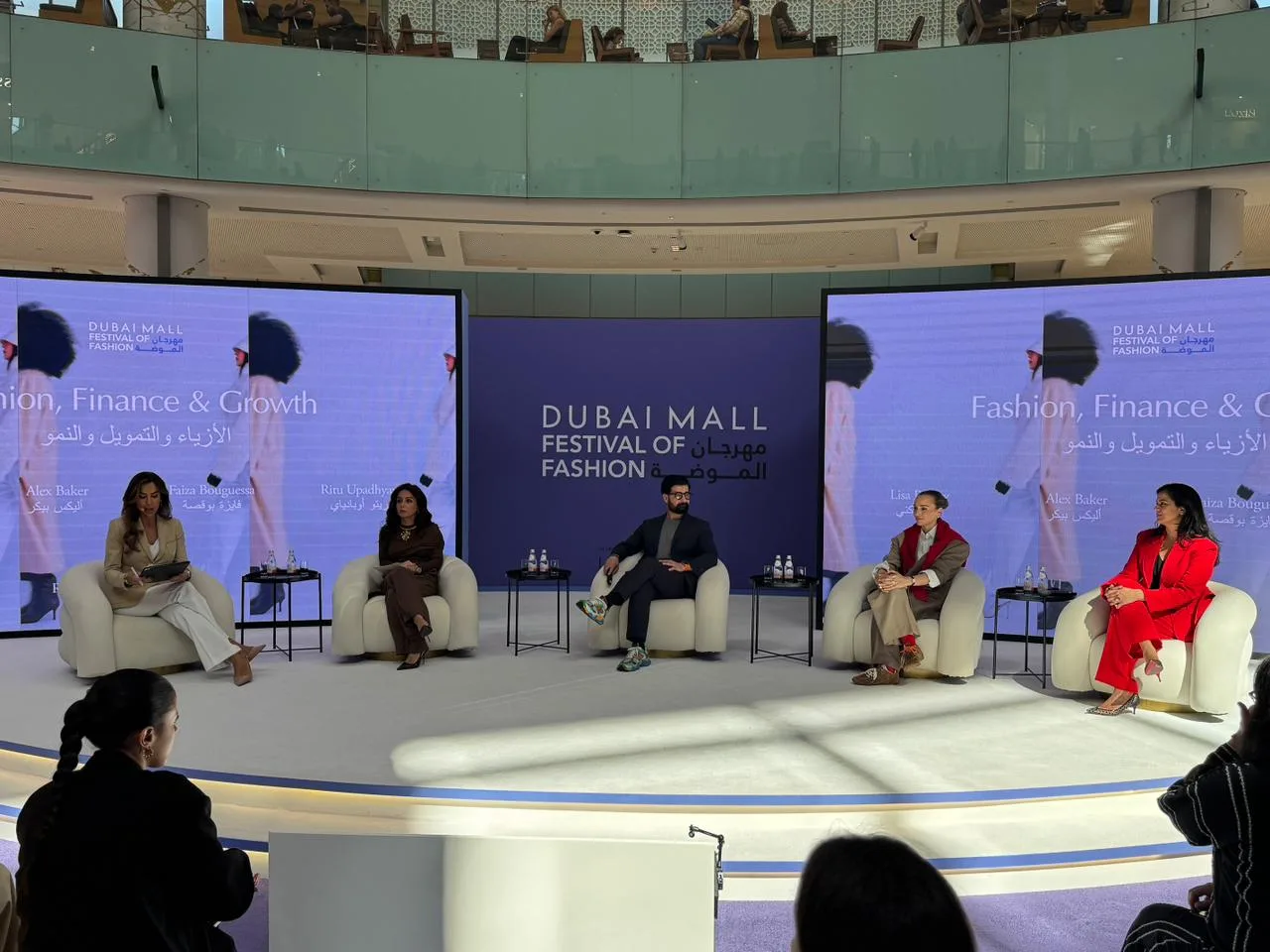
If the morning sessions were about the art of design, the afternoon at the Dubai Mall Festival of Fashion got down to the hard currency of the business. In a session titled “Fashion, Finance & Growth,” moderated by Ramia Farrage, the conversation shifted from fabrics to finances, revealing a seismic shift in how the Middle East is perceived by the global investment community.
The panel featured a power-list of industry insiders: Ritu Upadhyay, Bureau Chief at Women’s Wear Daily (WWD); Faiza Bouguessa, founder of the globally recognized label Bouguessa; Alex Baker, CEO of Retail Tech X and angel investor; and brand strategist Lisa Rokny.
The Macro Shift: $90 Billion Opportunity
Ritu Upadhyay provided the session’s defining context, declaring that the Middle East has graduated from being a passive consumer of luxury to an active creator and investor.
“The region has gone from being a market to being a hub,” Upadhyay stated. She noted that as luxury growth slowed in China, the world pivoted to the Gulf, citing a staggering valuation: “The last numbers I saw, $90 billion is the value of the luxury fashion market here in the region.”
She highlighted that major retail giants like the Chalhoub Group are shifting strategies, moving from being mere franchise partners to active investors in global brands like Willy Chavarria, proving the liquidity and ambition of the local ecosystem.
The Founder’s Revelation: Mentorship Over Money
In a moment that surprised even her co-panelists, Faiza Bouguessa revealed that despite her brand’s global success and 11-year trajectory, she has not yet taken external investment.
“I learned the hard way,” Bouguessa admitted, advocating for a ‘mentorship-first’ approach. She shared a pivotal experience of spending three days with legendary designer Roland Mouret, which gave her the roadmap she needed more than cash ever could.
“If you stay in chaos and receive funding, nobody is going to be able to help you,” she warned aspiring founders. Her strategy of building a healthy, self-sustaining business before seeking capital was lauded by the panel as the gold standard for resilience.
The “CEO and The Magician”
Angel investor Alex Baker broke down the formula for a fundable startup, using a framework inspired by LVMH: “You need the General and the Artist.”
Baker explained that while investors love a creative visionary (the “Magician”), the business is unscalable without a pragmatic operator (the “CEO”). He cautioned founders against raising money too early: “It is always easier to spend someone else’s money… but if we see they don’t understand the business, we keep them in the loop but address them later.”
The Equity-for-Services Model
Lisa Rokny highlighted a growing trend for cash-strapped creatives: the “equity for services” model. She explained how her advisory firm now takes a stake in brands in exchange for long-term strategic support rather than upfront fees. “It’s about treating investors as smart partners, not just debt investors,” Rokny advised.
The session concluded with a reality check on “exit strategies.” Upadhyay noted that unlike tech companies, fashion brands are personal. She cited Christian Louboutin’s recent deal with a family office rather than a conglomerate as a prime example of how fashion founders seek patient capital that respects their DNA.
“Founders don’t think about exit, they think about growth,” concluded Rokny. “As long as you demonstrate growth, the investor will see the opportunity.
“From Market to Hub”: Investors at Dubai Mall Fashion Festival reveal why the Gulf is the World’s New Capital of Fashion Finance
Middle East luxury fashion market valued at $90 billion, shifting from consumer to hub.