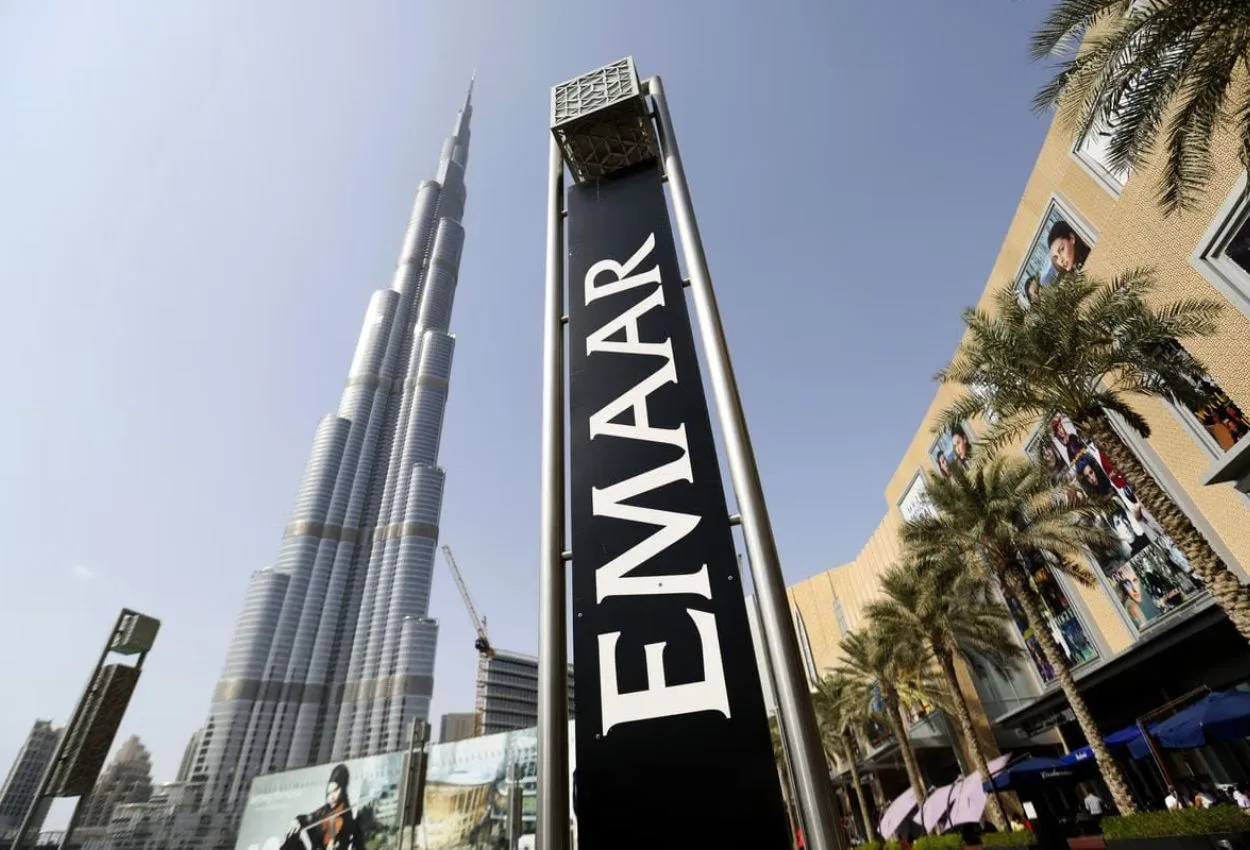
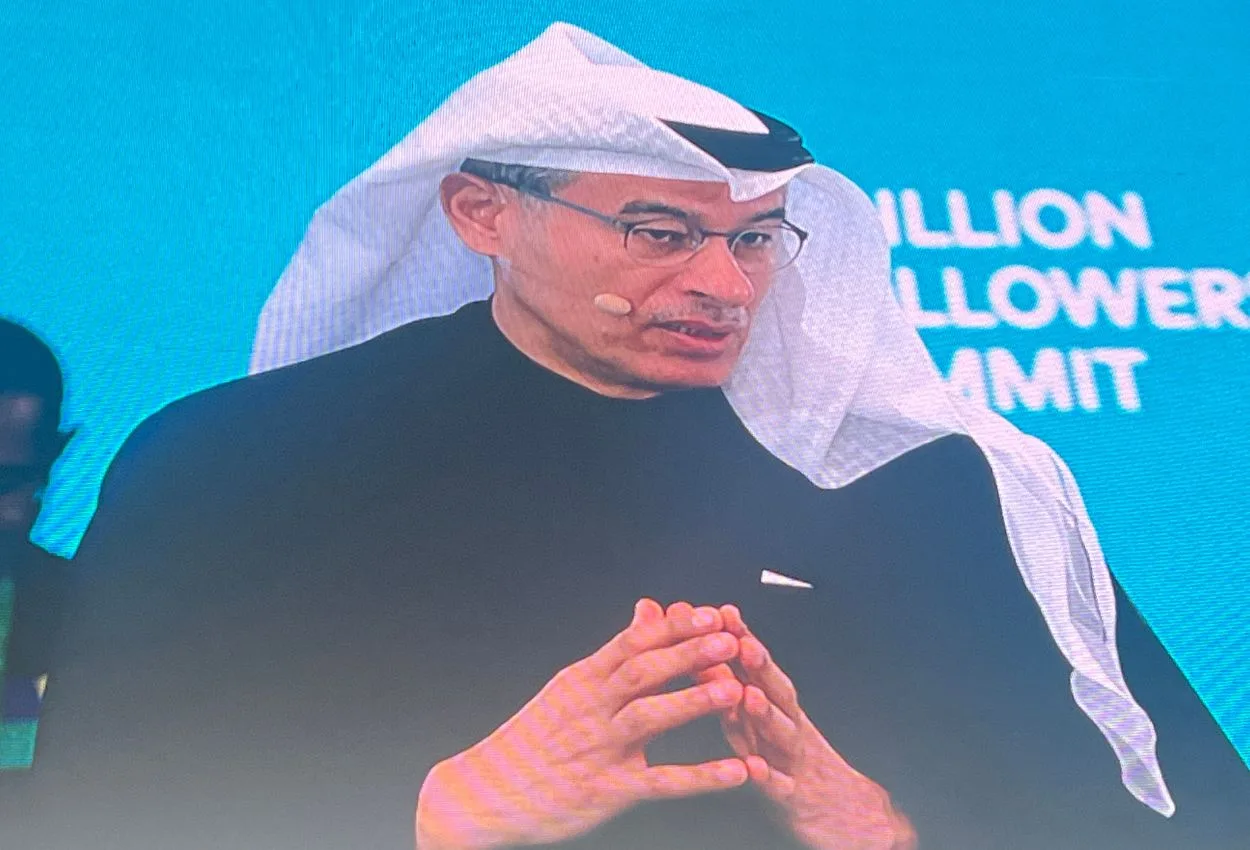
Dubai real estate developer EMAAR’s founder Mohamed Alabbar contrasted the UAE’s action-oriented approach with other regions’ political preoccupations during his address at the 2025 edition of the 1 Billion Followers Summit in Dubai on Saturday.
“At an EU conference, someone was talking to me before the conference, it was aggressive. And I said during the conference that ‘all of you are so busy with election, election, but we’re very busy with construction, construction’,” Alabbar told the audience.
The Emirati businessman, who is also the founder of noon, Eagle Properties, Symphony Global and Chairman of Americana, addressed global economic concerns and emphasised the importance of long-term business planning.
“One thing we have to keep in mind is that without a healthy United States of America (USA), there’s the risk for the world economy. So, I think we all want the best for the USA, because the world depends on it, along with China. We want these countries to be healthy,” he said.
Alabbar stressed the importance of long-term thinking for businesses and content creators alike. “Even content creators, social influencers, if you don’t build your business long term – with the value of your brand and your authenticity – if it’s not long term, then you are not in the business. So, we look at our business as a long-term business, therefore cycles will come and go.”
EMAAR going public was a ‘stupid idea’, Alabbar says at Dubai 1 Billion Followers Summit
Reflecting on EMAAR‘s public listing, Alabbar shared candid thoughts about the pressures of being a publicly traded company.
“What a stupid idea,” he said. “You know why? Because now – for the past 28 years – I have to announce my results every 90 days. You know how that feels? It feels like air pressure – every 90 days I have to strip naked in front of the public – see what I have spent, are you happy? Okay, let’s move on,” he quipped.
Despite his criticism, Alabbar acknowledged the discipline it brings.
“The good thing about public, it differentiates between the men and the boys. Shareholders want their shares to go up. They want the profit up every quarter ‘don’t tell me you have a COVID-19 problem, or a US problem’ – no. I really think that discipline and resilience in business is everything, as well as brand value. Enjoy the idea that you have a team that enjoys the struggle – but it is a lot of fun too.”
People going for elections ‘probably most unqualified’, Alabbar says
The businessman did not hold back in his criticism of electoral politics, suggesting those who pursue political office may not be the most capable leaders.
“Probably most unqualified people. They’re the people who go for election and political parties and all that. It’s too bad. But we wish everybody well. We want everyone to succeed. We want every country to do well, because Earth is very small place. We want everyone to prosper,” he said.
Alabbar criticised the short-term thinking driven by electoral cycles. “The Chinese are looking at the world with a lot of wisdom and saying, ‘You know what, we’re going to take a breather. We’re not worried about election’, because the world decides, mostly based on, how can I get more votes. Right now, California is kicking all the billionaires out of California. Do you think they know that they’re kicking them out? Of course, they know. But they will have more votes, maybe from the streets, for the people to rule in California. So, destroy your country, but get more votes to stay in power. And that is a problem I have with democracy these days – somebody needs to fix democracy.”
He praised China’s governance model, noting that “the leadership in China, the smartest people who come from school and university, they are the people who are in China. They don’t run technology companies. They are the smartest minds.”
However, Alabbar expressed disappointment with the situation in London, citing security issues and poor leadership.
“London, and I think Tokyo and Los Angeles, these are cities that Earth would be so boring without. They’re cities that are loved by everyone and we want them to be great cities, right? So I believe that it’s a shame that it is insecure – that they come and snatch your phone and you watch and speak, where are we? So it’s all about leadership,” he said, criticising the UK’s financial priorities.
“They’re very busy with wars – you don’t have any money to give to the police in London, but war? They’re not in touch with reality.”
He added: “I think they’re collecting now two pounds per night for hotel stay to fund the budget in London. Shame on you. Two pounds a night and you want to go to war. Shame on you.”
AI will run the world, elections, Alabbar says
When asked about AI’s impact on employment, Alabbar offered a perspective on how technology will reshape work and governance.
“AI and going autonomous is the greatest news for a country like UAE. We depend on amazing people who come from abroad. So that will slow down, because AI will do everything for us. Autonomous will do everything for us,” he said.
He noted the UAE’s current reliance on foreign workers, stating “we have like 70,000 bike drivers, that three wheelers are going to solve that. So, yes, it has an effect.”
However, Alabbar expressed confidence that skilled workers will adapt. “I really believe that smart architects, smart lawyers, smart anybody – if you know how to deal with AI itself, it will save your job. But will there be effect? Of course.”
On wealth disparity concerns, he explained “the good news is that the world doesn’t have too many millionaires, which means that there will be space for them. But we discussed with another is that we have to worry about the world, is that the rich is getting much richer.”
However, for those in the lower income stream, “the situation getting worse for them. And that’s something that has another deep discussion that we all need to have together, because we have a responsibility for everybody,” he said.
In addition, Alabbar also suggested that AI could solve political problems. “I think Germany will solve the problem. I think AI will run the world, the elections – because if we leave it to all these politicians, they only care about their chair. They don’t care about anybody. So we will need AI to solve our problems.”
Alabbar also shared his personal use of AI that for his business. “This AI business is driving me crazy, because I don’t call my staff, I don’t call my CFO, I don’t call my architects. I just don’t need anybody,” he said.
Last year, Alabbar disclosed he had dismissed Emaar’s complete marketing department, with his personal office also facing cuts.
“I don’t know – maybe next year, it will be just me, my assistant and AI. I have even cut the type of tea in my office – efore we had two teas, now just one,” he said.
‘We are so spoiled in this country,’ says Emaar founder Mohamed Alabbar
When asked about Emaar’s growth plans, Alabbar credited the UAE’s business environment for his success, describing how the country makes business “so easy” compared to other markets.
“First of all, It is very humbling that how we businessmen – we think we are so successful, and we’re so capable and all that. But despite that, for example – with all my capability – in certain countries, I failed. In America, I failed, I don’t want to mention some another two countries I’m having difficulties in, and that tells you that we are mesmerised by how easy it is to succeed in the Emirates,” he said.
“We’re so spoiled, it just autopilot because the creations are incredible. The environment is so great, and business is growing. Government policies are helping us. This country makes you succeed so easily. Other countries you can’t even breathe and lose all your money.”
Alabbar also described his company’s success as solving problems aligned with the city’s growth. “I was able, thank God, to think of an idea that can solve a problem. So I was able to think of my company to solve a problem that was in line also with the growth of the city. And after that, it is hard work. It is about protecting your brand. It is about bringing the best people. It is about really, really, honestly, excuse my language, working your ass off.”
Alabbar outlined his expansion plans, focusing heavily on the UAE and regional markets. “I think the UAE is growing aggressively. So there’s a lot of force in what we do here. My e-commerce business is like it’s almost exploding – here and in the region. Real estate is really on fire, so we can catch up. But still, we grew 40-50 per cent here, which means that, you know, we are still building 50 buildings. But next year we will build 100 buildings,” he said.
He further confirmed a return to the US market after losses. “We were losing the US. We went first in 2005 and we ran away after losing $1.2 billion – learning hard, right? You know, everyone’s a public company, so I’m glad that my shareholders were kind enough to know that I lost $1 billion, but I made $70 billion, so we were forgiven.”
“You are not going to do everything right. You do a lot of things that also fail, but but failing is also learning. And can you stand up after your failure.”
‘I am not in the business of charity,’ says Emaar founder Mohamed Alabbar
When asked about potential investment in Gaza reconstruction, Alabbar declined involvement and suggested a “you break it, you fix it” approach.
“I think everybody should sort out their problems on their own. Have I broken it? I’m not involved with that. Plus, I’m very busy enough for the company, my shareholders want me to give a lot of money. I’m not in the business of charity. I don’t do that anymore. Yeah, other people want to do it, but if you broke it, you fix it.”