
Most organisations operating in the UAE understand that global events shape local conditions. The harder question is whether the people running their operations day to day, managing suppliers, partners, regulatory relationships and capital across multiple markets, have the breadth to see those connections coming before they become problems to solve.
Geopolitical change is not simply external context. It shapes the conditions under which business is conducted. A regulatory shift in one jurisdiction affects a supply chain in another. An energy price movement reshapes the cost base of a partner three steps removed. A currency change quietly alters a competitive landscape that looked stable six months ago.
The organisations that navigate this well are not necessarily the ones with the best crisis response plans. They are the ones with leadership teams that read the world broadly enough to see those connections before they become urgent.
That capability does not sit only at the top of an organisation. It needs to exist across the layer of directors, senior managers and functional leads who are making decisions every day: about suppliers, contracts, market positioning, regulatory compliance, and how to keep operations running when the assumptions they were built on start to shift. This is where geopolitical awareness stops being an executive briefing topic and starts being a practical requirement.
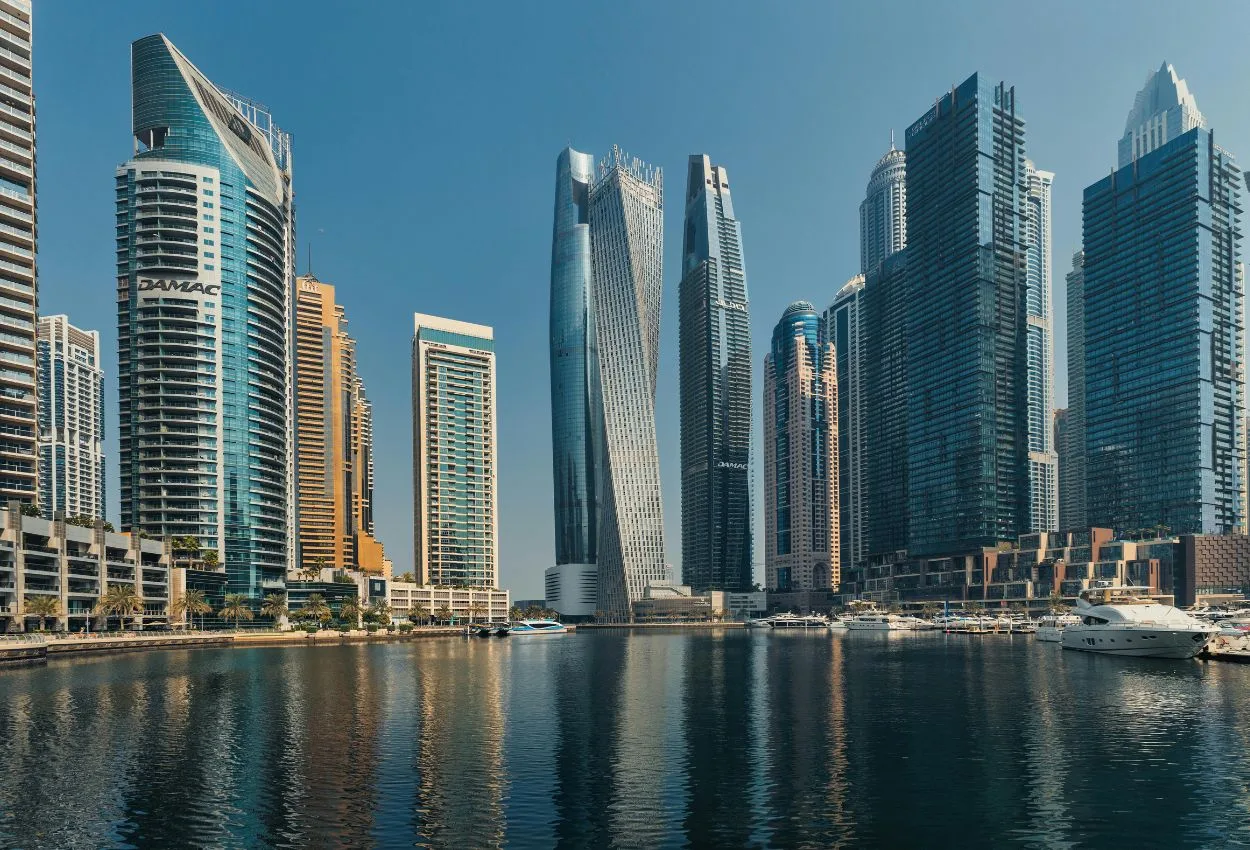
The UAE is a particularly exposed market in this regard. Organisations based here operate across more jurisdictions, regulatory regimes and cultural contexts than almost anywhere else in the world. That exposure has always been a source of competitive strength. It is also, in volatile conditions, a source of risk. The same complexity that makes the UAE an extraordinary platform for international business is the complexity that leaders have to manage through when global conditions change.
What is encouraging is that some of the most considered responses to this challenge are already visible here. The UAE has consistently approached national development with the understanding that resilience depends on people as much as infrastructure, and that philosophy is increasingly shaping how institutions invest in leadership.
Earlier this year, Georgetown University in Dubai partnered with Dubai Municipality to develop and deliver a leadership programme for their second and third-line leaders, the directors and senior managers responsible for translating institutional strategy into operational outcomes. The programme was built around the specific challenges those leaders face in their roles, and the competencies required to navigate them. It is the kind of investment that reflects a clear-eyed understanding of where organisational readiness is actually built.
What is also becoming clear is that this demand is not limited to government. Across the private sector, leadership teams are reassessing how they build capability in a more complex operating environment.
Early signals from executive education in the region reflect this shift. Demand is strengthening for programmes that offer international exposure with greater flexibility, allowing leaders to remain engaged with fast-moving markets while continuing to operate within them. At the same time, longer-term commitments are being more carefully evaluated, with greater emphasis placed on immediate relevance, peer networks, and real-world application.
This is beginning to reshape how institutions design leadership development. There is a growing focus on integrating geopolitics, policy and cross-border decision-making into business education. This is an area Georgetown has long prioritised, reflecting the realities leaders are navigating day to day.
For many businesses, the question is less whether to invest in leadership development and more where that investment has the greatest impact.
The case for developing the layer of directors, senior managers and functional leads who sit closest to operations, partners and markets is becoming harder to ignore. These are the people making consequential decisions every day, in real time, across multiple relationships and contexts. The quality of their judgement, and their ability to read a broader set of conditions than their immediate role requires, increasingly determines how well an organisation holds together when circumstances change.
Addressing this is a structural decision, not a talent one. It is not solved by identifying a handful of high-potential individuals and investing in them alone. It is solved by developing the leadership layer that sits across an organisation: the people who hold teams together when conditions become uncertain, maintain relationships with partners and regulators under pressure, and are first to be called on when something unexpected requires a response.
These are the leaders whose breadth of thinking, and whose confidence in acting, ultimately determines how well a business weathers disruption.
The UAE’s approach to long-term development has always reflected a belief that readiness is built before it is needed. For businesses operating here, the logic is the same. The organisations that will be best placed in the years ahead are not necessarily the largest or the most well-resourced. They will be the ones that have invested, across their leadership structures, in the judgement and preparation required to keep operating with confidence when the world around them shifts.