

Here is how to choose the cut, cook it to your taste, and get it right every time. A good steak rarely needs much intervention. The real skill lies in choosing the right cut and treating it with respect: proper heat, proper seasoning and the patience to leave it alone while it cooks. Master those basics and even a modest piece of beef can become something memorable.
We’ve got a full, comprehensive guide below. Have you little ‘steak’ in the game of reading, skip to the bottom for a foolproof how to on your most delicious protein output.
Understanding Steak Cuts
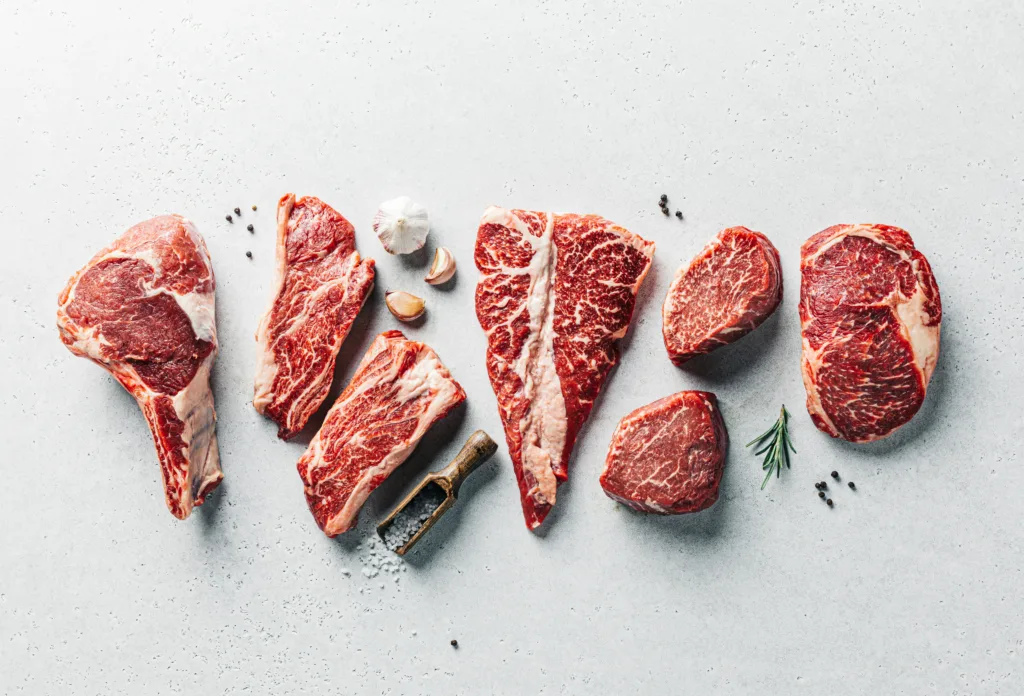
Before you start cooking, it helps to understand what you are working with. Different cuts behave differently in the pan. Some are lean and robust, others rich with fat and tenderness. Knowing which is which makes all the difference.
Rump
Rump steak is robust, lean and full of flavour. It comes from the hindquarter of the animal, which means the muscle has done more work. The result is a steak with a deeper beef flavour but slightly firmer texture.
Best cooked quickly over high heat and served medium rare or medium. Slice against the grain to keep it tender.
Sirloin
Sirloin sits just above the fillet on the animal and offers a balance between tenderness and flavour. It has a little more structure than fillet but retains a satisfying richness.
Cook over high heat until medium rare or medium. It benefits from a short rest and a generous seasoning of salt.
Ribeye
Ribeye is prized for its marbling, the delicate webbing of fat that runs through the meat. As it cooks, that fat melts into the steak, creating a rich and juicy result.
This cut handles heat beautifully and can be cooked medium rare to medium. The fat does most of the work for you.
Fillet
Fillet is the most tender cut of all. Taken from the least worked muscle of the animal, it is exceptionally soft but slightly milder in flavour.
Because it is lean, it benefits from careful cooking. Medium rare is usually ideal. Overcook it and the texture quickly dries out.
T-Bone
The T-bone combines two steaks in one: a section of fillet on one side and sirloin on the other, divided by the distinctive bone.
The bone helps retain moisture and flavour, but it also means the steak cooks unevenly. Careful heat management is key.
Flank
Flank steak is long, flat and deeply flavoured. It is lean and fibrous, but when handled properly it becomes wonderfully tender.
Cook quickly over high heat and slice very thinly against the grain. It is excellent for salads, tacos or sharing platters.
How to Cook the Perfect Steak
Now the cooking.
First, let’s start with heat. No matter what cut you are working with, the pan should always be properly hot before the steak goes in. A lukewarm pan will cause the meat to steam rather than sear, robbing it of that caramelised crust that makes steak so satisfying.
Remove the steak from the fridge about thirty minutes before cooking. Meat cooks far more evenly when it starts closer to room temperature.
Season generously with salt just before it goes into the pan. Pepper can wait until later, as it tends to scorch under high heat.
Place the steak into a hot pan with a little neutral oil. Resist the urge to move it around. Leave it undisturbed so the surface can develop a deep golden crust.
Cook the first side for two to four minutes depending on thickness, then turn and repeat. In the final minute you can add butter, garlic and herbs to the pan, spooning the foaming butter over the meat.
Finally, and this is the step many people skip, let the steak rest. Five minutes is enough for most cuts. This allows the juices to redistribute through the meat rather than spilling out the moment you cut into it.
The result is a steak that is evenly cooked, deeply flavoured and properly juicy. Simple food, done properly.
So you understand the above? Good. Here’s hoping you’re not a flank steak cooked well done type. No judgement. Well, maybe a little.
Our Recommendation
If you want the cleanest, most reliable result at home, we would suggest sirloin, cooked medium rare, finished with herb butter. It has enough fat for flavour, enough structure to sear properly, and it rewards a hot pan.
Ingredients
- 1 good quality sirloin steak (around 250–300g, about 2–3cm thick)
- Sea salt
- Freshly cracked black pepper
- 1 tbsp neutral oil (such as sunflower or rapeseed)
- 40g unsalted butter
- 1 garlic clove, lightly crushed
- A few sprigs of thyme or rosemary
For the herb butter
- 50g softened butter
- Small handful parsley, finely chopped
- A little thyme, finely chopped
- Small squeeze lemon juice
- Pinch of salt
Mix the herb butter ingredients together and set aside.
Method
Step 1
Take the steak out of the fridge about 30 minutes before cooking. Pat it dry with kitchen paper and season generously with salt.
Step 2
Heat a heavy frying pan over high heat until very hot. Add the oil.
Step 3
Place the steak into the pan and leave it alone. Do not move it. Let it sear for around 2–3 minutes until a deep golden crust forms.
Step 4
Turn the steak and cook the second side for another 2–3 minutes for medium rare.
Step 5
Add the butter, garlic and herbs to the pan. As the butter melts and foams, tilt the pan and spoon the butter repeatedly over the steak for about a minute.
Step 6
Remove the steak from the pan and let it rest for five minutes.
Step 7
Place a slice of herb butter on top and allow it to melt slowly over the meat before serving.