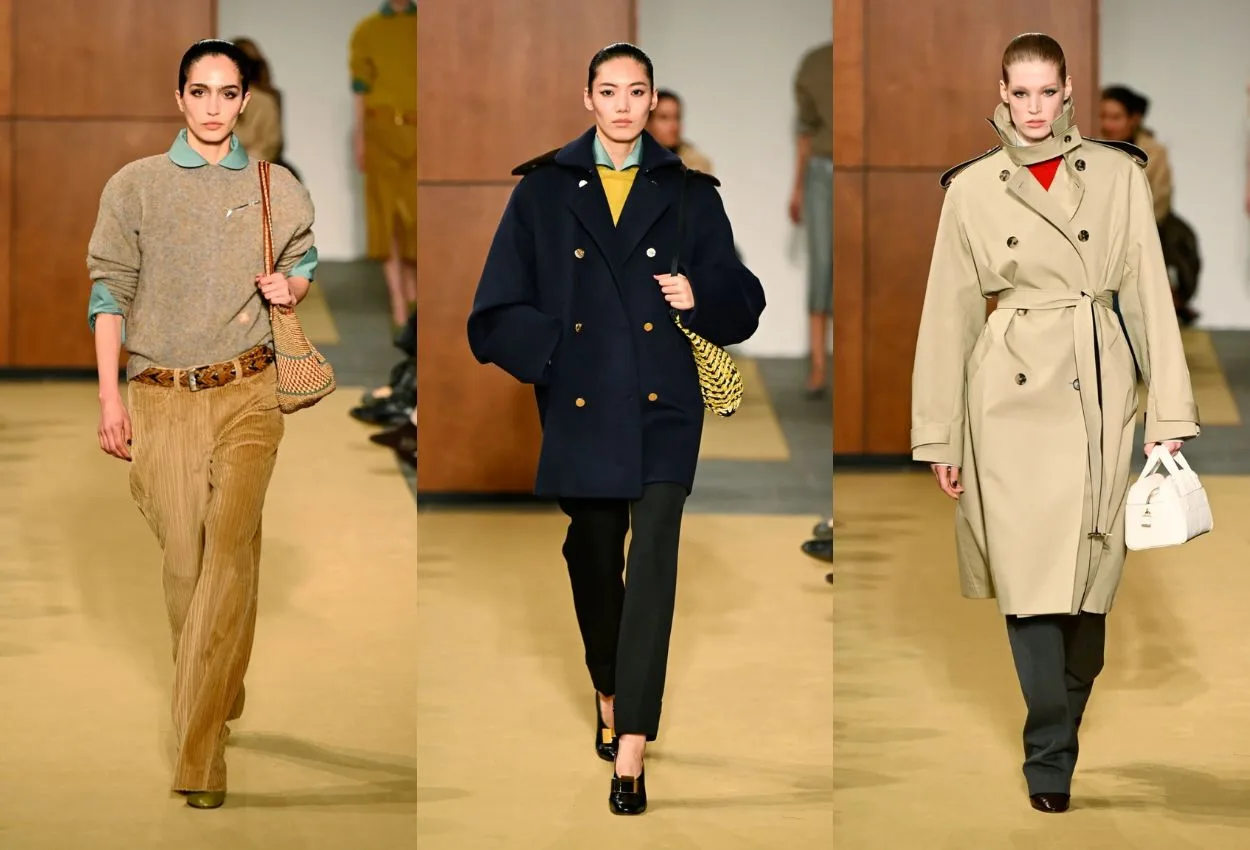
Tory Burch’s fall/winter 2026 collection in New York was built around a deceptively simple question the designer posed to herself: “What endures?”
The answer began with something deeply personal—a pair of her father’s well‑worn corduroy pants—which became both emotional anchor and aesthetic blueprint for the show.
Those corduroys reappeared on the runway as wide‑wale trousers with a relaxed, slightly slouched cut, styled with crewneck sweaters and round‑collar shirts, sleeves pushed up to the elbows in an understated, getting‑things‑done way.
Rather than chasing spectacle, the collection focused on real clothes for real women, but filtered through Burch’s sharp, modern eye. The mood was pragmatic yet poetic: familiar pieces quietly re‑engineered to feel sharper, freer, and more instinctive.
A key reference this season was style icon and philanthropist Bunny Mellon, whose effortless, rule‑breaking elegance has long fascinated Burch. That influence emerged not as literal vintage homage, but as a sensibility: clothes meant to be worn on instinct rather than by formula.
Tailoring was relaxed without being sloppy, evening pieces looked polished but never fussy, and everything carried a sense of life—buttons slightly undone, fabrics washed to feel lived‑in, proportions that suggested movement rather than rigidity.
Visually, the collection played with contrast: grounded, utilitarian roots on one side and refined, almost fragile femininity on the other. Soft knits, washed silks, and gently structured outerwear came in a palette that moved between earthy neutrals and richer, moodier tones, with an occasional charged color to keep the eye alert.
Accessories extended the narrative of endurance and memory—pieces that look like they could stay in a wardrobe for years, gaining character with time rather than losing relevance.
Taken as a whole, Tory Burch’s fall/winter 2026 outing felt like a mature, confident chapter in her evolution: less about chasing novelty, more about distilling what makes certain clothes worth keeping.
It proposed a vision of luxury rooted not in perfection, but in the emotional resonance of garments that feel familiar, personal, and quietly transformative.