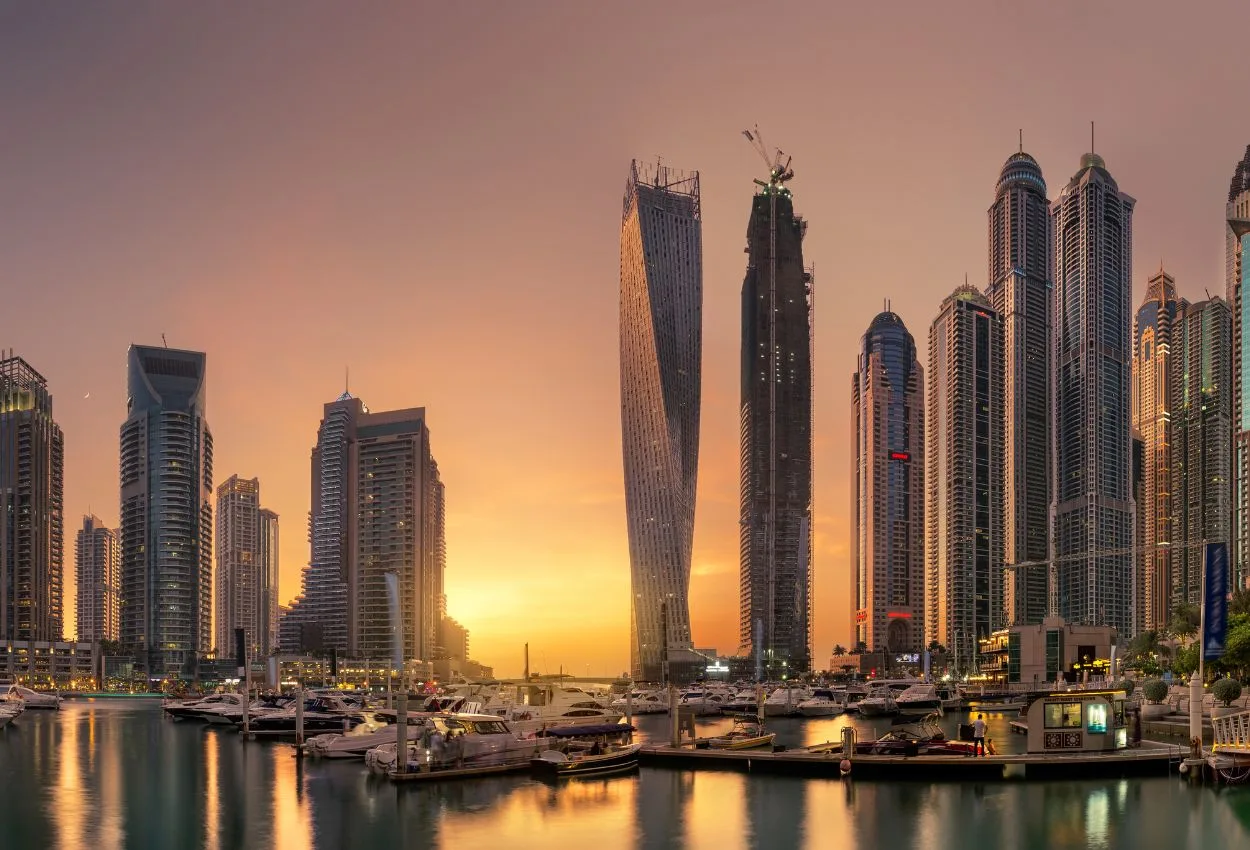
Dubai’s residential real estate market recorded 200,780 transactions worth AED 541.5 billion in 2025, an 18.9 per cent increase compared to the previous year, according to data from Property Monitor cited by Metropolitan Premium Properties (MPP).
The growth was driven by increased activity in emerging areas, while established locations such as Jumeirah Village Circle and Business Bay maintained their positions in transaction volumes.
Palm Jebel Ali records 244% surge in Dubai property transactions
Palm Jebel Ali recorded a 244 per cent increase in transaction volumes, while Dubai Islands posted 156 per cent growth.
Other areas that recorded increases included The Oasis (132 per cent), Nad Al Sheba (80 per cent), La Mer (74 per cent), Dubai Water Canal (69 per cent), Dubai Maritime City (54 per cent), and Dubai South (30 per cent).
According to MPP, the increases in these areas were driven by off-plan investment activity, as buyers positioned themselves in developments that are still under construction.
“Investor demand is increasingly concentrating on large-scale, future-facing developments where infrastructure, lifestyle appeal, and long-term supply dynamics support sustained growth. While waterfront locations have consistently attracted strong interest, we are now seeing heightened activity in new, large-scale coastal districts as buyers position themselves early in Dubai’s next phase of urban expansion,” Svetlana Vasilieva, Head of Secondary Sales at Metropolitan Premium Properties said in a statement.
Dubai real estate: Emerging areas drive 2025 market growth
MPP noted that ready and secondary market transactions continue to attract end-users and buyers seeking occupancy or rental income, while emerging districts are drawing investors focused on capital growth rather than yield.
Jumeirah Village Circle led all areas with 17,933 transactions at an average price of AED 1,102,967, with 69 per cent of transactions in the off-plan segment.
Business Bay recorded 11,874 transactions averaging AED 2,341,979, with 73 per cent off-plan. Dubai South followed with 9,820 transactions at an average of AED 2,084,040, with 84 per cent off-plan.
Other areas with transaction volumes included Dubai Residence Complex (7,802), Motor City (5,828), Dubai Science Park (5,391), Dubai Production City (5,273), Jumeirah Village Triangle (5,137) and DAMAC Islands (4,845). The top five areas accounted for 26.1 per cent of total transactions.
Off-plan transactions accounted for over 75 per cent of total transactions in 2025, according to MPP.
“Off-plan remains the driving force of Dubai’s residential real estate market, accounting for over 75% of total transactions in 2025 and this momentum is set to accelerate further. As major developers roll out large-scale projects in 2026 – particularly in high-growth corridors such as Dubai South, Dubai Islands and new master-planned phases by Emaar and DAMAC – we anticipate off-plan unit sales to rise by a further 10–15% in 2026,” Marcus Andersson, Head of Sales – Off-plan, Metropolitan Premium Properties added
MPP stated that Dubai’s market is entering a phase defined by depth, diversification and resilience, with transaction activity spreading across a wider range of communities.
“Dubai’s secondary market is set for steady, sustainable growth through 2026. Areas such as Dubai South, Dubai Hills Estate and Dubai Creek Harbour are increasingly attracting end-users and long-term investors, driven by airport-led development, improved connectivity and a growing focus on family-oriented communities. These emerging districts will be central to the next chapter of Dubai’s real estate story,” Vasilieva concluded.