

For many households in the UAE, Christmas is not a single day but a stretch of hosting, cooking, gifting and accommodating visitors.
While hosting at home is widely seen as the cost-conscious choice, the true expense is rarely decided at the checkout – forming instead across weeks of planning, last-minute purchases and untracked additions – that only become clear once the season has passed.
However, according to financial planners, the challenge is not a lack of awareness, but a lack of structure.
“The biggest hidden costs are rarely the headline items like the main meal,” Stuart Porter, a Dubai-based wealth coach and financial advisor, told Lana. “They tend to be the small, repeated expenses that build up quietly over several days.”
‘Expectations’ among hidden costs that build quietly when hosting Christmas in UAE
In addition, hosting Christmas carries expectations that extend beyond food for many in the UAE Guests are often visiting from overseas, and hosts feel responsible for creating an environment that reflects the occasion.
Echoing the sentiment, Mike Coady, a Dubai-based independent financial advisor said this sense of responsibility often triggers spending that was not planned “just in case.”
“The real hidden cost is what hosting turns into once guests are involved. What starts as a food budget quietly becomes a presentation budget, and that’s where most people lose control without realising it,” he explained.
He notes that extra beverage, fresh flowers, candles, tableware and cleaners are among the most common additions. These costs are often justified individually, but together they can outweigh the cost of the meal itself.
Porter further highlighted that transport and utilities are some of the overlooked contributors.
“Extra supermarket trips, last-minute decorations, higher electricity and water usage, and additional transport costs for guests all add up. In the UAE, utilities are often underestimated,” he said, adding that extended cooking times, decorative lighting, air-conditioning use and additional laundry for guests all contribute to higher December bills, particularly in households hosting over several days.
Another key factor to consider: Utilities and electricity
While utilities do increase during Christmas, both experts agree they are rarely the main problem.
“Utilities usually aren’t the main issue. Yes, extended oven use, running AC with a full house, and decorative lighting do increase costs slightly, but they’re marginal compared to food and drink overspend. If people are worrying about utilities, it’s often because the budget was already stretched elsewhere,” Coady said.
“Exact figures vary, but electricity and water consumption rises during periods of heavier home use. Longer oven times, additional refrigeration, festive lighting, and guests spending more time at home all contribute. Households should expect a higher-than-normal December bill and include this in their festive budget rather than treating it as an unexpected cost,” Porter added.
Budget well in advance, says UAE financial experts
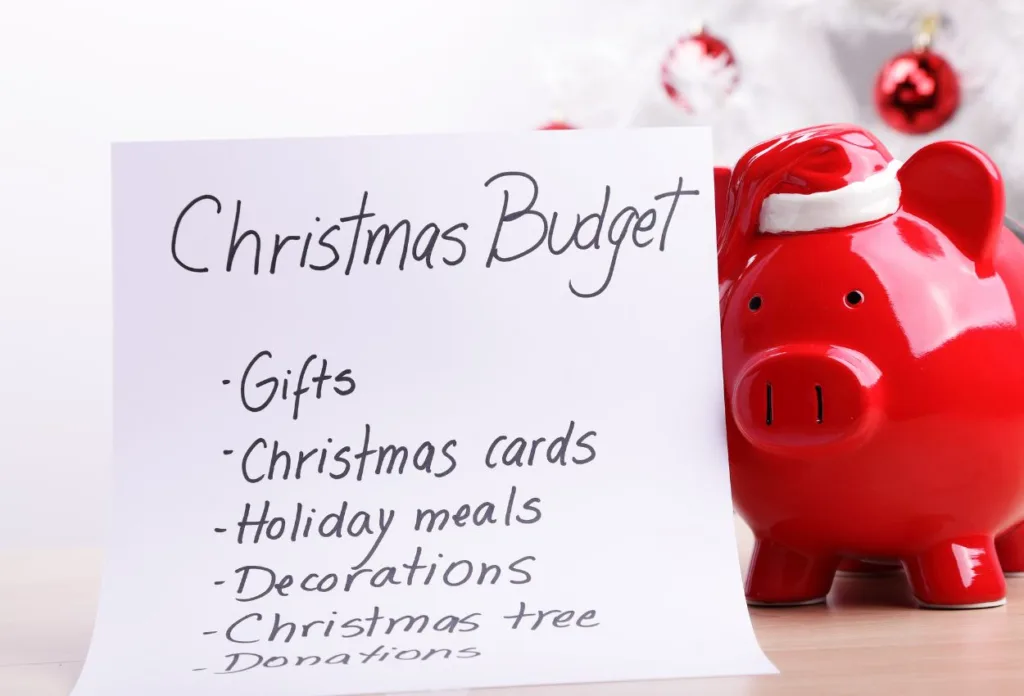
Nevertheless, one of the main drivers of overspending during the festive season, according to both experts, is late planning. Decisions made close to Christmas tend to be driven by time pressure rather than cost control.
Which is why, Porter advised, households should begin budgeting at least four to six weeks in advance.
“This allows households to plan menus properly, spread costs, and avoid panic buying,” he said, adding that “many people overspend during the festive season and then dread the January credit card bill.”
An effective way, Coady suggested, was creating a two- to three- week lead time, particularly for expat households hosting more than one gathering.
“The most expensive decisions are made at the last minute, when people are tired, busy, and emotionally invested in making the day perfect. Planning early isn’t about being cheap. It’s about removing pressure. When people feel rushed, they spend more and enjoy it less,” he said.
UAE Christmas budgets slip fastest when shopping for food, drinks, grocery
Food and drink remain the largest areas of financial risk. Grocery shopping for Christmas often includes backup items purchased “just in case”, many of which remain unused, according to Porter.
“Festive grocery shopping often leads to overbuying,” he said. “Food, drink, and presents are the biggest risk areas.”
“Shopping with a written menu and confirmed guest numbers is one of the most effective ways to control spending. Buying ingredients that can be used again after Christmas reduces waste. For guests who live nearby, asking them to contribute a specific dish, such as a dessert or side dish, can significantly reduce both cost and stress for the host. It also makes the occasion feel more shared rather than one-sided,” he advised.
A variety of drinks are particularly prone to escalation, according to Coady, who added that hosts often overestimate consumption and add variety without considering quantities.
“The second is backup food. Hosts buy extra dishes, extra desserts, extra snacks, driven by fear of running out. Most of it ends up untouched,” he said.
Should you indulge in gift-giving during Christmas?
During Christmas, gift-giving remains one of the most emotionally driven aspects of festive spending with small additional purchases often accumulate without being tracked.
“Presents are often underestimated,” Porter said. “Small “top-up” gifts can quickly accumulate, particularly when paid for on credit cards. Without a clear limit, January can become financially uncomfortable.”
He suggested setting a total gift budget first, then allocating amounts per person to maintain control.
“Agreeing spending limits within families, choosing fewer but more meaningful gifts, or opting for shared experiences rather than physical items can all help reduce pressure without diminishing the spirit of Christmas,” he said.
Coady further explained that good intentions often blur boundaries. “Christmas overspending rarely comes from carelessness. It comes from good intentions mixed with pressure,” he said.
“People want their home to feel warm, generous, and memorable, especially when friends and family are far from home. That emotional load is real, particularly for expat households, and it’s why rational budgets so often disappear in December.”
Hosting Christmas ‘cheaper’ than going out in UAE

Moreover, with festive menus and New Year events at UAE hotels priced per person, hosting at home is still viewed as the more affordable option for most families.
“For most families, hosting at home remains significantly cheaper. Festive set menus and New Year’s Eve events at premium UAE hotels often cost several thousand dirhams per person. Hosting at home avoids per-head pricing and gives households far more control over spending, particularly for larger groups,” Porter said.
However, Coady noted that the calculation depends on numbers and discipline.
“For small groups, hosting at home can be cheaper if the menu is simple and controlled. For larger groups, catering often works out better because it caps the cost and reduces waste. Restaurants are predictable and stress-free, but the per-head spend can climb quickly once you factor in transport, drinks, and service charges. The smartest option is the one that puts a ceiling on your spending,” he added.
Reuse your existing décor, focus your spending
Still, creating a festive atmosphere does not require continuous purchasing, according to both advisors.
“A festive atmosphere does not depend on constant new purchases. Re-using existing decorations, focusing on lighting, music, and table settings, and setting a fixed décor budget all help keep costs under control. Often, the atmosphere comes from the people and the occasion, not the price tag of the decorations,” Porter said.
Coady also recommended focusing spending rather than spreading it.
“Pick one focal point and do it properly. A well-set table, good lighting, and a calm, welcoming space create more impact than filling the house with decorations. People don’t remember how much décor you had. They remember how the home felt and how relaxed the host was,” he said.
Another way to make smart financial decisions is by keeping an eye out for seasonal promotions. However, it only works when they align with existing plans.
“Promotions can be helpful if they align with what was already planned. However, festive bundles often encourage people to buy more than they need. A useful test is to ask whether the item would have been bought anyway. If not, it is unlikely to be a genuine saving,” Porter said.
“A real saving lowers your final bill. If it increases it, it wasn’t a saving,” Coady agreed. “They only help if you were already going to buy the item. Festive bundles often increase total spend because they encourage people to buy more than they need under the illusion of saving,” he said.
In addition, guest numbers often dictate cost more than menu quality with larger groups increasing complexity, waste and clean-up.
“Larger groups benefit from simpler, scalable dishes rather than multiple courses. For overseas visitors, particularly family members who may wish to sightsee while visiting, planning is key. Trying to pack too much into one stay often increases costs unnecessarily. A more relaxed itinerary is usually cheaper and more enjoyable, with the option for guests to return another year,” Porter added.
Hosting should be ‘generous’, not ‘stressful’, say experts
Due to this, both advisers return to a single principle: set the total budget first.
“Set a total budget in advance and commit to it. If spending goes on a credit card, it should still fit within that budget and be comfortably repayable the following month. Christmas should not create financial stress that lingers into January,” Porter said.
“Most people do this backwards. They plan the ideal Christmas and hope the cost isn’t too painful. A clear budget upfront keeps you in control. Without it, Christmas decides for you,” Coady echoed.
“Hosting should feel generous, not stressful. If the spending is making you anxious, it’s a sign to simplify early. Guests remember the experience, not the excess. No one enjoys Christmas more because there were extra dishes,” he said.
“If there’s one mindset shift worth making, it’s this: generosity doesn’t come from excess, it comes from clarity. When people decide in advance what “enough” looks like, Christmas stops being expensive and starts being enjoyable again.”
Looking beyond December, Porter also suggested spreading costs across the year.
“Setting aside a small amount each month from January specifically for Christmas and New Year expenses can significantly ease cash flow. By December, much of the cost is already covered, reducing the need for credit cards and making the festive season far more enjoyable. Hosting at home can then be about time together, not financial recovery in the New Year,” he concluded.