Set to become one of the largest and most advanced urban transit systems in the world, the Metro isn’t just a transportation project — it’s a symbol of Saudi Arabia’s transformation into a modern, connected, and sustainable capital. And for residents and visitors alike, it’s fast becoming the most exciting way to experience Riyadh.
A City on the Move
Riyadh’s growth over the past 40 years has been nothing short of astonishing. From a mid-century desert town to a modern capital of over seven million people, the city’s expansion has brought wealth and innovation — but also congestion. Until recently, public transport options were limited. Most residents relied on private cars or drivers, and rush hours could stretch for hours.
The Riyadh Metro, part of the wider King Abdulaziz Public Transport Project, changes everything. With six lines, 85 stations, and more than 176 kilometers of track, it’s one of the most ambitious transit systems ever built in the Middle East. The project aims to redefine how people move, interact, and even think about their city.
The Metro connects every major district — from King Khalid International Airport in the north, through business zones like Olaya and King Fahd Road, to universities, hospitals, and residential suburbs in the east and south. In short: it’s a network designed not just for convenience, but for accessibility and inclusion.
Design Meets Vision
Step into any Riyadh Metro station and you’ll see how deeply the city’s modern vision has been woven into its design. Each station is a statement — a blend of contemporary architecture, cultural motifs, and cutting-edge technology.
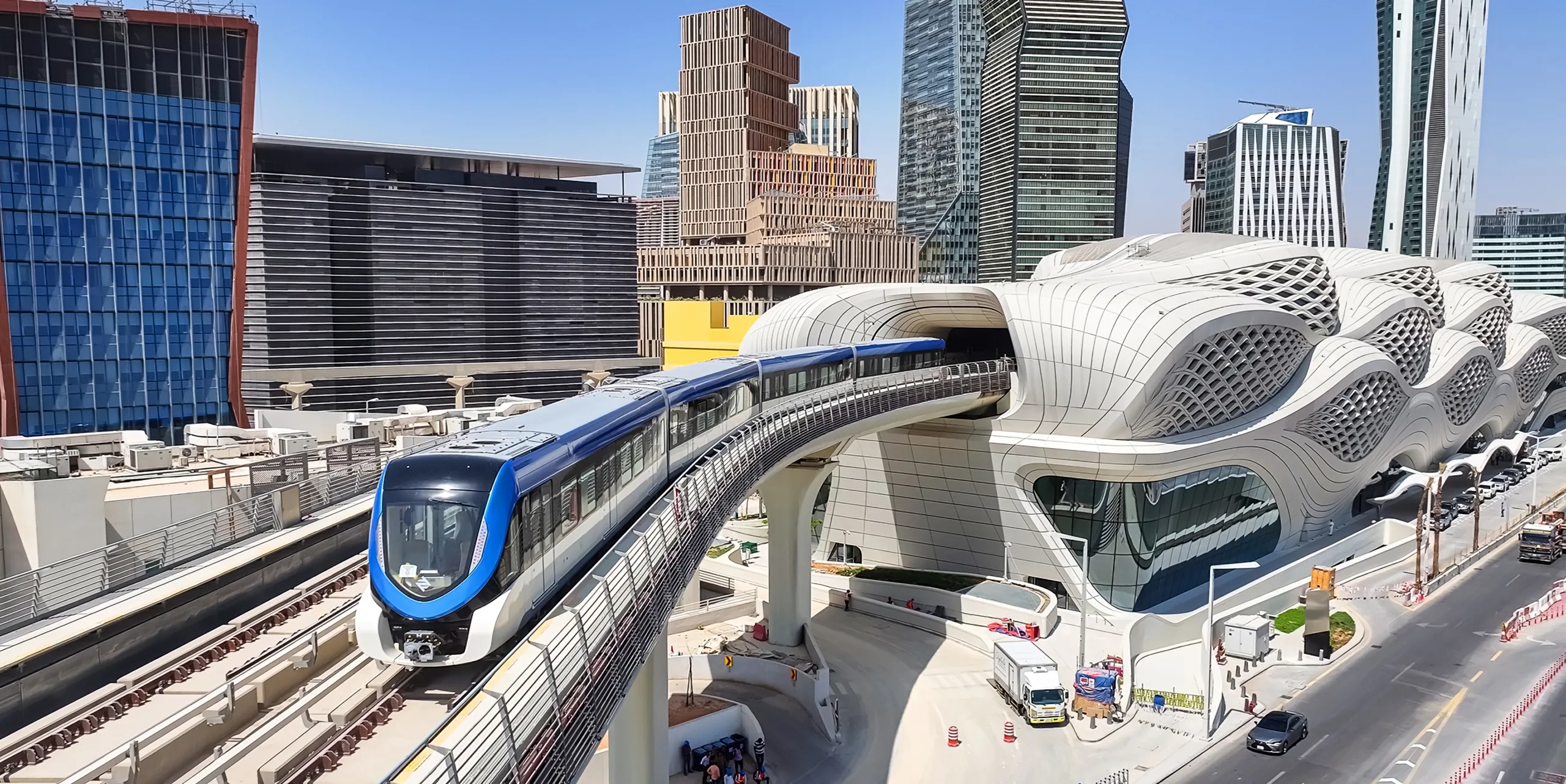
Many were designed by international firms like Zaha Hadid Architects and Foster + Partners, whose sleek, futuristic lines mirror Riyadh’s ambition. The interiors draw inspiration from desert landscapes: patterns of sand dunes, light diffusing through geometric screens, and materials that evoke both modernity and tradition.
The centerpiece is the King Abdullah Financial District (KAFD) Station, an architectural marvel that rivals any global transit hub. With its sweeping curves, natural lighting, and eco-friendly cooling systems, it’s a destination in itself — part art installation, part engineering feat.
Why the Metro Matters
The Riyadh Metro is not merely a way to get from point A to point B. It represents a cultural shift — a move toward sustainability, connectivity, and shared public life.
- Reducing traffic and emissions: The Metro is expected to remove up to 250,000 cars from the roads daily, significantly cutting air pollution and commute times.
- Empowering all communities: It offers safe, reliable transport for women, students, and workers who may not drive. The stations and carriages include dedicated zones for families and women, ensuring comfort and privacy.
- Economic catalyst: By linking business districts, residential areas, and leisure hubs, the system boosts property values and supports local commerce.
- Accessible design: Elevators, ramps, and platform screen doors make it welcoming to passengers of all ages and abilities.
For a city in the midst of transformation under Vision 2030, the Metro isn’t just infrastructure — it’s identity. It’s Riyadh saying to the world: we’re ready for the future.
How to Ride the Riyadh Metro
Using the Metro is designed to be effortless, even for first-time visitors. Here’s a simple guide:
1. Plan Your Journey
The Metro’s six lines are color-coded for easy navigation:
- Blue (Line 1): North–south along Olaya Street and King Fahd Road.
- Red (Line 2): East–west across King Abdullah Road.
- Orange (Line 3): Longest line, running west to east.
- Yellow (Line 4): Airport service.
- Green (Line 5): Inner city line serving major residential and business districts.
- Purple (Line 6): Connects key outer neighborhoods.
Digital maps and the official Metro app provide real-time updates, route planning, and estimated travel times. Most stations are connected to feeder buses and park-and-ride lots.
2. Get a Ticket or Travel Card
Riders can purchase single-journey tickets, day passes, or rechargeable smart cards at kiosks or via mobile apps. Contactless payment systems make entry seamless — just tap, go, and the gates open.
3. Know the Carriage Layout
Each train has three sections:
- First Class, offering wider seats and extra comfort;
- Family Section, designed for women and families traveling together;
- Single Section, for general passengers.
Trains are fully automated and driverless, running at regular intervals throughout the day. With air-conditioning, Wi-Fi, and clean modern interiors, the experience is closer to that of a high-speed airport system than traditional subway travel.
4. Timing and Operating Hours
Metro services typically run from early morning until midnight, with extended hours during weekends and public events. Stations are well-lit, monitored, and staffed with helpful attendants fluent in Arabic and English.
5. Explore with Confidence
Many key attractions — from the National Museum and Kingdom Tower to Riyadh Front and King Abdullah Financial District — are just steps away from Metro stops. For visitors, it’s the easiest way to explore the city without battling traffic.
A Glimpse into Tomorrow
Beyond convenience, the Riyadh Metro is about reimagining the rhythm of daily life. Children heading to school, professionals commuting downtown, families going out for an evening — all will soon share a common, connected space that reflects a new kind of urban citizenship.
It’s more than transport; it’s transformation — a visible, tangible piece of Saudi Arabia’s bold redefinition of itself. And for anyone arriving in Riyadh for the first time, stepping aboard the Metro is the perfect introduction to that new story: fast, efficient, beautifully designed, and open to all.