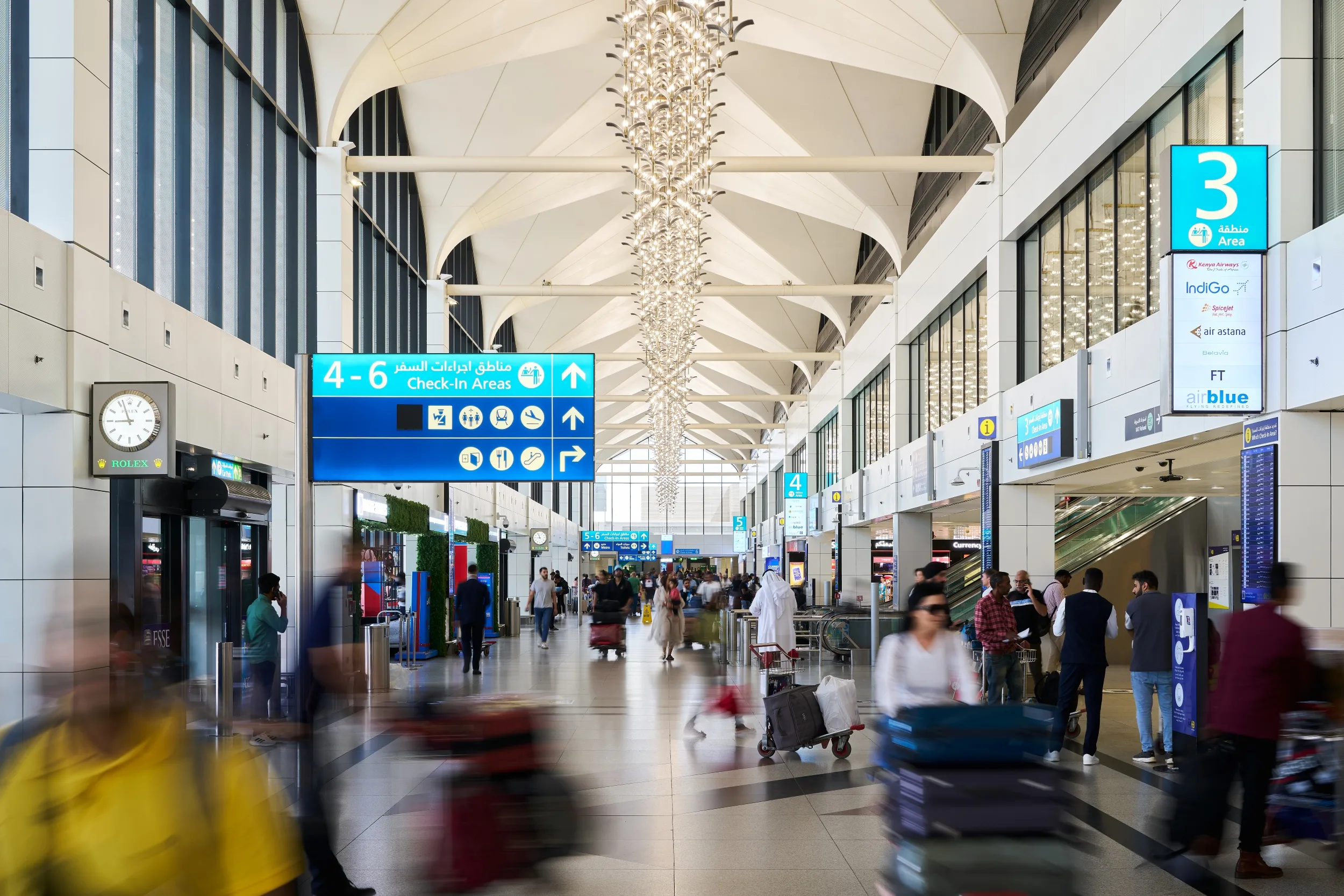
Dubai International Airport’s (DXB) ground handling operations have entered a new phase where traditional winter peaks have given way to sustained high-volume operations throughout the year, Ciaran O’Sullivan, Divisional Vice President – Airline Services, dnata told Lana in an exclusive interview.
“Before the pandemic, we would typically see 10 to 14 super-peak days around Eid, school holidays, and the Christmas period. Post-Covid, with the surge in demand for Dubai, seasonality has become far less pronounced. In many ways, we now operate at ‘super-peak’ levels most of the year,” he said.
The transformation means that teams at DXB no longer prepare for brief periods of intensity followed by quieter periods. Instead, the airport maintains high load factors throughout the year, with spikes around major holidays becoming “less extreme” compared to pre-pandemic patterns.
How Dubai Airport manages year-round ‘super-peak’ traffic
“We still experience spikes around major holidays, but they are less extreme, and our teams are conditioned to manage high volumes consistently. For each anticipated peak, we begin planning two to three months in advance,” he added.
Moreover, the company employs a three-tier planning structure to manage operations.
“Planning, planning, planning,” O’Sullivan emphasised when asked about managing increased flight traffic, cargo movement, and baggage handling.
“We work at multiple levels – seasonal, schedule-based, and tactical planning as we get closer to the operational day.”
This layered approach allows dnata to maintain flexibility while working towards long-term operational goals.
Seasonal planning provides the framework, schedule-based planning addresses known flight patterns, and tactical planning enables last-minute adjustments as the operational day approaches.
Moreover, technology has transformed how ground handlers track and respond to flight movements, O’Sullivan revealed adding that teams at dnata monitor flights “down to the minute” on the day of operations, using data that provides unprecedented accuracy.
“For instance, when an aircraft departs New York, we know its arrival time in Dubai with an accuracy of plus or minus three minutes, even after a 13-hour journey. This level of precision allows us to allocate resources for baggage and cargo transfers effectively,” he explained.
Additionally, the ability to predict arrival times with such accuracy enables the ground handler to position staff and equipment precisely where needed.
“If a flight is delayed for reasons outside an airline’s control, we dynamically adjust our plans. Our teams are highly agile and deliver exceptional performance every day,” the dnata executive added.
Safety protocols stay strict despite rising volumes, says dnata’s O’Sullivan
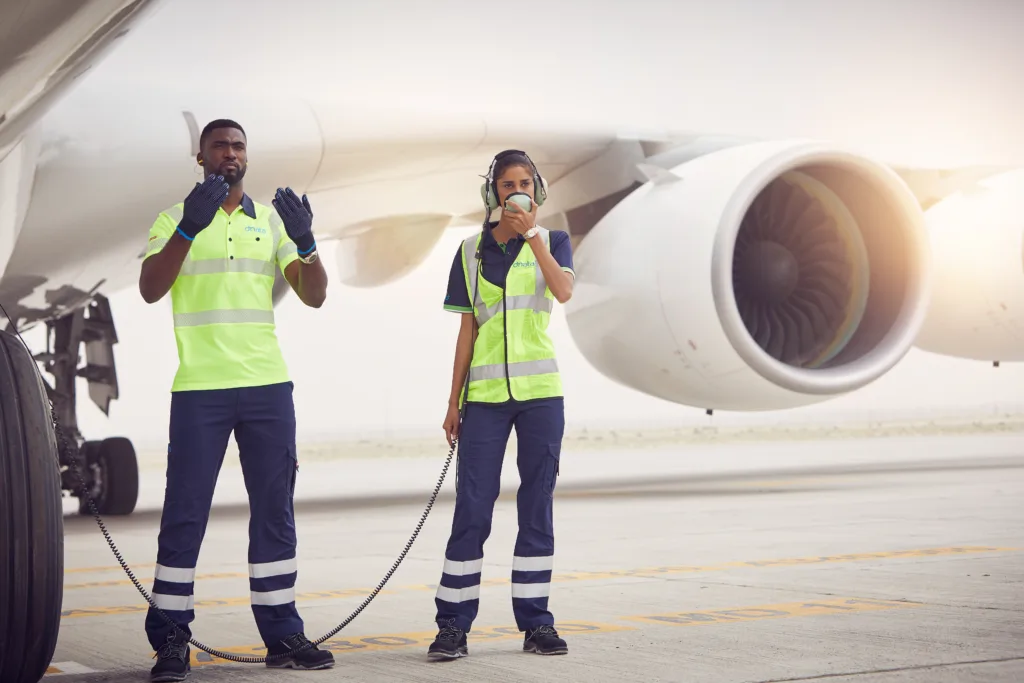
However, higher volumes do not translate to relaxed safety protocols and O’Sullivan is clear about the company’s position on maintaining standards during busy periods.
“Operational pressure increases during peak periods, but we never compromise on safety or service standards,” he said. “We reinforce this message in our daily and shift briefings.”
Safety walks, audits, and checklists continue throughout peak periods without interruption. The company treats adherence to Standard Operating Procedures as a “non-negotiable discipline” across all operations.
Yet, challenges could arise as Dubai’s winter season or adverse weather conditions brings specific operational challenges. Fog represents the most common form of weather disruption during this period.
“While it [winter fog] is relatively predictable, we rely heavily on robust business continuity planning,” he said, adding that the company tests its contingency processes throughout the year to ensure readiness when activation becomes necessary.
No training for staff during ‘super-peak days’
dnata also brings in additional personnel to support operations during periods of higher demand, focusing recruitment on functions that experience the greatest volume increases.
“Yes, in key functions such as check-in, baggage, and loading, we bring in additional staff to support higher volumes,” O’Sullivan confirmed. However, he noted that the need for seasonal staffing has decreased compared to previous years due to consistently high volumes.
“That said, the seasonal spikes are less pronounced than in previous years – DXB operates at very high load factors year-round,” he added.
Moreover, training schedules are adjusted to ensure maximum operational capacity during the busiest periods.
“To ensure maximum operational capacity, we avoid scheduling training during super-peak days,” O’Sullivan explained, adding that by doing so, dnata’s teams, trainers, and leaders are “fully available to support the operation.”
Aside from this, the Airport Operations Database (AODB) sits at the centre of dnata’s operational management system. This platform adds multiple data sources to provide a comprehensive view of airport activity.
“These feeds are harmonised and channelled into our Real-Time Coordination (RTC) system, which enables precise allocation of manpower and ground support equipment,” he explained
Coordination at dnata is a ‘mindset’ not a process
Another critical factor to ensure and maintain smooth operations is coordination, which according to O’Sullivan is a “mindset.”
“At DXB, we do it exceptionally well. Every entity, service partner, and frontline team works together as oneDXB to deliver world-class service at every touchpoint,” he said.
dnata also maintains a focus on learning from operational experience and refining processes based on those insights, O’Sullivan added, especially as operations do not always occur by the book.
“Operations don’t always go exactly as planned, and that’s why continuous improvement is built into our culture,” he explained. “We constantly capture learnings from across our business units and refine our processes.”
“With the airport busier than ever, our focus is on optimising the operation to build even more capacity and resilience. Improvement is an ongoing discipline for us,” he concluded.