
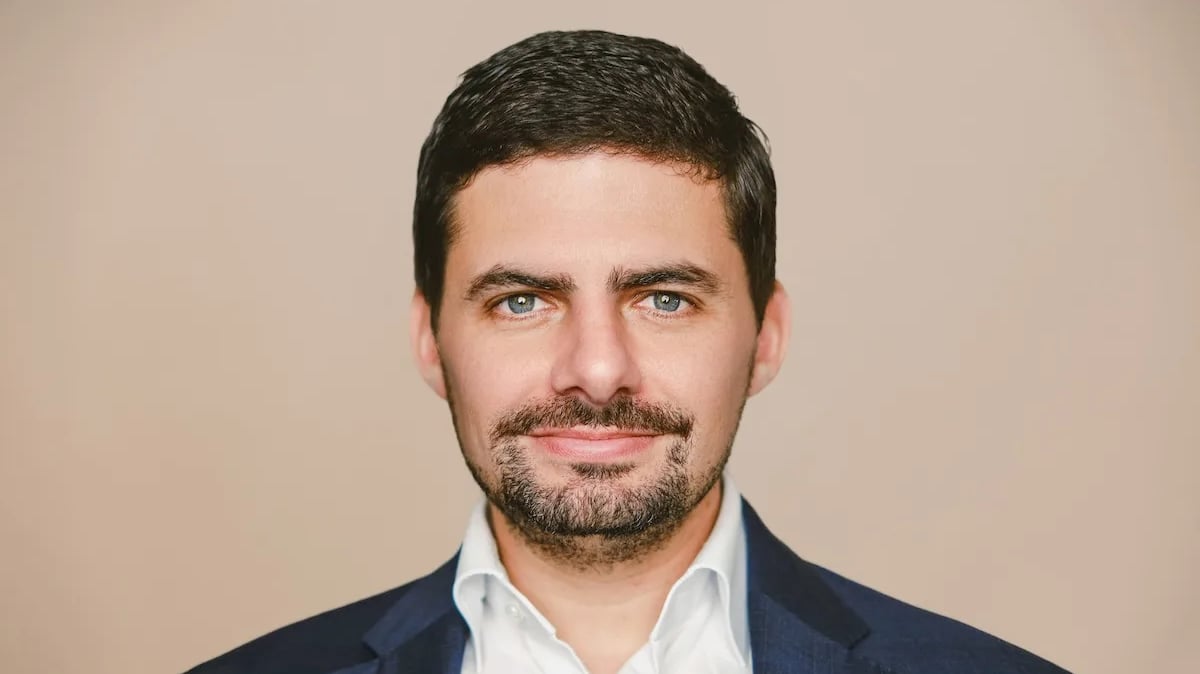
Two US surgical robotics companies backed by Sharjah’s Crescent Enterprises are in talks with hospitals in the UAE, their chief executive has told Lana.
Eduardo Fonseca runs both XCath and EndoQuest Robotics. He would not name the hospitals or the procedures involved. “We are currently in discussions with some UAE hospitals but cannot reveal details publicly at this stage,” he said. “We look forward to sharing more details in due course.”
The talks follow a milestone for EndoQuest earlier this month. On 5 November the company announced it had completed the world’s first fully robotic transoral gastric procedures. In the two operations, carried out at The Panama Clinic in Panama City, robotic instruments went in through the mouth and rebuilt stomach tissue from the inside, with no external cuts. EndoQuest said it was also the first clinical use of its Endoluminal Surgical (ELS) System in the upper digestive tract.
Asked whether the UAE could host a similar first, Fonseca pointed to one his own company has already staged here. In May 2024, at Abu Dhabi Global Healthcare Week, XCath gave what it describes as the world’s first public demonstration of a simulated remote mechanical thrombectomy. Dr Vitor Mendes Pereira, sitting in Abu Dhabi, operated on a simulated patient in South Korea and removed a blood clot in the brain within minutes.
Fonseca also mentioned Cleveland Clinic Abu Dhabi’s work in April 2025. A surgeon in Cleveland, Ohio, more than 11,000 kilometres away, controlled a robotic system to treat a patient in Abu Dhabi for prostate cancer. “The UAE has a strong track record of pioneering medical breakthroughs – making it well-placed to host more world-firsts in the future,” he said.
Beyond obesity
Obesity is one of the Gulf’s biggest health problems, and the Panama cases were endobariatric procedures, a weight-loss treatment. Even so, Fonseca would not commit to leading with weight-loss surgery in the region. “While obesity and bariatric surgery are important healthcare challenges in the region, our focus extends beyond any single condition,” he said. He added that the goal is to bring both companies’ technologies to the UAE, once the necessary regulatory approvals and clinical requirements are in place.
He said the UAE stands out for how it brings together clinicians, researchers, technology developers and international healthcare groups. “The UAE has become an increasingly exciting environment for pioneering healthcare research,” he said, citing Dubai Health’s innovation programme as an example of moving new technology from development into clinical use.
The Gulf money behind the machines
Fonseca did not say whether the companies will need another funding round before a US launch. For now, he said, the focus is regulatory. EndoQuest is preparing a De Novo Classification Request, which it hopes will lead to market authorisation from the US Food and Drug Administration. In July the company finished enrolling patients in PARADIGM, the pivotal US trial of its ELS System.
Crescent Enterprises was XCath’s founding investor and is its largest shareholder. “Its investment reflects a commitment to supporting innovation that can deliver tangible value for patients and healthcare systems,” Fonseca said.
Neeraj Agrawal is Executive Director of Crescent Enterprises and a director at both companies. He called the sector “one of the most compelling long-term investment opportunities in healthcare”.
“XCath and EndoQuest have assembled an exceptional team of physicians, entrepreneurs and engineers, together with Board and International Scientific Board, clearly focused on addressing significant global healthcare needs that are currently not being met,” Agrawal said. “This makes these companies a great investment opportunity for us at Crescent, and also for better innovation in healthcare.”
He added: “For EndoQuest specifically, we are also highly encouraged by the strong interest from strategic partners, which validates our confidence in its vision and potential to reshape surgical care and access to critical procedures.”
Two companies, one lab
Both companies came out of a research project at the University of Texas Microsurgical Robotics Lab, founded in 2014. They became private companies in 2017 and later split, because each one works on very different technology and needs different experts. Fonseca said there are no plans to merge them, but both will share some technical advances. In particular, both are now working on physical AI, which he said could give surgeons real-time guidance and help them make quicker, better-informed decisions during operations.
Fonseca says his years as an ambassador taught him how fast the UAE moves. “During my time as first ambassador I was able to witness how forward thinking the UAE was and it was able to adapt to changes in a very short span of time,” he said. “Doing business in the UAE allows you to collaborate with some brilliant visionaries and strong decision-makers.”